


The way people search online is shifting. While Google and Bing remain dominant, AI tools like ChatGPT are becoming essential discovery channels. If you want your website to appear in ChatGPT results, you need to understand how these AI-driven search environments work differently from traditional search engines like Google.
ChatGPT and other AI tools don’t just crawl and index – they interpret, synthesize, and recommend. This guide will help you learn how to rank your content in ChatGPT by understanding the mechanisms behind AI search and implementing proven strategies that boost your chances of being cited by LLM.
Mechanisms Powering ChatGPT Search
Understanding how ChatGPT processes and retrieves information is the first step toward getting your website recommended by ChatGPT. The system operates differently from platforms like Google or Bing, though it relies on some of their infrastructure.
Bing Index Integration Basis
ChatGPT relies on the Bing search index to access current information across the web. When users ask questions requiring real-time data, the AI queries Bing’s database to retrieve relevant pages. This dependency means your site must be discoverable by Bing’s crawler; mastering how to get your website crawled and indexed is the first step to ensuring ChatGPT can reference your content.
To ensure visibility in ChatGPT, submit your website to Bing Webmaster Tools. This process allows Bing’s crawler to discover, analyze, and index your pages systematically. Without proper indexing, even exceptional content remains invisible to AI-powered tools like ChatGPT. Verify your sitemap submission and monitor crawl errors regularly – technical issues that block Bing will also prevent ChatGPT from accessing your content.
Conversation Search Intent Processing
LLM approaches queries differently than traditional search engines. Instead of matching keywords, the model prioritizes context–learning how to do semantic SEO is essential for helping the AI parse conversational, multi-turn questions to extract meaning. Users might ask, “What’s the best approach for small businesses trying to rank on search engines like Google without a huge budget?” rather than typing “affordable SEO services.”
The AI prioritizes content that directly addresses the nuance and context of these conversational prompts. Your pages should answer specific questions comprehensively rather than targeting isolated keywords. This shift requires creating content that answers real user problems in natural language, reflecting how readers and AI both interpret information.
Source Citation Selection Logic
When ChatGPT provides answers, it evaluates which sources deserve citation based on relevance and information density. The model assesses whether a page offers authoritative, detailed responses that directly match the user’s query.
Key criteria ChatGPT uses when selecting sources to cite:
- Information density – comprehensive coverage with specific data and clear explanations
- Direct relevance – content that precisely matches the conversational query
- Authoritativeness – demonstrated expertise through depth and accuracy
- Completeness – thorough answers that require minimal supplementation
Pages with higher information density rank higher in the AI’s selection process. ChatGPT may skip over thin content or generic overviews in favor of resources that demonstrate expertise. If you want to get cited, your content must stand out as the most complete and trustworthy answer available.
Core ChatGPT Ranking Factors

ChatGPT rank websites based on signals that extend beyond your own domain. While traditional SEO focuses heavily on on-page optimization, AI search considers your brand’s presence across the entire web.
Brand Mentions Across Web
Being mentioned around the web matters significantly for ChatGPT’s understanding of your authority. When your brand appears frequently on platforms like Reddit, Wikipedia, industry forums, and news sites, ChatGPT builds a stronger entity profile for your business.
These off-site signals function as digital endorsement. A company consistently discussed in relevant contexts signals to the AI that you’re an industry leader worth recommending. Encourage brand mentions through digital PR campaigns, guest contributions to authoritative publications, and active participation in community discussions where your expertise adds value.
Google Search Ranking Correlation
There’s a notable correlation between Google rankings and visibility in LLM. Pages that rank highly on Google typically demonstrate quality, trustworthiness, and relevance – signals that ChatGPT also values when selecting sources.
Traditional SEO remains foundational. If your content performs well in search engines like Google and Bing, you’re already building the credibility that helps you rank in ChatGPT. This doesn’t mean SEO tactics are identical, but the underlying principles of creating high-quality content and earning trust apply across both traditional and AI-driven search platforms.
Domain Authority Significance
Domain authority – built through age, backlink profile, and historical trustworthiness – influences how confidently ChatGPT cites your content. A website with a strong technical foundation and reputable link profile receives a higher “confidence score” from the AI.
Factors that build domain authority for AI search:
- Domain age – established websites with consistent publishing history
- Backlink quality – links from credible, relevant sources in your industry
- Historical trust – maintained technical health and content accuracy over time
- Topical consistency – focused expertise in specific subject areas
Newer domains face steeper challenges. Building authority requires consistent publication of expert content, earning links from credible sources, and maintaining technical SEO health over time. While domain authority alone won’t guarantee visibility, it creates the foundation that makes ChatGPT more likely to trust and reference your pages.
Content Optimization Strategies for AI

Creating content that directly addresses user needs while meeting AI evaluation criteria requires specific formatting and depth strategies.
Human-Written Expert Insights
ChatGPT and other AI search tools can detect and often deprioritize generic, AI-generated text that lacks original perspective. Content that stands out incorporates unique data, case studies, and personal experiences that demonstrate genuine expertise (E-E-A-T).
Include proprietary research, client results, or industry observations that competitors cannot replicate. When insights are based on real-world implementation rather than recycled common knowledge, the content is recognized by AI language models as valuable and authoritative. This differentiation is critical as generative AI systems become more effective at identifying shallow or low-substance content.
Direct Answer Formatting
Front-load your information. Place clear, concise answers at the beginning of each section so ChatGPT can easily extract relevant snippets for user responses. The AI scans for immediate value rather than building suspense through lengthy introductions.
Structure paragraphs to answer specific questions directly in the opening sentence, then provide supporting details and context. This approach serves both human readers seeking quick answers and AI systems evaluating which content most efficiently addresses the query. Use headings and subheadings that pose questions or state topics plainly, making it easier for ChatGPT to understand your content structure.
Freshness and Data Accuracy
ChatGPT compares information across multiple sources when formulating responses. Outdated statistics or contradictory facts can cause the AI to bypass your content in favor of more current resources. Maintaining up-to-date data prevents your site from being flagged as unreliable.
Essential steps to maintain content freshness:
- Audit regularly – review all published content quarterly for accuracy
- Update statistics – replace outdated data with current figures annually
- Revise recommendations – adjust advice based on industry changes
- Add timestamps – include publication and revision dates prominently
- Cross-reference claims – verify facts against multiple authoritative sources
Since ChatGPT is becoming more sophisticated at cross-referencing claims, factual precision directly impacts whether your content gets included in ChatGPT answers.
Technical SEO for AI Discovery
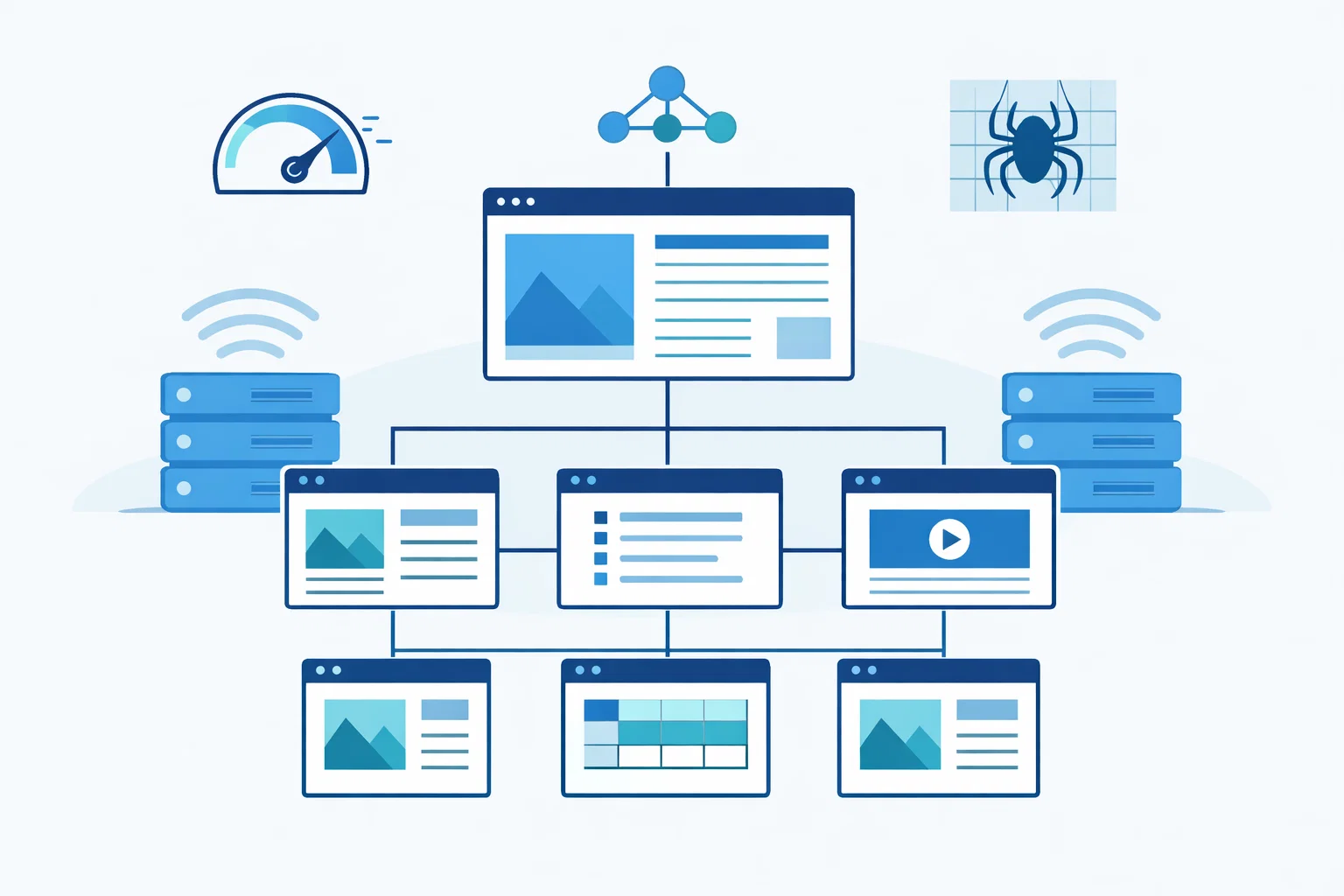
Technical infrastructure determines whether AI crawlers can access and process your content efficiently.
Structured Data Implementation
Schema.org markup (FAQ, Product, Organization, Article) provides a clear map of content structure and semantic meaning. While AI language models do not interpret schema in the same way as Google’s search algorithms, structured data enables Bing’s index to categorize a business and its services with higher precision – which, in turn, improves how generative AI systems contextualize and reference a website.
Implement FAQ schema for Q&A content, Product schema for service offerings, and Organization schema to establish your business entity. This structured approach reduces ambiguity and helps ChatGPT rely on your content with greater confidence when it matches user queries.
Site Speed Performance
Fast loading times ensure that GPTBot (OpenAI’s web crawler) and Bing’s crawler can efficiently access your pages without timeouts. Core Web Vitals matter not just for user experience but for AI indexing processes that may deprioritize slow sites.
Optimize images, leverage browser caching, and minimize render-blocking JavaScript. Technical issues that frustrate human visitors also impede AI crawlers, reducing your chances of appearing in ChatGPT search results. Monitor your site’s performance regularly and address speed bottlenecks as part of your broader technical SEO strategy.
Clear Header Architecture
A logical H1-H4 hierarchy helps ChatGPT determine the topical depth and organization of your page. Descriptive, keyword-rich headers (without unnecessary articles) signal what each section covers, allowing the AI to extract relevant information accurately.
Best practices for header structure that ChatGPT can parse effectively:
- Use H1 for main page topic (one per page)
- Employ H2 for major section divisions
- Apply H3 for subsections within H2 topics
- Reserve H4 for detailed breakdowns when needed
- Write descriptive titles instead of vague labels like “Introduction”
- Include relevant keywords naturally in headers
This clarity improves content parsing and increases the likelihood ChatGPT will pull the right passage when answering related questions.
Trust and Authority Signals

Beyond content quality, external validation shapes how ChatGPT evaluates your credibility.
Positive Third-Party Reviews
ChatGPT aggregates sentiment signals from platforms like Trustpilot, G2, and Google Business. A high volume of positive reviews functions as a consensus signal, indicating that real users trust your brand.
Encourage satisfied customers to leave reviews on relevant platforms. The AI interprets this external validation as evidence of reliability, making it more likely ChatGPT will recommend your business when users ask for service or product suggestions. Negative reviews or a lack of third-party mentions can reduce your authority in the AI’s assessment.
High-Quality Backlink Profile
Being linked by authoritative news outlets, academic institutions, or industry publications establishes your site as a primary source. These backlinks signal to both traditional search engines and AI models that your content merits citation.
Focus on digital PR rather than bulk link acquisition. A single mention in a major publication often carries more weight than dozens of low-quality directory links. Quality backlinks reinforce your position as an expert, increasing the higher chance that ChatGPT will reference your content when synthesizing answers.
Digital Footprint Consistency
Consistent NAP (Name, Address, Phone) data and brand messaging across the web reduces entity ambiguity. When ChatGPT encounters conflicting information about your business, it may avoid citing you to prevent providing inaccurate responses.
Critical elements to maintain consistency across platforms:
- Business name – identical formatting everywhere (including punctuation)
- Address – same format on all directories and listings
- Phone number – consistent presentation (with or without country code)
- Website URL – uniform across all citations
- Brand messaging – aligned core value propositions and descriptions
Audit your listings on directories, social platforms, and review sites. Ensure your brand name, contact information, and core messaging align everywhere. This consistency helps ChatGPT confidently identify and credit your website as the authoritative source for information about your business.
Search Logic Comparison
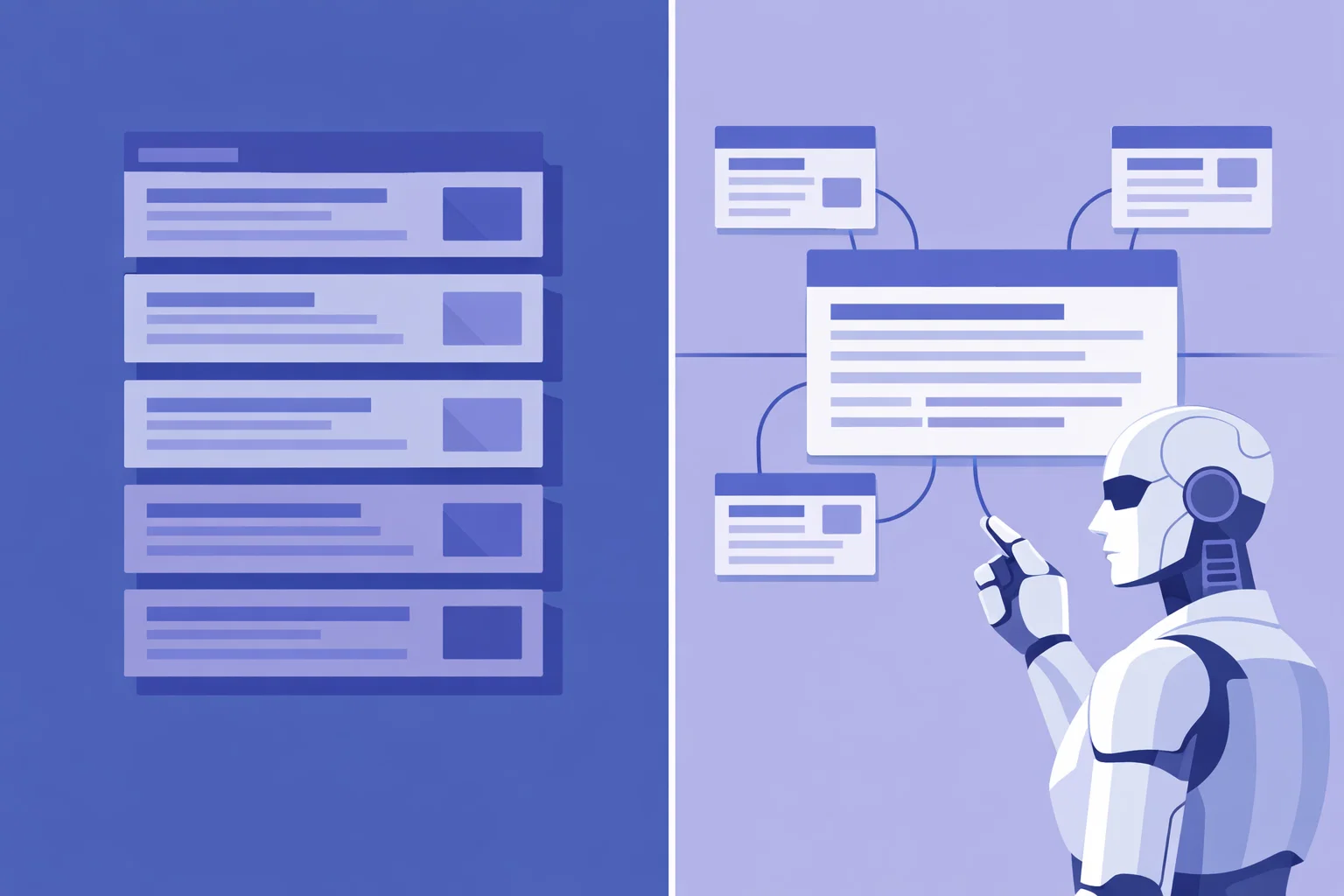
Understanding the differences between traditional and AI-driven search helps you optimize for both.
ChatGPT vs. Google Search
User behavior diverges significantly between Google and ChatGPT. On Google, people browse multiple links before making decisions. In ChatGPT, users receive synthesized answers and expect immediate, conversational guidance.
This shift changes how you structure calls to action. Instead of optimizing solely for click-through rates, create content that directly answers questions comprehensively. When ChatGPT provides your information within its response, your brand gains visibility even without a direct click. Position your expertise so that ChatGPT answers naturally lead users to want more from your site.
Bing Search Dependency
Since ChatGPT relies on Bing’s index, understanding Bing ranking factors becomes essential. Bing places more emphasis on social signals, exact-match domains, and precise meta descriptions compared to Google.
Optimize your meta descriptions to be clear and keyword-inclusive. Maintain active social media profiles that link back to your content. While Google remains the dominant search engine, neglecting Bing means limiting your potential visibility in ChatGPT and other AI search tools that use Bing’s data infrastructure.
User Decision Journey Impact
AI search affects the marketing funnel differently than traditional search engines. ChatGPT often enters the conversation during the consideration phase, when users compare options or seek recommendations rather than browsing initial research.
How to position content for the AI-driven decision journey:
- Address comparison questions directly with feature-by-feature analysis
- Provide detailed evaluations with pros and cons
- Offer clear differentiators that set your solution apart
- Include specific use cases showing when your product/service fits best
- Anticipate follow-up questions users typically ask during consideration
When users ask ChatGPT “What’s the best SEO agency for startups?” or “How does X compare to Y?” your brand should be present in that critical decision-making moment. Optimizing for this phase requires content that showcases authority and practical value concisely.
Final Thoughts
As search continues to evolve, understanding how to achieve visibility within AI-driven conversational platforms becomes as important as mastering Google or Bing optimization. Such systems matter because they represent a fundamental shift in how information is discovered and consumed. To ensure website visibility in this emerging landscape, it is necessary to produce relevant content, build an authoritative digital presence, and maintain a high standard of technical execution.
The strategies outlined here – from Bing indexing and entity building to content formatting and trust signals – collectively boost visibility across both traditional search engines and AI-powered tools. Whether users asked ChatGPT directly or found you through Google rankings, the goal remains the same: provide value, demonstrate expertise, and earn the trust that makes both algorithms and humans choose your content.
Start by auditing your current strategy or reaching out for expert SEO Consultancy to identify and fix gaps in AI optimization. Then systematically implement these tactics to boost your chances of being the source ChatGPT provided when users need answers in your industry.
ChatGPT Optimization FAQ
Listicles, comparison tables, and how-to guides perform exceptionally well because they’re easily parsed by AI models. ChatGPT can extract specific points from structured content and present them coherently to users.
Create content that answers questions in digestible formats. Step-by-step tutorials, feature comparisons, and curated resource lists help ChatGPT provide precise responses. These formats also tend to get cited more frequently since they offer clear, actionable information that directly addresses conversational queries.
Yes. A robust internal linking structure helps both traditional search engines and AI systems discover related content on your site. When ChatGPT follows your internal links, it gains a fuller understanding of your topical expertise.
Build topic clusters that demonstrate breadth of knowledge in your niche. Link related articles together logically, using descriptive anchor text that clarifies relationships between pages. This architecture signals authority across subject areas and increases the likelihood that ChatGPT will reference multiple pages from your domain when users ask complex, multi-faceted questions.
Start with these actionable steps: update old content with current data, fix technical crawl errors that prevent indexing, and actively work to increase brand mentions on external forums and industry platforms.
Comprehensive optimization checklist for better ChatGPT visibility:
- Update old content with current statistics and data
- Fix technical crawl errors in Bing Webmaster Tools
- Increase brand mentions on external forums and platforms
- Structure content for direct answers with front-loaded information
- Implement schema markup (FAQ, Product, Organization)
- Build high-quality backlinks from authoritative sources
- Maintain NAP consistency across all digital properties
- Optimize site speed and Core Web Vitals
- Create topic clusters with strategic internal linking
- Monitor and respond to third-party reviews
Additionally, need to optimize your content structure for direct answers and build relationships that lead to high-quality backlinks. Since ChatGPT continues to evolve, staying informed about changes to AI search behavior ensures your SEO and content strategies remain effective. Traditional SEO is great, but ranking algorithms in AI-driven search require additional attention to conversational intent and entity recognition.