


Artificial intelligence has fundamentally altered how digital marketers approach search engine optimization. Among the AI tools reshaping the digital landscape, ChatGPT stands out as a practical assistant for SEO professionals. This isn’t about replacing human expertise – it’s about amplification. When used strategically, ChatGPT can accelerate research, streamline content creation, and tackle technical tasks that traditionally consume hours of manual work.
This guide reveals five game-changing tactics to integrate ChatGPT into your SEO workflow without compromising content quality or search rankings. You’ll discover specific prompts, practical applications, and critical boundaries that separate smart AI usage from risky shortcuts.
What to Know Before Using ChatGPT for SEO
Understanding ChatGPT’s role in your SEO strategy begins with realistic expectations. As a large language model, ChatGPT excels at processing language patterns, generating variations, and structuring information. However, it cannot browse live websites, access proprietary tool data, or understand your brand’s unique voice without explicit guidance.
Google’s stance on AI-generated content centers on helpfulness, not origin. The search engine’s E-E-A-T framework (Experience, Expertise, Authoritativeness, Trustworthiness) evaluates content quality regardless of how it’s produced. Content must demonstrate genuine experience and expertise to rank well. Raw AI output rarely meets this standard.
Key principle: ChatGPT serves as an assistant that accelerates workflows, not an autopilot that produces publish-ready material. Human oversight remains non-negotiable. Every AI-generated draft requires fact-checking, editing, and the injection of insights that only human experience provides.
ChatGPT as Creative Tool, Not Strategist
ChatGPT functions best as a brainstorming partner and variation generator. Stuck on how to angle a blog post? Feed the tool your topic and ask for ten different perspectives. Need to overcome writer’s block? Request three opening paragraphs with distinct tones.
This creative assistance differs fundamentally from strategic decision-making. Full competitor analysis requires examining backlink profiles, traffic patterns, and positioning strategies – data ChatGPT cannot access. Budget allocation demands understanding ROI, resource constraints, and business priorities. Campaign strategy involves market timing, audience psychology, and competitive intelligence that extends beyond language processing capabilities.
Position ChatGPT as your creative collaborator for ideation and drafting. Reserve strategic decisions for human analysis.
Inject Personal Insights, Experiences, and Opinions
Google’s emphasis on experience isn’t arbitrary. Search engines have become sophisticated at detecting content that lacks firsthand knowledge. Generic AI output often reads smoothly but says nothing distinctive. It lacks the case studies, specific examples, and hard-won lessons that make content genuinely helpful.
The solution involves a two-step process:
- Generate foundation – Use ChatGPT to create structural drafts or outlines
- Add authenticity – Enhance that draft with your unique perspective, including specific campaign data, lessons from failures, client conversations, and original research
As part of your editing process, ask yourself: Could a competitor’s AI tool generate this exact content? If yes, you haven’t differentiated enough.
Limitations of ChatGPT for SEO
Transparency about weaknesses prevents costly mistakes. ChatGPT operates with three significant constraints that affect SEO applications.
First, the model occasionally generates plausible-sounding information that’s factually incorrect – a phenomenon called “hallucination.” When asked for statistics or specific examples, ChatGPT might invent convincing details. Always verify claims independently.
Second, training data has a cutoff date. ChatGPT cannot provide information about recent algorithm updates, current trends, or breaking industry news. For time-sensitive SEO decisions, supplement AI assistance with real-time research.
Third, ChatGPT lacks integration with professional SEO platforms. It cannot tell you keyword search volume, competition levels, or backlink metrics. It won’t crawl your website to identify technical issues. These tasks require specialized tools like SEMrush, Ahrefs, or Screaming Frog.
1. Use ChatGPT for Advanced Keyword Research
Keyword research traditionally involves hours of manual work – compiling lists, organizing themes, and analyzing intent patterns. ChatGPT accelerates this process significantly when combined with data from professional tools.
The key lies in moving beyond simple requests like “give me keywords for X.” Effective prompts provide context about your niche, specify the type of analysis needed, and request structured outputs that fit directly into your workflow.
Generate Seed Keyword Ideas for Niche
Starting broad helps establish topical authority. Rather than targeting isolated keywords, modern SEO requires covering interconnected topics comprehensively.
Example prompt: “Act as an SEO expert for sustainable fashion brands. Generate 20 seed keywords and organize them into 5 thematic buckets that represent major content pillars for the brand.”
The structured output provides immediate direction for content planning. You’ll receive grouped themes like:
- Eco-friendly materials
- Ethical manufacturing
- Circular fashion economy
- Sustainable styling tips
- Slow fashion movement
Take these seeds to your preferred keyword research tool to obtain search volume data and identify specific opportunities within each theme.
Cluster Topics and Keywords
Once you’ve exported keyword lists from platforms like SEMrush, organizing hundreds of terms becomes overwhelming. ChatGPT excels at pattern recognition and categorization.
Example prompt: “Cluster these keywords based on search intent. Group them into informational, commercial, transactional, and navigational categories: [paste keyword list]”
Alternatively, request topical clustering: “Analyze this keyword list and group related terms that could be addressed within the same comprehensive guide: [paste keywords]”
This clustering reveals content consolidation opportunities. Rather than creating thin pages targeting individual keywords, you can develop authoritative guides addressing entire topic clusters – an approach that aligns with how search engines evaluate topical authority.
Analyze Search Intent
Understanding what users actually want when they search determines content success. Misaligned intent causes high bounce rates and poor rankings, regardless of technical optimization.
Example prompt: “For the keyword ‘project management software,’ what is the likely primary search intent? Provide reasoning and suggest what type of content would best satisfy this query.”
ChatGPT’s analysis helps predict whether users seek:
- Product comparisons and reviews
- Step-by-step tutorials
- Basic definitions and explanations
- Direct purchasing opportunities
Run this analysis for your target keywords before creating briefs. Align content type with intent to maximize relevance.
Find Keywords for Target Audience
Long-tail queries and audience-specific questions often have lower competition but higher conversion potential. ChatGPT helps uncover these opportunities through persona-based prompting.
Example prompt: “What common questions does a small business owner have about local SEO? Provide 15 specific questions they might search for when trying to improve visibility in their geographic area.”
This approach surfaces conversational queries that keyword tools might miss. These questions often map directly to FAQ sections, blog topics, or guide chapters. Repeat this exercise for different audience segments to build comprehensive content libraries addressing specific needs at various stages of awareness.
2. Develop Content Outline and SEO Briefs
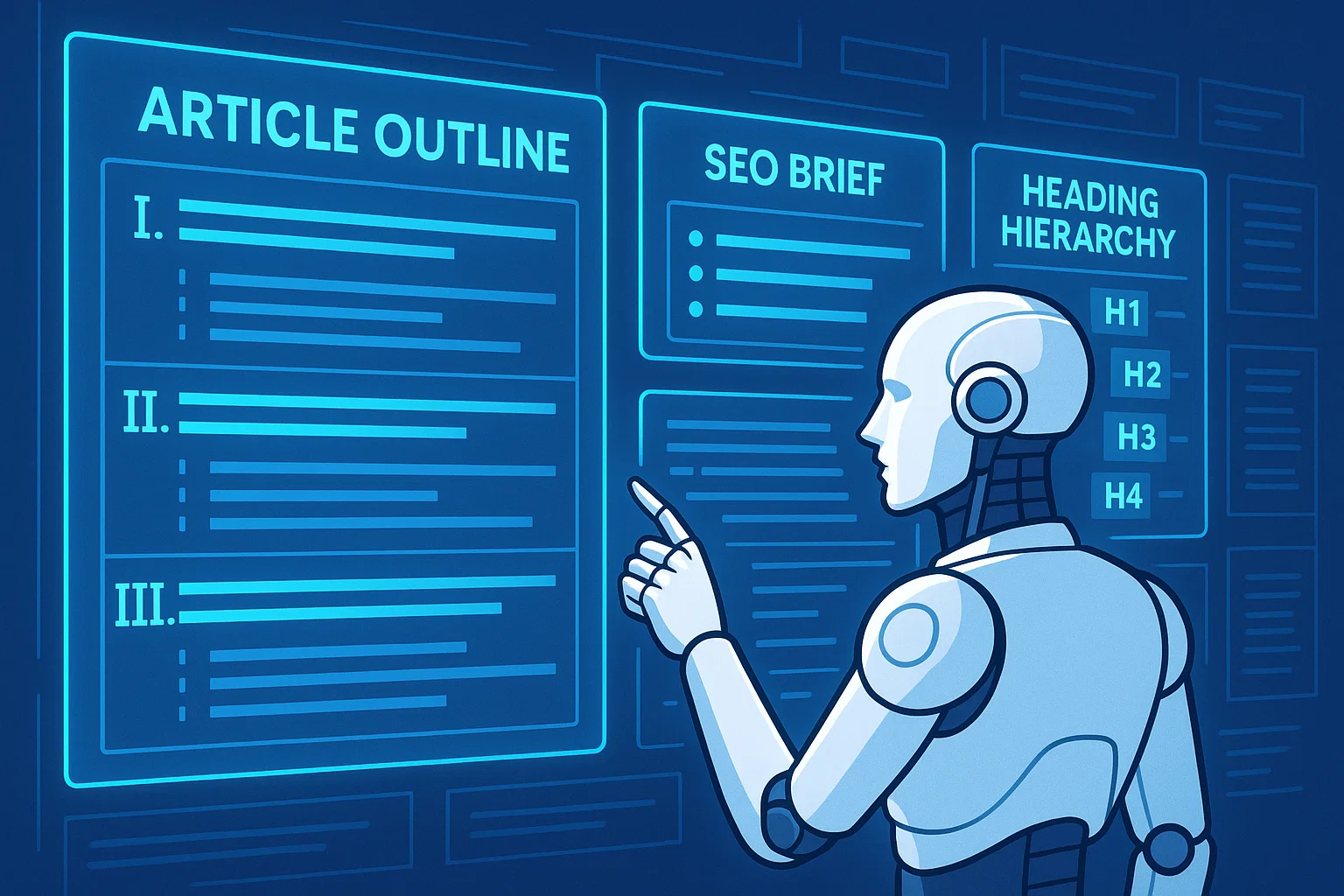
Creating thorough content outlines prevents scope creep, ensures comprehensive coverage, and helps writers deliver on-target drafts. ChatGPT transforms this multi-hour process into a task measured in minutes.
The goal extends beyond basic structure. Well-crafted outlines anticipate user questions, organize information logically, and identify gaps in competitor coverage – all elements that contribute to superior search performance.
Brainstorm Stand-Out Content from Competitors
ChatGPT cannot browse live websites, but you can paste competitor content for analysis. This workaround reveals opportunities for differentiation.
Example prompt: “Analyze this article outline from a top-ranking competitor [paste outline]. Identify 5 topics or user questions that this content doesn’t address but would add significant value for readers interested in this subject.”
The AI identifies gaps based on logical flow and comprehensive topic coverage. These missing elements become your competitive advantage – addressing questions competitors overlooked or covering subtopics they treated superficially.
What to look for in the analysis:
- Unanswered user questions in the topic area
- Missing how-to steps or implementation details
- Lack of beginner vs. advanced segmentation
- Absent troubleshooting or common mistake sections
- Missing real-world examples or case studies
This technique works particularly well when combined with “People Also Ask” boxes from search results, giving you both algorithmic and analytical perspectives on content gaps.
Create Article Outlines
Structured content performs better in search results. Proper heading hierarchy helps search engines understand content organization while improving readability for users.
Example prompt: “Create a comprehensive article outline for a blog post titled ‘Email Marketing Automation for E-commerce’ targeting the keyword ’email automation strategies.’ Include H2 sections and H3 subsections that address various aspects of implementation, best practices, and common challenges.”
Review the generated outline for logical flow and comprehensive coverage. Adjust sections based on your keyword research and search intent analysis. Add notes about specific examples or data points to include in each section.
This structured approach ensures writers cover topics thoroughly while maintaining focus on user needs and search intent.
Generate FAQs for Topic
FAQ sections serve multiple SEO purposes. They target featured snippet opportunities, address voice search queries, and provide quick answers that improve user experience.
Example prompt: “Generate a list of 10 frequently asked questions related to ‘content marketing strategy’ that would be suitable for an FAQ section. Focus on questions beginners and intermediate practitioners commonly ask.”
The output typically surfaces fundamental questions that longer-form content might not explicitly address. Format answers concisely – aim for 40-60 words per response to optimize for snippet extraction. Add these FAQs strategically throughout longer content or compile them in dedicated sections.
3. Craft Audience-Targeted On-Page Elements

On-page optimization involves numerous repetitive tasks – writing meta descriptions, formatting snippet-friendly content, and adjusting readability. These tasks consume disproportionate time relative to their complexity. ChatGPT handles them efficiently, freeing you for higher-level work.
The focus here shifts from creation to optimization and refinement. You’re not asking ChatGPT to write original content but to enhance existing material for specific technical purposes.
Write Meta Titles and Descriptions
Meta elements significantly impact click-through rates from search results. They require precision – compelling copy within strict character limits that incorporates target keywords naturally.
Example prompt: “Write 5 compelling meta titles (under 60 characters) and 3 meta descriptions (under 160 characters) for an article about ‘remote team collaboration tools’ targeting the keyword ‘best collaboration software.’ Emphasize practical benefits and include a clear value proposition.”
Generating multiple variations lets you test different angles:
| Angle | Focus Area |
| Cost savings | Budget-conscious buyers |
| Productivity gains | Efficiency-focused teams |
| Ease of implementation | Non-technical users |
| Feature comparison | Research-phase prospects |
Review each option for keyword inclusion, character count accuracy, and differentiation from competitors ranking for the same terms.
Optimize Content for Featured Snippets
Featured snippets occupy position zero in search results, driving significant traffic. They reward specific formatting – concise definitions, numbered steps, or comparison tables.
Example prompt: “Take the following paragraph about content marketing benefits and reformat it as a concise definition under 50 words suitable for a featured snippet: [paste paragraph]”
For process-oriented content, request list formatting: “Convert these instructions into a numbered list with brief explanations for each step, optimized for a featured snippet extraction.”
Not all content warrants snippet optimization, but for high-volume informational queries, this formatting significantly improves visibility chances.
Improve Content Quality and Readability
Even well-researched content sometimes suffers from dense prose, complex sentence structures, or inconsistent tone. ChatGPT functions as an editing assistant to address these issues.
Common editing prompts:
- “Edit this text for clarity and conciseness while maintaining all key information: [paste text]”
- “Simplify this complex paragraph to a 9th-grade reading level without oversimplifying the concepts: [paste text]”
- “Rewrite this paragraph to have a more authoritative yet approachable tone, similar to how an experienced consultant would explain this to a client: [paste text]”
These editing passes transform rough drafts into polished content. The key involves multiple targeted prompts rather than asking for complete rewrites, which helps maintain your original insights and examples.
4. Assist in Technical SEO Content
Technical SEO often requires creating code snippets, regular expressions, or structured data markup – tasks where human error commonly occurs. ChatGPT generates these elements quickly and, when prompted correctly, with good accuracy.
Critical caveat: Never deploy technical changes without validation. Test all code in staging environments and verify regular expressions before applying filters or redirects.
Generate Schema Markup
Structured data helps search engines understand content context, potentially earning rich results in search. However, hand-coding JSON-LD markup invites syntax errors.
Example prompts by schema type:
- FAQ Schema: “Generate JSON-LD schema markup for an FAQPage using the following questions and answers: [paste Q&A content]”
- Article Schema: “Generate ‘Article’ schema for this blog post including headline, author, date published, and image URL. Use these details: [paste metadata]”
- Local Business: “Create LocalBusiness schema including name, address, phone, hours, and aggregate rating using this information: [paste details]”
Always validate generated schema using Google’s Rich Results Test before implementation. This catches formatting errors that could prevent search engines from parsing your structured data correctly.
Create Regular Expression (Regex) Patterns
Regex patterns power advanced filtering in Google Search Console, Google Analytics, and various SEO tools. They’re powerful but notoriously difficult to construct correctly.
Example prompt: “Create a regex pattern for Google Search Console to match all URLs in my ‘/blog/’ subfolder but exclude any URLs containing ‘/blog/author/’ or ‘/blog/tag/'”
For redirect mapping: “Generate a regex pattern to match all URLs that end with ‘.html’ so I can identify pages needing redirects after a site migration.”
Test regex patterns using online validators before applying them to analytics filters or large-scale technical implementations. A flawed pattern might exclude critical data or include unintended URLs.
Build Crawl Directives for Robots.txt
Robots.txt files control crawler access to site sections. Proper directives prevent wasted crawl budget on low-value pages while ensuring important content remains accessible.
Example prompt: “Write a robots.txt rule to disallow all crawlers from my ‘/admin/’ directory while allowing access to everything else.”
For more nuanced control: “Create robots.txt directives that allow Googlebot to access ‘/resources/’ but disallow all other crawlers from that directory.”
Mistakes in robots.txt can accidentally block important pages from indexing. Always review generated directives with a technical SEO expert before uploading to your production server. Use Google Search Console’s robots.txt tester to verify intended behavior.
5. Support Off-Page SEO Efforts

Off-page SEO extends beyond your website to link building, content promotion, and digital PR. These activities often involve repetitive communication tasks – another area where ChatGPT provides leverage.
The focus here involves streamlining outreach and repurposing content for various promotion channels while maintaining personalization and authenticity.
Create Emails for Backlink Opportunities
Link building requires personalized outreach at scale. Generic templates get ignored, but customizing each message manually doesn’t scale. ChatGPT bridges this gap when provided with sufficient context.
Example prompt: “Draft a personalized outreach email for a broken link building campaign. My site [Your URL] has a comprehensive resource on ‘sustainable supply chain management’ that could replace a broken link I found on their logistics industry page. Make the tone helpful and professional, not promotional. Keep the email under 150 words.”
For guest posting: “Write an outreach email pitching a guest post contribution to a marketing blog. Propose three specific article ideas related to AI in content marketing. Reference a recent article they published about automation to demonstrate genuine familiarity with their content.”
Essential customization checklist:
- Recipient’s name and title
- Specific article or page reference
- Unique value proposition
- Genuine compliment about their work
- Clear, simple call-to-action
Customize key details before sending. The AI provides structure and professional language; you add personalization that drives responses.
Get Help with Content Promotion
Content marketing requires distributing material across multiple channels, each with distinct format requirements and audience expectations. ChatGPT accelerates this repurposing process.
Example prompt: “Take my blog post about email segmentation strategies [paste summary or key points] and create: 3 unique tweets (each under 280 characters), 1 LinkedIn post (professional tone, 150 words), and a 50-word summary for an email newsletter.”
For visual content ideas: “Based on this article about SEO trends, suggest 5 data visualization ideas that would work well as standalone social media posts. Focus on statistics or comparisons that would perform well visually.”
Each channel reaches different audience segments with varying levels of awareness. Repurposing extends content reach while respecting platform-specific norms for format and tone.
Key Takeaways: ChatGPT for SEO Done Right
Strategic AI integration amplifies SEO results without compromising quality or sustainability. Remember these essential principles:
- ChatGPT serves as an assistant, not a strategist – Use it for acceleration and ideation, but reserve strategic decisions for human analysis informed by data and experience
- Human review and E-E-A-T remain mandatory – Every AI-generated element requires fact-checking, editing, and enhancement with firsthand insights
- Verify all outputs independently – Don’t trust statistics, claims, or technical code without verification
- Combine AI with professional SEO tools – ChatGPT cannot replace platforms that provide search volume data, competition analysis, or technical audits
- Focus on augmentation, not automation – The goal involves doing better work faster, not eliminating human judgment
These boundaries separate sustainable AI-enhanced SEO from risky shortcuts that might generate short-term results but damage long-term organic performance.
FAQ About Using ChatGPT for SEO
Not entirely. ChatGPT works effectively for generating drafts, outlines, and variations that jumpstart the writing process. However, publishing unedited AI output risks creating generic content that lacks the experience and expertise Google rewards.
The optimal approach involves using ChatGPT for structural work and initial drafts, then systematically enhancing that foundation with unique insights, case studies, and firsthand experience. Always fact-check AI-generated claims and inject your distinctive perspective before publishing.
ChatGPT excels at specific keyword research tasks – generating seed ideas, clustering related terms, and analyzing search intent patterns. These capabilities accelerate the research process significantly.
However, ChatGPT cannot provide critical metrics like search volume, competition levels, or cost-per-click data. It also lacks real-time trend information or the ability to access proprietary keyword databases.
Effective keyword research requires combining ChatGPT’s analytical and organizational capabilities with data from professional platforms like SEMrush, Ahrefs, or Google Keyword Planner. Use ChatGPT to process and organize information, not as your sole research source.
Accuracy varies considerably. ChatGPT generates responses based on patterns in training data, which can lead to plausible-sounding but factually incorrect information. This “hallucination” phenomenon affects statistics, specific examples, and technical details particularly frequently.
Additionally, ChatGPT’s knowledge reflects its training data cutoff date. It cannot provide current information about recent algorithm updates, emerging trends, or breaking industry developments.
Always verify claims independently before including them in published content. Cross-reference statistics with original sources, test technical implementations in controlled environments, and supplement AI assistance with current research for time-sensitive topics. Treat ChatGPT as a starting point for investigation, not a definitive source of truth.