


Google Discover has evolved into one of the most sophisticated content distribution channels available to publishers and marketers. Unlike traditional organic search, where users actively query information, Discover operates as a query-less, AI-driven feed that anticipates user interests before they even articulate a search term. This fundamental difference makes optimizing for Google Discover both more challenging and potentially more rewarding than conventional SEO strategies.
As we move through 2026, understanding the ranking signals that determine visibility in this feed has become essential for anyone serious about driving traffic to their content. The algorithm has shifted toward real-time tracking, making it even more important to understand how to get your website indexed quickly.
This guide breaks down the core ranking factors, technical requirements, and strategic approaches that separate high-performing content from material that never surfaces in the feed.
Understanding Google Discover Mechanics and Core Functions

The foundation of Discover lies in Google’s Knowledge Graph and what the company internally refers to as the “Topic Layer.” These systems work together to map content entities – people, places, concepts, and events – to individual user interests with remarkable precision.
Google builds user interest profiles through multiple data streams: browser history, app activity, location patterns, and explicit topic preferences set within the Google app. When you follow a specific topic like “sustainable architecture” or “quantum computing,” the algorithm doesn’t just show you articles with those exact phrases. Instead, it identifies semantically related content that fits within your broader interest ecosystem.
The feed appears in several key locations: the Google app on iOS and Android devices, the mobile homepage at google.com, and integrated within Chrome mobile browsers. Each placement uses the same underlying algorithm, but user behavior varies slightly depending on the context in which they encounter the feed.
What makes this environment fundamentally different from organic search is the absence of query intent. Traditional SEO relies on matching content to specific search queries. Discover operates in reverse – it matches content to users who haven’t expressed explicit intent but whose behavior suggests they would find the material valuable.
Core Ranking Factors and Eligibility Requirements
Not all content qualifies for the Discover feed. Google maintains strict baseline requirements that function as gatekeepers to the system.
E-E-A-T: Experience, Expertise, Authoritativeness, Trust
The first “E” – Experience – has become increasingly critical in 2026. Google’s algorithm now heavily favors first-hand accounts and content from verified authors with demonstrable credentials. An article about “best practices for remote team management” written by someone who has actually managed distributed teams for years will outperform generic advice synthesized from other sources.
Implementing author bylines with structured data markup, maintaining consistent author profiles across your site, and linking to professional credentials creates the signals tell Google that your content comes from qualified sources. This isn’t just about avoiding penalties; content without clear authorship signals and professional writing and optimization often gets filtered out entirely, regardless of quality.
Technical SEO and Mobile Performance
Mobile-first indexing isn’t optional for Discover, so performing a comprehensive technical SEO audit is the only way to ensure your site is eligible. Pages that fail Core Web Vitals metrics, particularly Largest Contentful Paint (LCP) and Cumulative Layout Shift (CLS), frequently get disqualified from consideration regardless of content quality.
Your pages need to load in under 2.5 seconds on mobile networks, and the layout must remain stable as elements load. Even a brilliant article with perfect topical relevance won’t surface if users consistently experience poor page speed when Google tests your URLs.
Adherence to Google News Content Policies
Discover uses the same content policies as Google News, even for non-news content. Sexually explicit material, hateful or harassing language, and medical advice without extreme authority all trigger exclusions. The medical restriction has tightened considerably – general wellness content now requires demonstrated medical expertise that most lifestyle publishers simply can’t provide.
These aren’t just manual review issues. Google’s classifiers automatically scan content during the initial crawl, and failing this check means your content never enters the eligibility pool for the feed.
Visual Content Standards for High Visibility

Google Discover is fundamentally a visual medium. The algorithm prioritizes click-through rate above almost all other engagement metrics, and CTR in a mobile feed depends heavily on imagery.
High Quality Image Requirements
Images must be at least 1200 pixels wide to qualify for large card format in the feed. This isn’t a recommendation – it’s a technical requirement enforced at the algorithmic level. Content with smaller images can still appear, but only in the less prominent standard card format that generates significantly lower CTR.
Stock photography that appears across thousands of sites creates a unique problem. Google’s Vision AI can identify when an image lacks originality, and generic stock photos actively hurt your chances of prominence. Publishers seeing consistent Discover traffic invest in custom photography, original graphics, or at minimum, heavily edited stock images that create visual differentiation.
Max Image Preview Tag Implementation
The max-image-preview:large robots meta tag directly controls whether your content qualifies for large card format. Implementation is straightforward:
<meta name=”robots” content=”max-image-preview:large”>
This single line can double or triple your CTR by enabling the larger, more visually prominent card format. Yet many sites still overlook this basic technical requirement.
Video and Multimedia Integration
Embedding relevant video content, particularly YouTube Shorts or Web Stories, creates additional engagement signals that the algorithm interprets as content quality. When users watch embedded video within an article, the extended dwell time signals that the content delivered value beyond the headline promise.
This doesn’t mean forcing video into every article. The multimedia needs to genuinely enhance the content experience, or users will bounce, creating negative ranking signals.
Headline Optimization and Engagement Signals
The balance between creating curiosity and delivering value defines successful headline strategy for Discover. Analysis of top-performing content consistently shows headlines between 10-15 words outperform both shorter and longer alternatives.
Ideal Headline Length and Word Count
Headlines exceeding 15 words get truncated in the mobile feed, cutting off critical information and reducing CTR. Headlines under 10 words often lack the specificity or curiosity gap needed to compete with the dozens of other stories users scroll past.
The optimal range creates enough space to establish context, introduce a specific angle, and create the desire to learn more without overwhelming users with information.
Emotional Triggers and Sentiment Analysis
Content with strong emotional resonance – excitement, surprise, concern, or urgency – consistently outperforms neutral, informational headlines. This doesn’t mean resorting to clickbait that overpromises and underdelivers. Deceptive tactics trigger manual actions that can suppress your entire domain in the feed for months.
The distinction lies in authentic emotional value. A headline like “New Battery Technology Could Triple Electric Vehicle Range by 2027” creates excitement through genuine news value. A headline like “You Won’t Believe This New Battery Technology” relies on deception and will eventually trigger algorithmic penalties.
Question-Based Titles and Curiosity Gaps
Posing questions in headlines taps into natural human psychology around unanswered queries. “Why Are Enterprise Companies Abandoning Cloud Repatriation?” performs better than “Enterprise Companies Abandon Cloud Repatriation” because it creates a specific information gap the reader wants to fill.
The question format works particularly well when it challenges conventional assumptions or addresses emerging trends that haven’t yet reached mainstream awareness.
Content Strategy and Topical Authority

Google recognizes sites for specific topical expertise. A general news site and a specialized technology publication might both cover the same AI development, but the specialized site has higher probability of ranking for that content in users’ feeds because Google has established its topical authority in that domain.
Freshness and Topical Relevance
New content receives what industry observers call an “initial spike” – a 24-48 hour window where Google tests it with a broader audience than your typical reach. This testing phase determines whether the content breaks out to a larger audience or settles into a smaller niche distribution.
Capitalizing on trending topics through Google Trends and social listening gives you the opportunity to publish while interest is rising, maximizing your chances during that critical initial exposure window. However, trending content also faces more competition, creating a trade-off between potential reach and ranking difficulty.
Refreshing Evergreen Content
High-performing evergreen articles can get a “second life” in Discover through strategic updates. Changing the publication date, updating statistics and examples, and swapping the hero image all signal freshness to the algorithm.
This strategy works particularly well for content that addresses persistent user interests rather than time-sensitive news. A comprehensive guide to “email marketing automation workflows” remains relevant for years, and periodic updates can trigger new distribution cycles in the feed.
Niche Authority and Content Clusters
Building topical authority requires consistent publishing within defined subject areas. A site that publishes sporadically across dozens of unrelated topics will struggle to establish the domain-level expertise signals that Discover’s algorithm prioritizes.
Creating content clusters and producing high-quality long-form articles demonstrates the depth of knowledge that Google recognizes and rewards. This strategy benefits both traditional organic search and Discover visibility.
Advanced Distribution Tactics and External Signals
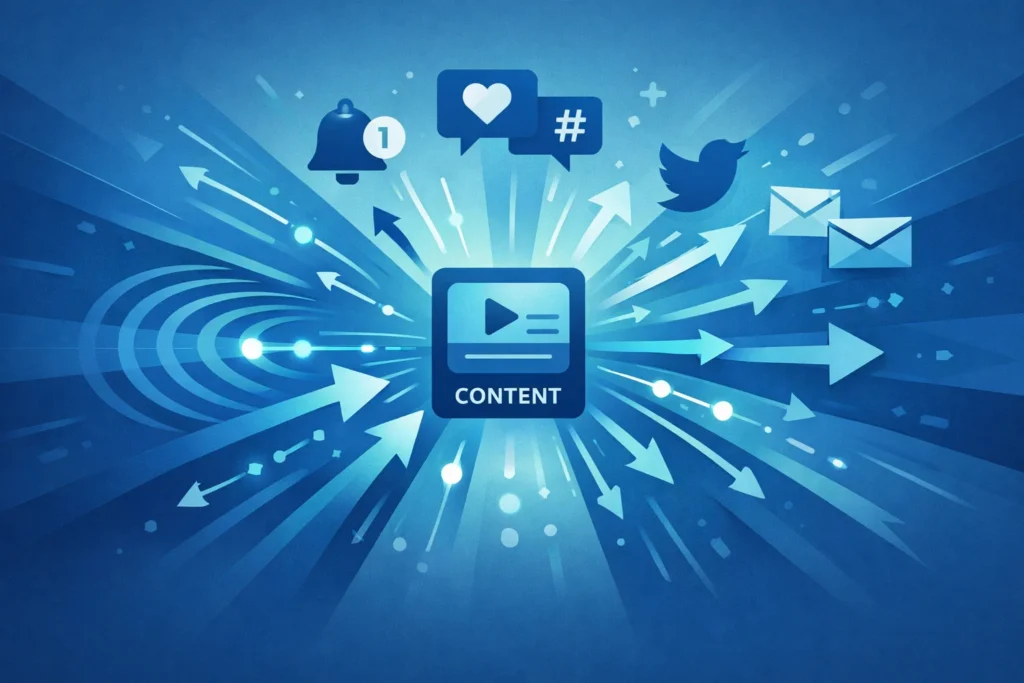
Discover doesn’t exist in isolation from other traffic sources and engagement signals. External factors often kickstart the algorithm into expanding your content’s reach beyond its initial test audience.
Hybrid Push Notifications
Some publishers use web push notifications to create immediate traffic surges that signal trending status to Google. When hundreds or thousands of users click through from a push notification within minutes of publication, the algorithm interprets this as strong user interest that merits broader distribution.
This tactic requires an existing subscriber base willing to grant push notification permissions, limiting its applicability to established publishers. However, for those with the infrastructure, it creates a reliable method to boost new content into broader distribution.
Social Media Correlation and Shares
While Google officially states social signals aren’t direct factors, the correlation between high Twitter/X or Facebook engagement and Discover visibility remains strong. The likely explanation is that social engagement serves as a proxy for genuine user interest – content that resonates enough for people to share it publicly demonstrates quality that the algorithm wants to surface.
This doesn’t mean buying fake social engagement creates ranking benefits. The algorithm appears sophisticated enough to distinguish between authentic viral sharing and artificial manipulation.
Newsletter and Community Building
Direct traffic from email newsletters creates positive ranking signals by demonstrating audience loyalty and trust. When users consistently click through from your newsletter to read new content, it tells Google your domain produces material that people actively seek out rather than just consuming when it appears in their feed.
Building an email list provides both a direct distribution channel independent of algorithmic changes and a way to send quality signals back to Google that improve your Discover performance.
Future Trends: SEO in 2026
The convergence of generative AI and traditional search continues reshaping how content gets discovered and consumed.
AI Developments Impacting Content Discovery
Google’s Gemini models now generate preview summaries of some Discover content before users click through. This “pre-click” summary helps users decide whether the full article merits their time, but it also means you need to optimize for these AI-generated excerpts.
Structuring your content with clear topic sentences, well-defined sections, and concise explanations makes it easier for AI systems to extract accurate summaries that represent your content well. Misleading or clickbait headlines create a mismatch between the summary and the actual content that users notice and penalize through low CTR.
Local AEO Best Practices
Local businesses increasingly appear in Discover through location-based triggers. A restaurant opening, local event, or community development story can surface for users in the geographic area even if they haven’t explicitly followed local news.
Optimizing for these opportunities requires accurate location markup, locally relevant content that addresses community interests, and consistency across your Google Business Profile and website content.
Generative Search and Discover Integration
The Search Generative Experience (SGE) and Discover are beginning to merge, with the feed becoming more conversational and personalized. Future iterations may allow users to refine their feed through natural language preferences rather than just following topics.
This evolution means content that answers specific questions clearly and directly will gain advantage over purely informative or news-focused material.
Performance Analysis and Measurement
Google Search Console provides the primary tool for analyzing Discover performance, but interpreting the data requires understanding what the metrics actually indicate.
Search Console Performance Reports
The Discover tab in GSC shows impressions (how many times your content appeared in feeds) and clicks (how many users actually engaged). The relationship between these numbers reveals whether your content suffers from distribution or engagement problems.
High impressions with low clicks indicate the algorithm is testing your content with users, but your headlines or images aren’t compelling enough to drive engagement. Low impressions suggest your content isn’t qualifying for broad distribution in the first place.
Analyzing Top-Performing URLs
Create a systematic audit of your winning content. What headline length did they use? What visual style performed best? Which topics generated the most sustained traffic versus quick spikes?
This analysis reveals patterns you can replicate. If your data shows that question-based headlines consistently outperform declarative statements for your audience, that becomes a template for future content.
Strategic Adjustments Based on Data
When CTR is high but impressions remain low, you’ve likely chosen a topic that’s too niche. The content quality is there, but the audience size can’t support high volume. Either expand to broader related topics or accept the smaller audience.
When impressions are high but CTR is low, you have an immediate problem requiring revision. Update the headline to be more compelling, swap the hero image for something more visually striking, or both. These elements can be changed without altering the publication date, giving you the chance to improve performance on already-distributed content.
Final Recommendations for Maximum Reach
Success in Google Discover requires technical precision, content quality, and strategic promotion working together.
Before publishing any content intended for the feed, verify these critical elements:
- Image dimensions meet the 1200px minimum width requirement
- Max-image-preview:large robots tag is properly implemented
- Headline creates emotional engagement without deceptive clickbait
- Page loads in under 2.5 seconds on mobile devices
- Author credentials are clearly displayed with structured data
- Content includes first-hand experience or expert insights
- Topic aligns with established site authority areas
Manual actions for “engagement bait” – explicitly asking for likes, shares, or follows within Discover content – have increased significantly in 2026. While the algorithm rewards genuine engagement, attempting to artificially generate it through direct requests can result in long-term suppression of your entire domain in the feed.
Focus on creating genuinely valuable content that serves user interests, optimize the technical elements that make content eligible for distribution, and build external signals through legitimate audience development. This combination remains the most reliable path to sustained Discover traffic as the algorithm continues evolving.