

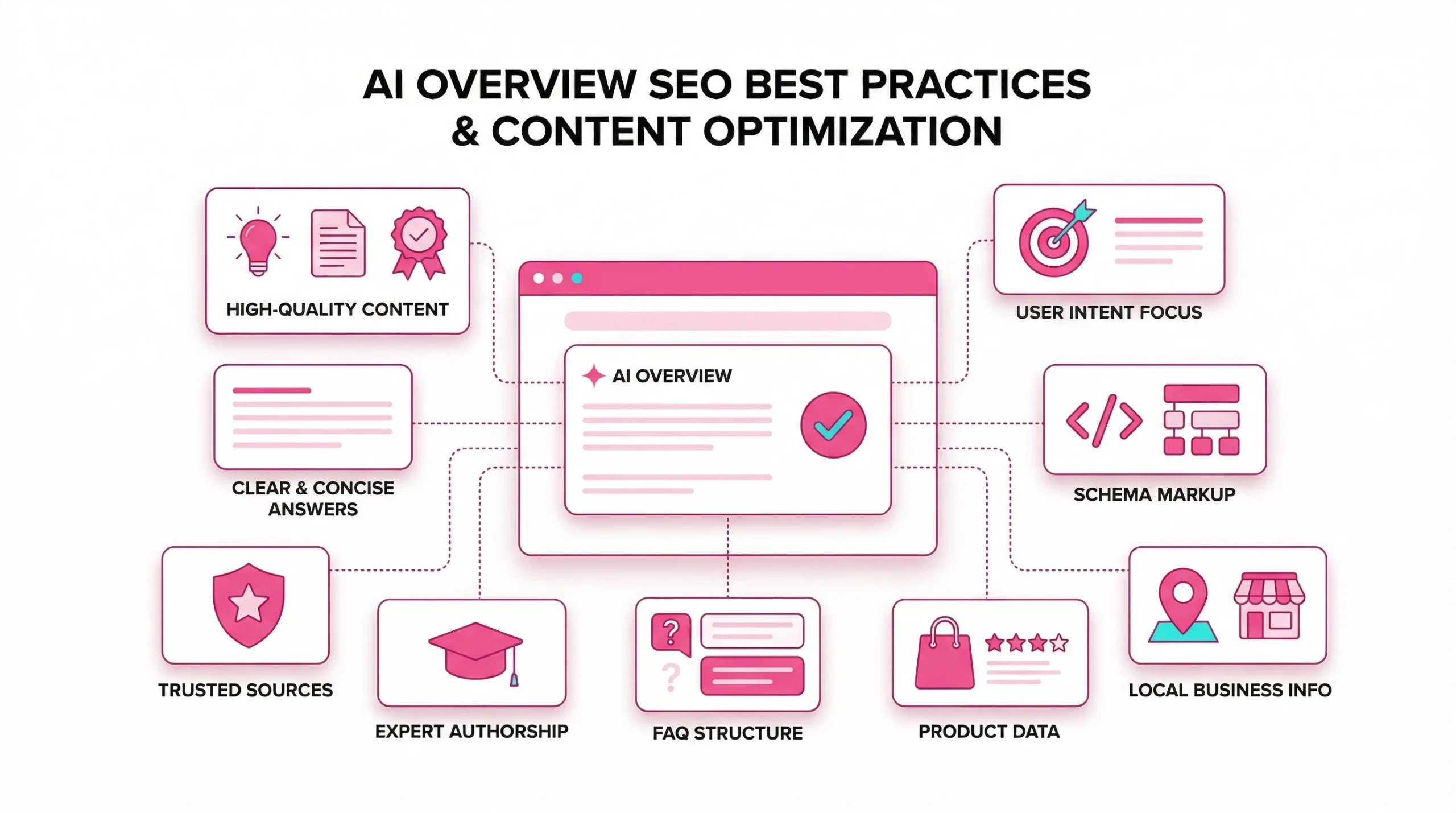
What are Google AI Overviews and How They Work?
Google’s AI Overviews represent one of the most consequential shifts in how a search engine presents results. Appearing at the very top of search results, these summaries pull from multiple authoritative sources to answer queries before users even see a standard listing. For businesses and content creators, understanding this search feature is no longer optional.
Role of Generative AI in Modern Search Results
Generative AI now sits at the center of how Google processes user intent. Rather than simply ranking individual URLs, Google’s systems synthesize content from across the web into a single, readable answer. This creates a new challenge: your page may contribute to an answer without ever receiving a click.
Key capabilities that power AI overviews include:
- Natural language interpretation of complex, multi-part search queries
- Cross-referencing multiple sources to verify factual claims
- Contextual relevance scoring that weights freshness and authority
- Dynamic updates as new, more accurate content is published
How to Help AI Understand Your Page Content
Making your content easier for AI to parse starts with deliberate structure. Clear headings, inline definitions, and logically ordered sections allow AI systems to locate and extract relevant passages. Schema markup further reinforces meaning for search engine crawlers.
Steps to improve AI readability:
- Use descriptive subheadings that stand alone as direct answers
- Write concise opening paragraphs that summarize each section
- Define technical terms inline to reduce ambiguity
- Keep each paragraph focused on a single idea
Key Differences Between Traditional SEO and AI Summaries
Traditional search engine optimization prioritized getting a page to rank at the top of organic search results. AI-driven search introduces a layer above that, where content may be synthesized and attributed without generating a direct click. The distinctions matter for how you plan and measure your efforts.
| Factor | Traditional SEO | AI Overview SEO |
| Primary goal | Rank on page one | Earn citation in the summary |
| Traffic model | Click-through based | Visibility without guaranteed visits |
| Content format | Keyword-optimized pages | Answer-structured, citable writing |
| Authority signals | Backlinks and domain strength | E-E-A-T and factual precision |
| User behavior | User visits the full page | User reads summary, may click for more |
Why You Must Optimize for AI Overviews in 2026
The rise of AI overviews is reshaping competitive rankings. Ignoring this shift places your business at risk even when traditional organic search results still show your pages. Businesses must adapt their SEO approach to protect and grow visibility.
Impact on Organic Traffic and Traditional SEO Success
Early data suggests that the impact of AI overviews on traffic varies significantly by query type. Pages cited as sources gain credibility signals, while pages below the AI block see reduced clickthrough rates. The overall effect depends on several variables:
- Whether your content is directly attributed in the summary
- The nature of the query — informational queries are most affected
- The competitiveness of your category and topic
- How frequently Google refreshes its source selection
Influence on User Experience and Clickthrough Rates
Users now receive synthesized answers before reaching a single organic link. For informational queries, this compresses the journey significantly. Your content must either appear in the AI block or deliver clear additional value that earns a deliberate click.
Brands that invest in depth and credibility are better positioned to convert readers who want more than a brief summary can provide.
New Opportunities for AI Visibility in eCommerce
For eCommerce businesses, AI overviews create a fresh surface for product discovery. Comparison and “best of” queries increasingly surface structured summaries referencing specific products or categories. This makes structured data and authoritative product content more commercially valuable than before.
7 SEO Strategies to Rank in AI Overviews
Consistent inclusion in AI overviews requires combining content quality, technical precision, and deliberate topic planning. The following practices reflect how AI overviews work and what signals Google’s systems consistently favor.
1. Target Specific Conversational and Question-Based Queries
AI overviews often appear in response to conversational, question-based search queries. Phrases beginning with “how,” “what,” “why,” and “which” are common triggers. Structuring your content around these formats makes it easier for AI to identify your page as a direct, relevant answer.
- Research long-tail question variations for each core topic
- Use FAQ sections that mirror real, natural language search queries
- Map each question to a specific stage of the buyer or reader journey
2. Focus on Topic Clusters for Better AI Search Rankings
Search engines increasingly reward topical depth over isolated keyword targeting. Building interconnected content clusters signals that your site covers a subject comprehensively. This approach helps AI systems understand your domain’s breadth and authority.
A well-built topic cluster includes:
- One detailed pillar page on the core subject
- Supporting articles addressing specific sub-topics in depth
- Internal linking that connects related content naturally
- Scheduled updates that reflect developments in the field
3. Prioritize E-E-A-T to Get Cited in AI Overviews
Experience, Expertise, Authoritativeness, and Trustworthiness remain the foundation of how Google evaluates source quality. AI overviews often favor sources demonstrating genuine expertise through author credentials, original research, and transparent sourcing practices.
Ways to strengthen E-E-A-T signals:
- Display author bios with verifiable, relevant credentials
- Cite primary sources and link to reputable external research
- Update content regularly to maintain factual accuracy
- Include original data, case studies, or documented first-hand experience
4. Implement Structured Data to Help AI Process Data
Structured data delivered through schema markup gives AI systems explicit context about your content’s purpose and meaning. Pages with proper schema implementation are easier for search engine crawlers to interpret, attribute, and summarize accurately.
Relevant schema types for better AI visibility:
| Schema Type | Use Case |
| FAQ | Question-and-answer pages |
| HowTo | Step-by-step instructional content |
| Article | News, blog posts, editorial content |
| Product | eCommerce listings |
| Review | User or expert evaluations |
5. Optimize Your Content Structure for Scannability
Well-structured content benefits both readers and AI parsing systems. Clear headings, short paragraphs, and bullet points allow AI to extract key information quickly. This approach helps AI systems locate citable passages rather than bypassing your page.
Content structure checklist:
- Lead each section with the main point, not the supporting context
- Write subheadings that answer a question independently
- Keep paragraphs under 100 words for easier scanning
- Avoid conclusions buried deep inside long, unbroken text blocks
6. Enhance Multimedia Elements for Better AI Visibility
Images, videos, and infographics with accurate alt text and descriptive captions reinforce your content’s meaning. AI systems increasingly interpret multimedia as a quality signal, indicating that content is complete and well-produced.
- Write precise, descriptive alt text for every image used
- Include transcripts for video and audio content
- Use captions that add context rather than repeat visual descriptions
- Compress media files to support fast loading and efficient crawling
7. Maintain an Always-On SEO Strategy for AI Overviews
Maintaining visibility in search results over time requires treating your SEO work as a continuous discipline rather than a campaign. Google updates source selection frequently, based on freshness, accuracy, and relevance shifts. Monitor your appearance in AI overviews through Google Search Console, and schedule regular content audits to identify outdated material.
Technical SEO Best Practices for AI Crawling
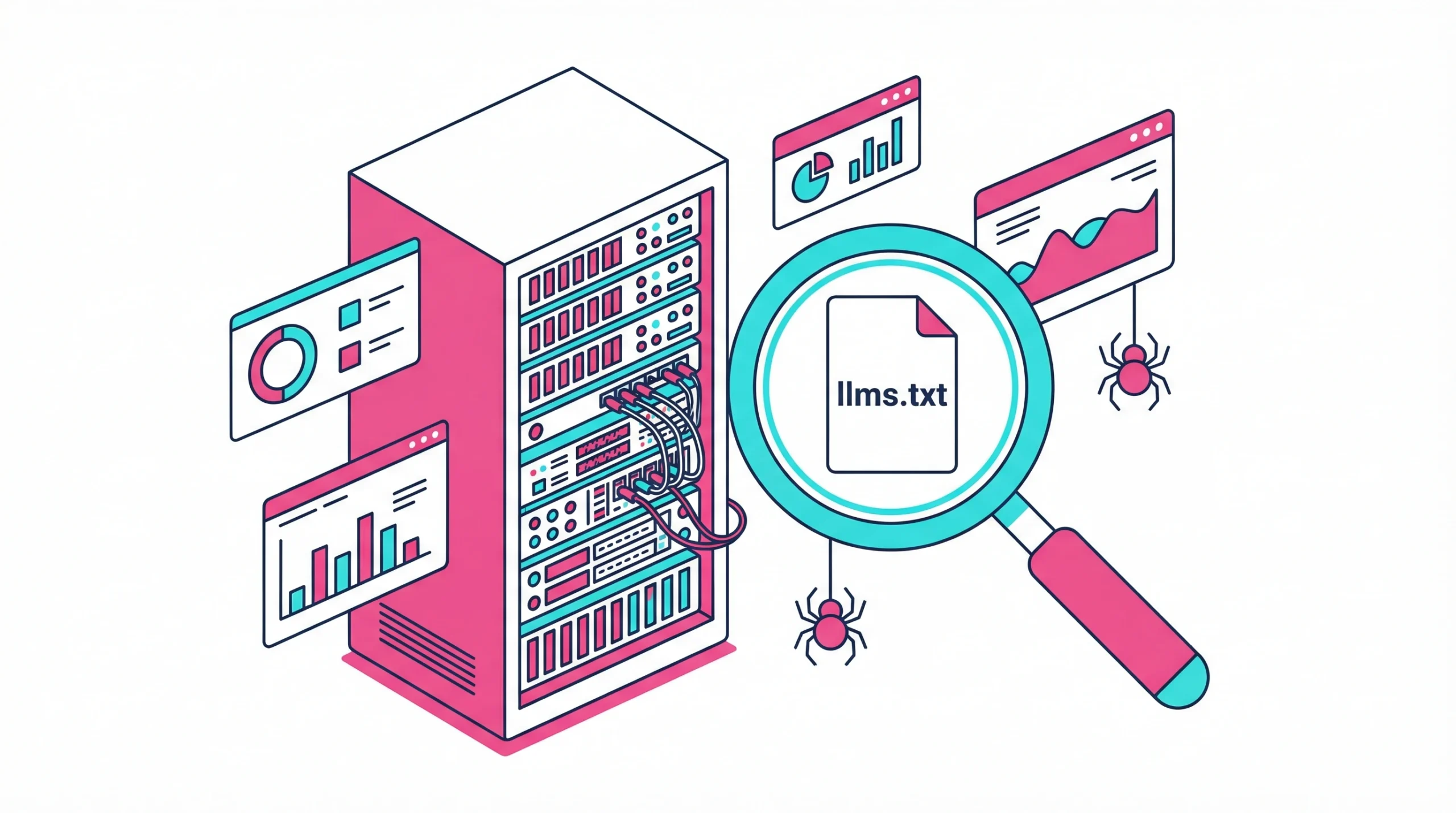
Strong technical foundations are a prerequisite for AI inclusion. Even well-written, authoritative content can be overlooked when technical errors block proper indexing and crawling.
Ensure Proper Indexing to Improve AI SEO Performance
Verify that your most valuable pages are correctly indexed using Google Search Console. Crawl errors, unintentional noindex tags, and slow page load times can all reduce eligibility for AI citation.
Technical priorities for indexing:
- Submit updated XML sitemaps on a regular schedule
- Monitor Core Web Vitals scores and address regressions
- Resolve crawl errors and redirect chains promptly
- Confirm mobile-first compatibility across all key templates
Use llms.txt Files for Modern AI Search Discoverability
A newer dimension of technical optimization for AI involves the llms.txt file standard. Functioning similarly to robots.txt, this file communicates to AI systems which portions of your site are available for indexing and summarization. Early adoption can provide a meaningful edge as AI-driven search continues to mature across multiple platforms.
Fix Technical Errors That Limit Content for AI Overviews
Broken internal links, duplicate content, and slow server response times each reduce the likelihood of content being featured in AI overviews. A thorough technical audit should cover redirect chains, canonical tag implementation, and page speed benchmarks at minimum.
Essential Content Strategies for Generative Engine Optimization
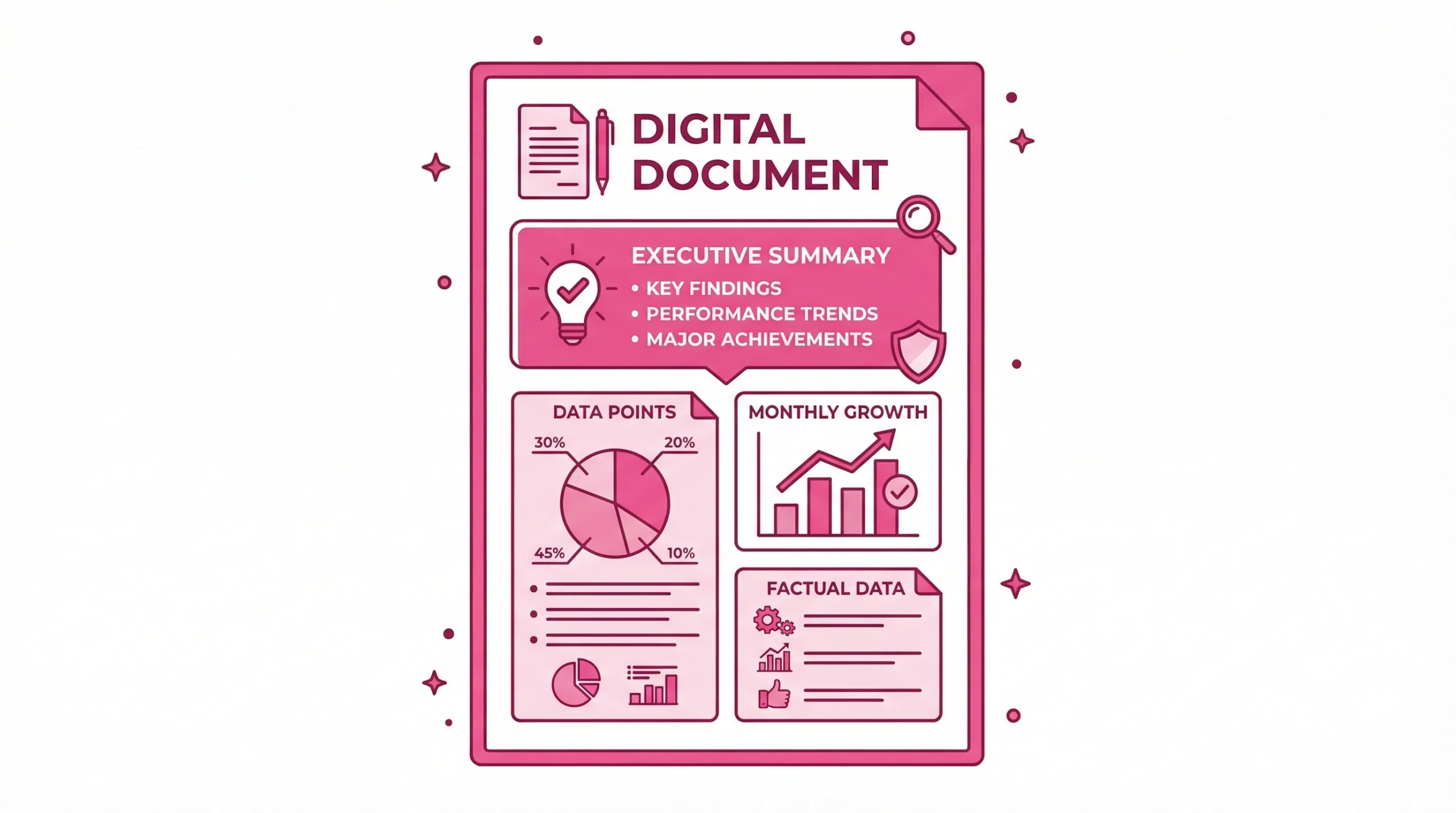
Beyond technical SEO, the way content is written and structured plays an equally important role in how it performs across AI-driven environments.
Lead with Summary-First Answer-Oriented Introductions
AI overviews often pull from the opening paragraphs of a page, specifically those that address the query directly. Writing summary-first introductions, where the core answer appears within the first two or three sentences, increases the probability of selection. This mirrors the inverted pyramid used in journalism: most important information first, supporting context below.
Why High-Quality Content Needs Freshness and Fact Accuracy
Outdated or inaccurate content is less likely to appear in AI summaries. According to Google’s Search Quality Evaluator Guidelines, accuracy and freshness are core signals used to assess page quality. A consistent refresh schedule keeps your content competitive.
Content freshness priorities:
- Update statistics and data references at least once per year
- Display a visible “last updated” date on revised pages
- Remove or redirect pages with permanently outdated information
- Expand thin content with new insights as topics develop
Using Simple Language and Visual Reinforcement for AI Systems
Jargon-heavy content is harder for AI systems to summarize accurately. Writing in plain, accessible language improves comprehension for both users and AI systems. Supporting content with diagrams, comparison tables, and step-by-step visuals also increases completeness signals that influence citation frequency.
Google’s structured data documentation confirms that clearly marked, semantically rich content consistently performs better in AI-driven results environments.
The Future of Your SEO Strategy for AI Overviews

The evolving search landscape demands a long-term perspective. Short-term tactics may produce brief visibility gains, but durable presence in AI overviews requires consistent quality and trust-building over time.
Balancing AI Visibility with Traditional Search Tactics
Optimizing exclusively for AI overviews at the expense of traditional organic search results would be a strategic error. Many of the practices that improve AI visibility — strong E-E-A-T signals, clean structure, and technical health — simultaneously support standard ranking performance. A balanced approach protects against volatility on either surface.
Trends in AI-Powered Search and Answer Engines
Beyond Google, platforms including Perplexity, Microsoft Copilot, and other answer engines are building their own summarization capabilities. Content that earns citation in Google’s AI overviews tends to perform similarly on competing platforms, reflecting shared underlying quality signals.
The key trends shaping the next phase of AI search include:
- Multimodal search that interprets images, video, and voice queries
- Personalized AI summaries adapted to individual user history
- Increased attribution transparency showing which sources were cited
- Expansion of AI summaries into more transactional query types
Long-Term Outlook for AI SEO Success
The long-term advantage belongs to content creators who prioritize genuine expertise and clear communication above algorithmic manipulation. As AI systems grow more sophisticated, they are increasingly able to distinguish between surface-level optimization and content reflecting real experience and original insight.
Brands treating content as a long-term asset — rather than a short-term traffic tool — are best positioned to maintain visibility as the search landscape continues to shift.
Frequently Asked Questions about AI Overviews and SEO
AI overviews can reduce clickthrough rates for informational queries where users find a sufficient answer in the summary itself, but transactional and navigational queries tend to retain stronger clickthrough performance, meaning the actual impact on traffic varies considerably by industry, content type, and the specific intent behind each query.
The primary concerns involve attribution, compensation for original publishers, and factual accuracy in synthesized summaries, with ongoing legal debate in many jurisdictions about whether AI-generated summaries constitute fair use, making transparency about sourcing and proper citation practices the most widely supported path forward for both platforms and publishers.
Optimizing for AI recognition involves writing clear, well-structured content that directly answers user questions, building strong E-E-A-T signals through verified credentials and reputable sourcing, implementing schema markup across key page types, ensuring your technical foundation is sound, and maintaining a consistent schedule for updating facts and statistics to reflect current knowledge.
The factors that most consistently influence citation include content relevance to the specific query, the overall authority and trustworthiness of your domain, the clarity and scannability of your content structure, the presence and accuracy of structured data markup, and the recency and factual correctness of the information you publish — pages scoring well across all of these dimensions are statistically more likely to earn citation in AI-generated responses.