


The digital landscape is shifting beneath our feet. Traditional search engines are giving way to AI-powered answer engines that don’t just list links – they synthesize information and provide direct answers. Perplexity AI represents this evolution, and understanding how to rank on Perplexity means adapting your entire approach to content creation and optimization.
Definition of Perplexity AI and Impact on Search

Perplexity AI is an AI-powered answer engine built on large language models that fundamentally changes how users interact with information. Unlike traditional search engines that return pages of blue links, Perplexity processes user queries and delivers synthesized answers with citations, creating a conversational experience that feels more like consulting an expert than scanning through search results.
Key differences from conventional search include:
- Direct answers instead of link lists
- Real-time web indexing for current information
- Citations to multiple authoritative sources
- Conversational query understanding
- Synthesis across multiple viewpoints
Evolution from Keyword Matching to Answer Engines
The transition from traditional search engines like Google to answer engines represents a seismic shift in information retrieval, highlighting the growing gap between ai search vs traditional search optimization strategies. Traditional search relied heavily on keyword matching, backlinks, and domain authority to rank pages. You searched for “best running shoes,” and you got ten blue links pointing to various websites – each competing for your click.
Answer engines like Perplexity operate differently. They use large language models to understand the intent behind your search queries, synthesize information from multiple trusted sources, and present a coherent answer directly on the platform. Conversational queries like “what makes a good running shoe for flat feet in wet conditions” better represent actual user intent than the keyword-stuffed phrases of the past.
Importance of Generative Engine Optimization (GEO)
Generative Engine Optimization marks the frontier of digital marketing strategy. While traditional SEO focused on ranking for keywords and earning backlinks, GEO prioritizes becoming the source that AI platforms reference when generating answers.
Perplexity AI prioritizes real-time web indexing and pulls from the most authoritative, fresh, and relevant sources available. Being cited in a Perplexity response isn’t just about traffic – it’s about establishing your brand as the definitive voice in your domain. When an AI-powered answer engine recognizes your content as trustworthy enough to cite, it signals to users and AI models alike that you’re a credible authority.
Why Perplexity Matters for SEO and GEO Strategy
Understanding why Perplexity requires a different approach than traditional SEO reveals opportunities that forward-thinking marketers are already capitalizing on by using specific LLM SEO tips to stay ahead.
Capturing High-Intent User Traffic
Perplexity attracts a distinct demographic – tech-savvy professionals, researchers, and decision-makers who value efficiency and accuracy. These users don’t want to sift through ten competing blog posts. They want the answer, backed by credible sources, delivered immediately.
Benefits of ranking on Perplexity:
- Reaching decision-makers: Users often have purchasing authority or influence
- Shorter conversion paths: Synthesized format means users arrive with clearer understanding
- Quality over quantity: Fewer but more qualified leads compared to broad search traffic
- Higher engagement rates: Users from answer engines demonstrate stronger intent signals
Influence of Citations on Brand Authority
When Perplexity references your content, it functions as an endorsement from an AI trusted by millions. Citations in AI-generated answers carry implicit authority. Users trust that the AI has evaluated multiple sources and selected yours based on accuracy and relevance. This creates a perception cascade where your reputation as a thought leader strengthens with each citation, leading to improved performance across all marketing channels.
Key Ranking Factors for Perplexity AI Visibility

The ranking system that determines which sources Perplexity uses differs from traditional search engine algorithms. Understanding these factors helps you optimize specifically for AI consumption.
Critical ranking factors include:
- Content freshness: Perplexity favors recently updated information
- Source authority: Consensus across multiple high-authority domains
- Semantic relevance: Natural language that mirrors conversational queries
- Structured data: Schema markup for faster AI parsing
- Citation patterns: References to other authoritative sources
- Technical health: HTTPS, fast loading, mobile optimization
Priority of Content Freshness and Regular Updates
Perplexity favors content that reflects the current state of knowledge. The platform’s “Pro” search actively crawls the live web, seeking the most recent information available. Content published months ago, even if well-written, loses visibility as newer sources emerge.
Update frequency should match your niche: news-driven content requires daily or weekly updates, while evergreen topics benefit from quarterly refreshes with new statistics and insights. Ensure publication and update dates are clearly marked to signal active maintenance.
Authority and Trustworthiness through Credible References
Unlike traditional search engines that heavily weight backlinks, Perplexity and other AI platforms assess authority through consensus. The platform looks for alignment across multiple high-authority domains before citing a claim as fact.
The E-E-A-T framework becomes critical. Perplexity recognizes patterns of authority – if ten credible sources align on a particular insight and yours is among them, your content becomes more likely to be cited.
Semantic Relevance and Natural Language Processing
The shift from keyword optimization to entity-based understanding changes how you should structure content. Perplexity uses natural language processing to identify concepts, relationships, and context rather than matching exact keyword phrases.
Write for entities, not just keywords. Explain ideas in their full context, mirror how people actually speak, and include semantically related terms that strengthen topical authority. This makes content easier for Perplexity to parse, understand, and ultimately cite.
Proven Tactics to Rank Higher in 2026
Practical implementation separates successful Perplexity optimization from theoretical understanding. These tactics represent current best practices for improving visibility on AI platforms.
Implementation of Schema Markup for AI Data Extraction
Structured data helps AI models understand your content’s organization and extract relevant information efficiently. JSON-LD schema provides a standardized format that large language models can parse quickly.
Essential schema types:
- Article schema: Defines headline, author, publication date
- FAQ schema: Explicitly marks question-answer pairs
- Product schema: Enables AI to understand specifications and pricing
- Organization schema: Establishes brand identity and credentials
Schema helps Perplexity AI by enabling faster parsing, accurate attribution, enhanced relevance, and improved citations.
Strategic Content Refreshes to Prevent Decay
Content decay represents one of the most significant threats to AI visibility. Implement a systematic refresh process: audit existing content, update statistics, add new insights, expand depth, and re-submit to search consoles to trigger a re-crawl. This signals to Perplexity and similar AI tools that your content remains current and authoritative.
Maximizing Early Impressions and Click-Through Rates
While Perplexity delivers synthesized answers, it also provides citations linking to source material. Compelling headlines and meta descriptions still drive traffic from citation blocks. Optimize with clear value propositions, specific numbers, question-based headlines, and concise summaries.
High-Value Topic Targeting for Ranking Multipliers
Identifying topics where AI answers are currently weak or outdated creates opportunities to become the definitive source. Research process: use Perplexity to search for your brand and competitors, identify questions where answers seem incomplete, look for emerging trends not yet comprehensively covered, and target specific technical questions where depth matters.
Advanced Strategies for Answer Engine Optimization

As understanding of AI platforms deepens, advanced techniques emerge that provide competitive advantages.
Adoption of LLMs.txt for Model Crawling
The llms.txt standard represents a new protocol for communicating with AI crawlers. Creating an effective file involves content prioritization, crawl guidance, permission settings, and summary provision. This helps Perplexity AI understand your site’s structure and value proposition.
Key implementation steps:
- Specify which pages contain your most authoritative information
- Indicate update frequency for different content types
- Control how AI platforms can use and cite your content
- Offer condensed versions of key articles for faster processing
Participation in Perplexity Publisher and Merchant Programs
Perplexity offers official partnership programs that provide enhanced visibility and integration. Benefits include priority indexing, enhanced formatting, revenue opportunities, and better brand representation.
Leverage of Reddit and Community Platforms for Social Proof
Perplexity often cites Reddit, Quora, and other community platforms when users ask for recommendations. Strategic community participation creates “third-party seeding” opportunities. Provide detailed, helpful answers that become reference material while building recognition across platforms.
Utilization of Perplexity Pages for Native Visibility
Perplexity’s “Pages” feature allows users to create AI-generated reports within the platform. Create Pages that synthesize your research, include citations back to your website, position your brand as the source of underlying data, and link related Pages together to create a content ecosystem.
Content Quality Standards for AI Indexing
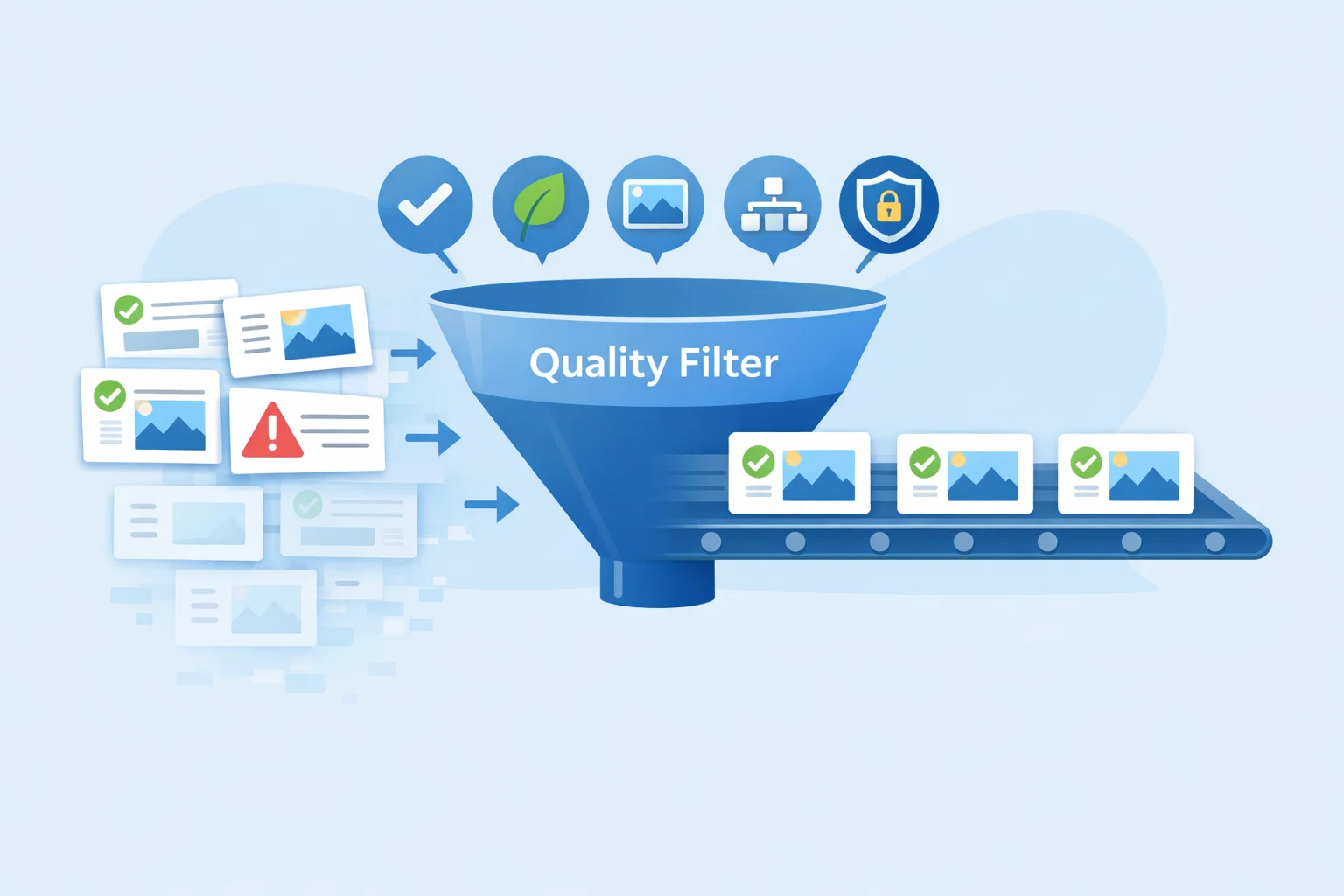
Meeting the quality thresholds that AI platforms expect ensures your content remains eligible for citations, which is why professional Content Writing & Optimization Services are becoming essential for maintaining visibility.
Multimodal Source Integration with Visuals and Data
Perplexity increasingly surfaces visual results alongside text answers. Optimization for visual AI discovery includes descriptive alt text, semantic file names, contextual placement, and original graphics. Data visualizations particularly help Perplexity understand complex relationships.
Quality standards checklist:
- Images with descriptive alt text explaining relevance
- File names like “perplexity-ranking-factors-2026.png”
- Visuals positioned where they support surrounding text
- Original graphics rather than stock images
- Charts and infographics for complex data
Website Security and Compliance Standards
AI engines avoid citing unsafe or poorly performing websites. Essential technical requirements include HTTPS encryption, Core Web Vitals compliance, mobile optimization, and privacy compliance. These factors don’t directly improve ranking but prevent disqualification from consideration.
User Engagement Signals as Content Value Indicators
Perplexity tends to favor sources that demonstrate genuine user value. Low bounce rates suggest content meets user expectations, extended dwell time indicates comprehensive information, return visitors signal ongoing value, and social sharing demonstrates content resonates.
Examples of High-Performing Content Structures
Certain content formats consistently perform well in AI indexing and citation rates.
Effective FAQ Formats for AI Snippets
FAQ sections structured with clear questions and direct answers are ideal for AI extraction. Best practices: question as H3 heading using exact search phrasing, answer in first sentence providing direct response, elaboration follows with context and details, and natural language writing.
Example structure elements:
- Question formatted as user would ask it
- Immediate direct answer in opening sentence
- Supporting context and examples following
- Related questions linked for deeper exploration
Case Studies of Successful Answer Engine Optimization
A B2B SaaS company specializing in project management tools restructured content for AI platforms. Their approach: converted long-form posts into structured Q&A formats, added references to industry reports throughout content, and implemented biweekly refreshes of top 20 articles.
Results after six months included 340% increase in Perplexity citations, 127% growth in qualified demo requests from AI platform referrals, and improved Google search visibility as a secondary benefit. The key insight: formatting content for AI readability improved performance across all channels.
Future of Search and Emerging Trends

The evolution from traditional search to AI-powered platforms continues accelerating, reshaping digital marketing strategies.
Shift from SEO to AEO (Answer Engine Optimization)
Within two to three years, optimizing for answers rather than keywords will become standard practice. Key shifts include intent over keywords, citation metrics as primary KPIs, conversational content outperforming keyword-stuffed prose, and authority building on specific topics.
Future priorities:
- Understanding what users actually want to know
- Tracking how often AI platforms reference your content
- Writing that mirrors natural dialogue
- Becoming the definitive source on specific topics
- Adapting to AI platform algorithm changes
Continuous Monitoring and Adaptation Strategies
AI platforms evolve rapidly, requiring ongoing attention. Establish monitoring systems that track citation frequency, audit AI responses, monitor algorithm changes, test content variations, and analyze user journeys from AI platforms. Use tools like Perplexity itself to search for your brand periodically and understand how the platform currently views your authority.
The shift to AI-powered answer engines represents a fundamental change in how people access and trust information online. Perplexity and similar platforms reward content that genuinely helps users and provides authoritative, well-sourced answers. Success requires emphasizing accuracy, freshness, and structured presentation over keyword manipulation. By implementing these strategies and maintaining commitment to quality, you position your brand as the trusted source that AI platforms consistently cite, building authority that compounds across all digital channels.
Perplexity SEO FAQ
Traditional search engines provide ranked lists of links, requiring users to visit multiple sites to find answers. Perplexity delivers synthesized responses with citations, combining insights from multiple sources into coherent answers. This approach prioritizes accuracy and directness over maximizing page views.
Update frequency depends on your content niche. News and trend-focused topics require daily or weekly updates, while evergreen content should be refreshed quarterly. Perplexity frequently checks for fresh information, so regular updates improve citation chances.
Answer engines like Perplexity favor scannable, structured formats. Bulleted lists, direct definitions, comparison tables, and clearly marked FAQ sections perform best. These formats help Perplexity AI extract and synthesize information efficiently.
Domain authority remains relevant, but topic authority and page-specific accuracy matter more. Perplexity provides citations based on individual page quality rather than overall site metrics. A newer site with exceptional content on a specific topic can outperform high-authority domains with mediocre coverage.
Perplexity uses several ranking factors: content freshness, consensus across trusted sources, semantic relevance to the query, structured data implementation, and website security. Unlike traditional search engines that heavily weight backlinks, AI platforms emphasize accuracy and citation reliability.
Semantic SEO focuses on topics and concepts rather than exact keywords. Perplexity recognizes relationships between ideas, making it essential to write naturally and comprehensively. Include related terms, answer follow-up questions, and explain concepts thoroughly to improve semantic relevance.
Rather than replacing traditional SEO, Perplexity requires expanding your approach. Search engine optimization principles like quality content and authoritative sourcing still apply. However, AI optimization adds emphasis on structured data, conversational language, and citation-worthy accuracy.
Search for your brand and key topics directly in Perplexity to see how the platform references your content. Understanding how Perplexity processes user queries around your domain helps identify optimization opportunities. Some analytics tools are beginning to track AI platform citations.