

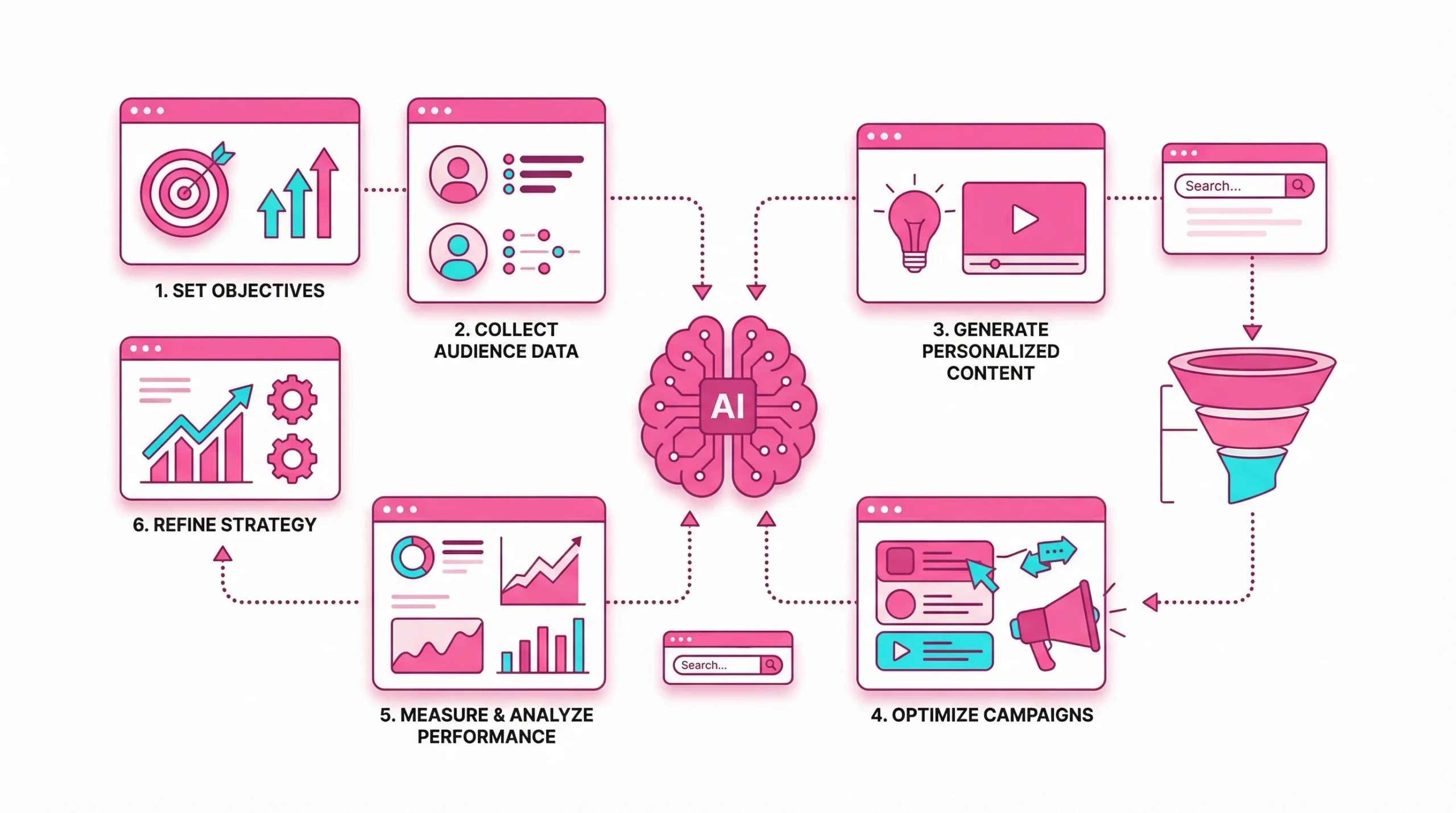
AI is no longer a niche experiment reserved for tech giants. Businesses of every size are turning to AI-driven approaches to sharpen their marketing, speed up execution, and deliver experiences customers actually want. Yet many teams still struggle to move beyond curiosity toward a coherent plan that delivers results.
Discover how to create an effective AI marketing strategy — from diagnosing where you stand today to choosing the right tools and measuring what matters. Whether you are refining a digital marketing strategy or building one from scratch, this guide covers every step.
Why AI in Marketing Matters Now
Marketing has always been about reaching the right person with the right message at the right moment. Traditional marketing relied on broad assumptions and slow feedback loops — but marketing isn’t a guessing game anymore. What has changed dramatically is the sheer volume of data, channels, and customer expectations involved. AI helps marketers manage this complexity in ways that were simply not possible before.
Explosion of Data-Driven Marketing
Modern marketing generates enormous data volumes across web, email, social, and commerce platforms. Human teams cannot process these signals fast enough to act on them meaningfully.
AI can analyze behavioral patterns, purchase histories, and engagement signals at scale — surfacing insights that inform smarter decisions. AI transforms raw numbers into strategic clarity: according to McKinsey, companies that embed data-driven practices into their marketing see 15–20% higher ROI compared to peers who rely primarily on intuition.
Efficiency and Automation in Resource-Constrained World
Most marketing teams are asked to do more with less. Marketing automation powered by AI streamlines repetitive tasks — scheduling, segmentation, A/B testing, reporting — freeing teams to improve efficiency and focus on strategy and creative work.
The result is not just faster output. It is also more consistent output, with fewer errors introduced by manual processes.
Rising Consumer Demand for Personalization
Consumers now expect brands to know them. Epsilon research indicates that 80% of consumers are more likely to purchase when brands offer personalized experiences. Personalized marketing campaigns, once reserved for large enterprises with custom technology, are now achievable for smaller teams through accessible AI platforms.
Need for Predictive Insights and Real-Time Optimization
Reacting to yesterday’s data is no longer enough. AI enables marketers to anticipate what customers will do next and adjust campaigns dynamically — shifting budget, messaging, or targeting before performance drops.
Competitive Industry Advantage
Competitors are already investing. AI is revolutionizing how brands acquire and retain customers — and the gap between early adopters and late movers is widening. Gartner predicts that by 2026, organizations using AI in marketing will outpace competitors in customer acquisition speed by an average of 25%. Waiting is itself a strategic choice — and increasingly a costly one.
Key Components of AI Marketing Strategy
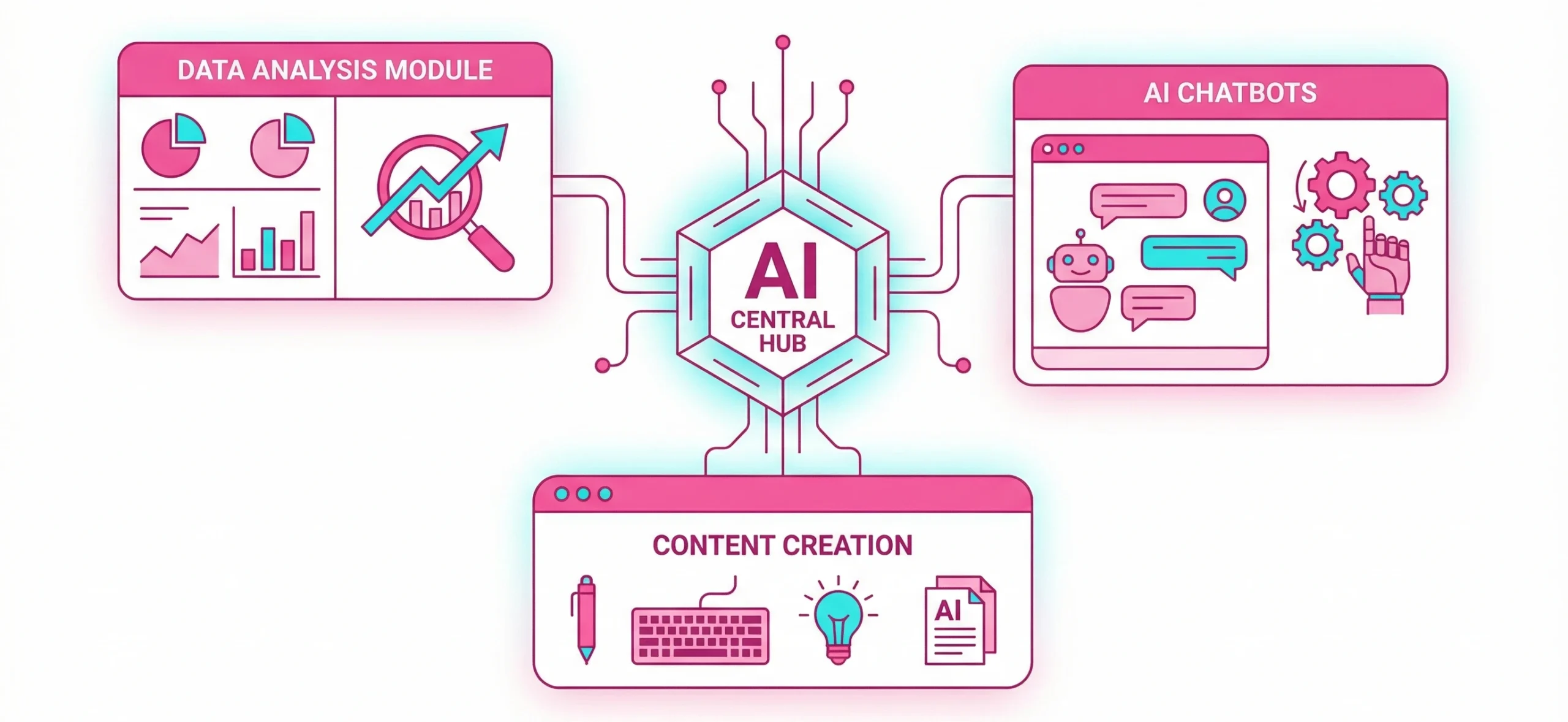
A well-designed AI marketing strategy is not a single tool or tactic. It is a layered system of capabilities working together. AI for marketing offers a spectrum of functions — from analysis and prediction to content creation and real-time customer engagement. Understanding the core components helps you make better decisions about where to invest first.
Advanced Data Analysis
At its core, AI marketing relies on turning raw data into actionable intelligence. AI algorithms process structured data (purchases, clicks, form fills) alongside unstructured data (reviews, social comments, support tickets) to build a fuller picture of customer behavior.
Predictive Analytics of Customer Behavior
Predictive models use historical patterns to forecast future actions — which customers are likely to churn, which leads are most likely to convert, and which product a returning shopper is likely to buy next. Decisions based on AI predictions consistently outperform those derived from intuition alone, shifting marketing from reactive to anticipatory.
Automated Content Creation
Generative AI tools can produce first drafts of email copy, ad headlines, product descriptions, and social posts at scale. This does not replace human judgment — it accelerates the production pipeline so creative teams can spend more time refining marketing content and less time generating from scratch.
AI Chatbots and Customer Support
Conversational AI handles routine customer queries around the clock, reducing support costs while improving response times. Well-designed chatbots also gather intent data that feeds back into broader marketing insights.
Real-Time Insights and Improved Decision-Making
Dashboards powered by AI synthesize campaign performance, audience signals, and market conditions into real-time recommendations. Combining AI with real-time data feeds gives teams the ability to act on what is happening now, rather than waiting for a weekly report.
Step-by-Step Guide: Building Successful AI Marketing Strategy
Building an ai-driven marketing strategy requires discipline and sequencing. Jumping straight to tool selection without a clear foundation is one of the most common AI marketing mistakes.
Audit Existing Marketing Efforts
Before adding new technology, understand what you already have.
- Map your current marketing channels and workflows
- Identify where bottlenecks or inefficiencies exist
- Assess the quality, completeness, and accessibility of your data
- Catalog existing tools and integrations
This audit surfaces the highest-leverage starting points and prevents you from automating broken processes.
Define Specific AI Marketing Goals
Vague goals produce vague results. Define what you want to achieve with your AI strategies in measurable terms:
- Reduce email churn rate by 15% within two quarters
- Increase marketing qualified lead volume by 30% year-on-year
- Cut content production time by 40% without reducing quality
Specificity also helps you evaluate tools against real needs rather than feature lists.
Choose AI-Powered Tools and Technologies
Select the right AI tools based on your goals, not market trends. Consider:
| Capability Needed | Tool Category | Example Platforms |
| Content generation | Generative AI writing tools | Jasper, Copy.ai, Writer |
| Predictive lead scoring | CRM-integrated AI | Salesforce Einstein, HubSpot AI |
| Email personalization | Marketing automation AI | Klaviyo, ActiveCampaign |
| Conversational support | Chatbot platforms | Drift, Intercom, Tidio |
| Ad optimization | Paid media AI | Google Performance Max, Meta Advantage+ |
| Analytics and attribution | Data intelligence tools | Northbeam, Triple Whale |
Prioritize tools with strong integration capabilities so data flows seamlessly between systems.
Implement AI in Phases
A phased rollout reduces risk and builds internal confidence.
- Phase 1 — Pilot: Select one high-impact, low-risk use case. Run it for 6–8 weeks and measure results.
- Phase 2 — Expand: Apply learnings to two or three additional workflows. Begin training team members.
- Phase 3 — Scale: Integrate AI across multiple marketing channels with clear governance and oversight.
Avoid trying to transform everything at once. Sustainable adoption happens incrementally.
Track Performance and Optimize Results
Define your measurement framework before launch. A solid marketing strategy to boost long-term results must track the effectiveness of marketing campaigns consistently. Key metrics to monitor include:
- Conversion rate changes attributed to AI-personalized experiences
- Cost per acquisition across AI-managed versus manually managed campaigns
- Content production velocity — output volume per team member
- Customer satisfaction scores on AI-assisted support interactions
- Return on ad spend for machine-learning-optimized campaigns
Review these metrics monthly and adjust your approach based on evidence, not assumption.
How to Leverage AI for Campaign Execution
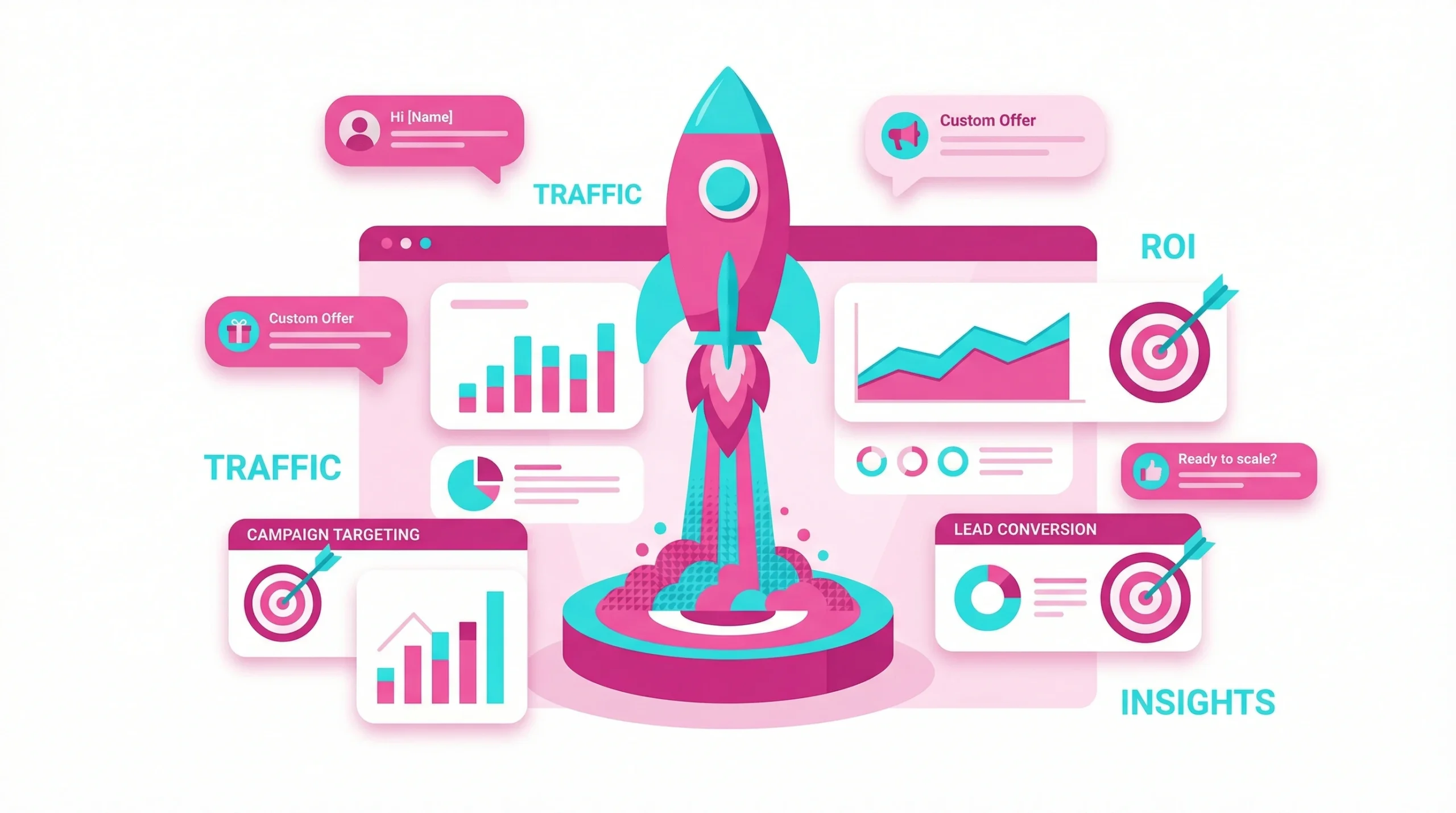
With a strategy in place, execution is where AI marketing tools demonstrate their clearest value. Integrating AI into your marketing day-to-day — rather than treating it as a separate layer — is what separates teams that see transformative results from those that see marginal gains.
Scaling and Automating Personalization
AI enables marketers to create highly tailored experiences at a scale no manual process can match. Tailoring marketing messages to individual behavior — through dynamic email content, personalized landing pages, and product recommendations — all becomes achievable without proportionally increasing headcount.
Netflix estimates that its recommendation engine drives over 80% of content streamed — a powerful illustration of what AI-driven personalization looks like at full maturity.
Boosting Performance via Machine Learning
Machine learning models continuously refine targeting, bidding, and creative selection based on live performance data. Google’s Smart Bidding, for example, adjusts bids in real time based on dozens of contextual signals — device, location, time, audience history — far beyond what manual bidding can account for.
Accelerating Workflow and Increasing Productivity
AI streamlines the internal production chain. From briefing documents to copy drafts to visual concepts, generative AI tools compress timelines. Teams report time savings of 30–50% on routine content tasks, allowing more capacity for strategy, testing, and optimization.
Strengthening Brand Engagement Through Intelligent Selection
AI helps brands identify which content formats, messaging angles, and creative styles resonate most with specific audience segments. Rather than guessing what will perform, brands can use predictive scoring to prioritize the assets most likely to drive engagement before they are deployed.
Reducing Churn and Improving Customer Targeting
Churn prediction models monitor engagement signals — email open rates, purchase frequency, support ticket volume — and flag at-risk customers early. Marketers can then trigger retention campaigns before those customers have already decided to leave.
Essential AI Marketing Solutions and Tools
The market for AI solutions has expanded rapidly, with specialized platforms covering nearly every marketing function. AI tools like ChatGPT, Jasper, and Midjourney have broadened access to capabilities once limited to enterprise teams. The challenge is not finding tools — it is selecting the right combination for your specific needs.
Copywriting Assistants and Image Generators
Tools like Jasper, Writer, and Copy.ai assist in generating on-brand written content. For visual assets, platforms like Midjourney and Adobe Firefly produce imagery from text prompts, reducing reliance on stock photography and long design cycles.
Content Quality Assurance and Item Recommendations
AI-powered quality tools check content for tone, clarity, brand compliance, and readability. Recommendation engines on e-commerce sites use collaborative filtering and behavioral data to surface the most relevant products for each visitor.
Predictive Events and Intelligent Timing
AI systems identify the optimal moment to send an email, push a notification, or trigger a retargeting ad — based on when individual users are most likely to engage. This move from batch-and-blast to intelligent timing can meaningfully lift open and conversion rates.
Personalized Paths and Query Builders
Dynamic audience segmentation tools allow marketers to build complex behavioral segments without manual SQL queries. Natural language query interfaces mean non-technical team members can ask questions of their data directly, democratizing insight access.
Liquid Assistants for Dynamic Content
Liquid templating logic — used in platforms like Klaviyo and Braze — enables emails and messages to pull in personalized variables dynamically: names, locations, recently viewed products, loyalty points. When paired with AI-generated copy variants, this creates messaging that feels individually crafted at scale.
Overcoming Common Challenges in AI Marketing
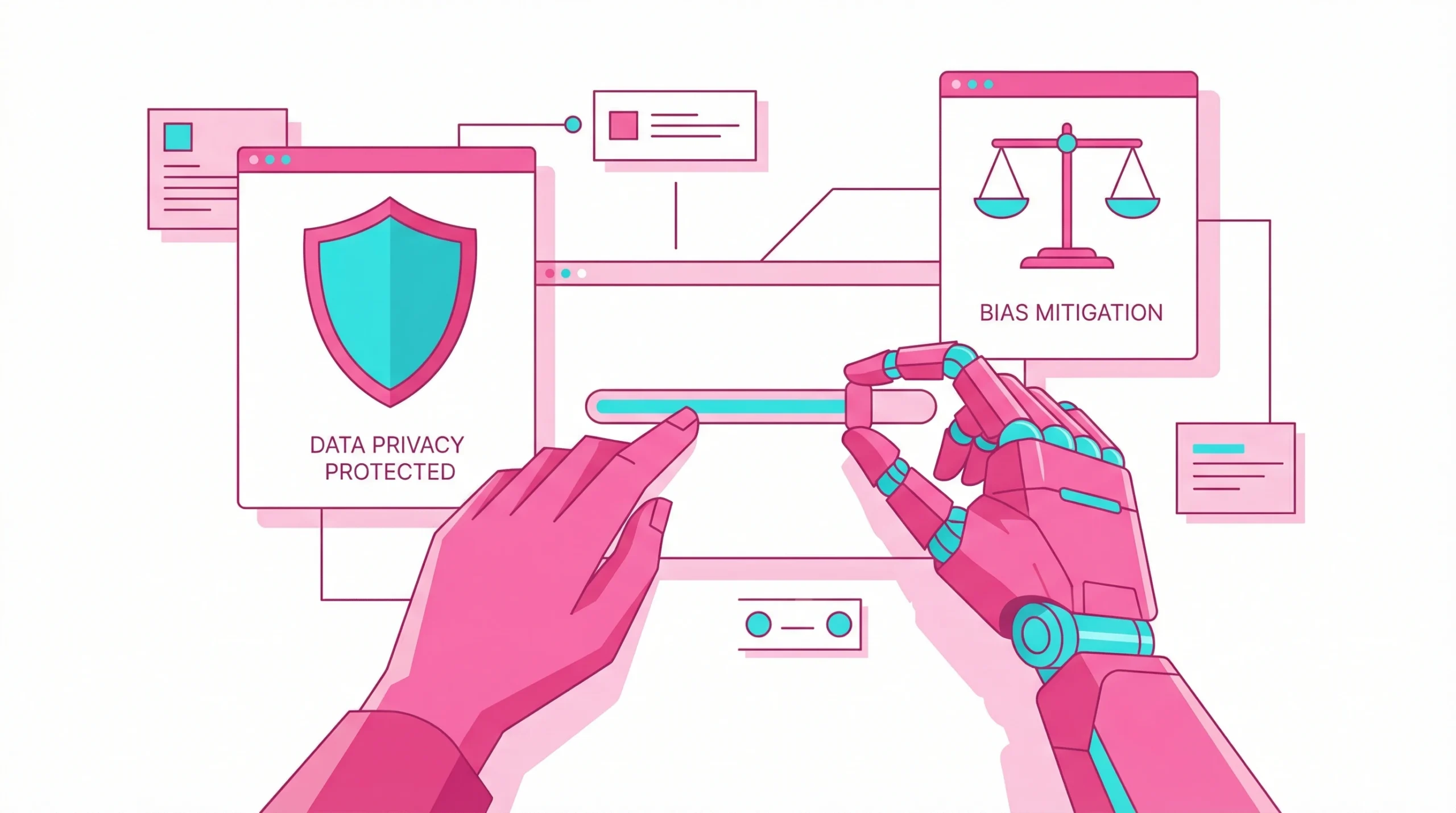
Embedding AI into your marketing strategy introduces specific challenges that teams must prepare for. AI-powered marketing delivers the best outcomes when these obstacles are addressed proactively rather than reactively. Most are manageable with the right governance and mindset.
Maintaining Human Touch in AI-Generated Content
AI-generated content can feel formulaic without skilled human editing. The solution is to use AI to enhance the drafting process — not replace creative judgment. Human writers and brand strategists review, reshape, and inject voice — turning AI output into genuinely compelling material.
Balancing Automation and Human Oversight
Full autonomy in marketing automation carries risk. Automated systems can amplify errors at scale — a misconfigured audience, a broken tracking pixel, an offensive creative combination. Build in regular human checkpoints, especially for high-visibility campaigns.
Mitigating Bias in Decision-Making
AI algorithms trained on historical data can reinforce existing biases — over-indexing on demographics that converted in the past while under-serving segments with real potential. Auditing your models for fairness and regularly introducing fresh training data is essential practice.
Managing Data Privacy and Ethical Concerns
AI marketing relies on data. That data comes with legal and ethical responsibilities. Ensure compliance with GDPR, CCPA, and evolving global privacy regulations. Be transparent with customers about how their data informs personalized experiences.
A clear data governance policy should precede any significant AI deployment.
Establishing Clear Measurement Metrics
One of the most common AI marketing mistakes is failing to define success upfront. Without baseline metrics and attribution frameworks, teams cannot determine whether AI is actually delivering value. Establish measurement infrastructure before launch, not after.
Tips for Strategic Innovation
Sustained success with AI in marketing requires ongoing adaptation, not a one-time implementation. Effective marketing in an AI-driven environment is as much about optimizing marketing processes as it is about deploying new tools. The following principles help teams maintain momentum over time.
Start Small with Pilot Projects
Pilots reduce the cost of learning. Choose a contained use case — a single email workflow, a product recommendation widget, a paid media campaign — and run a clean test. The insights gained are worth more than theoretical planning.
Identify Key Areas for Impactful Results
Not every marketing function benefits equally from AI. Prioritize areas where:
- Data volume is high and human processing is slow
- Personalization has a direct impact on conversion
- Repetitive tasks consume disproportionate team time
Email marketing, paid media optimization, and customer segmentation consistently top this list for most organizations.
Regularly Evaluate and Update Tech Stack
The AI tool landscape evolves quickly. Conduct a quarterly review of your technology stack against your current goals. Tools that were best-in-class 18 months ago may now be outpaced by newer alternatives with better integrations or capabilities.
Monitor Data Quality for Better Performance
AI output is only as good as the data feeding it. Implement regular data hygiene processes:
- Remove duplicate or outdated contact records
- Validate tracking integrity across all channels
- Audit attribution models for accuracy
- Ensure consent and compliance records are current
Poor data quality is one of the leading causes of disappointing AI performance, and it is entirely fixable.
Align Strategy with Company Culture
Technology adoption without cultural alignment tends to stall. Invest in training, communicate the rationale for AI adoption clearly, and involve team members in tool selection.
When teams understand how AI helps them rather than threatens them, adoption accelerates and outcomes improve.
FAQ
An AI marketing strategy is a structured plan that integrates artificial intelligence tools and technologies into a brand’s marketing operations to improve targeting, personalization, efficiency, and overall campaign performance. When you create an AI strategy with clear objectives, AI can assist across every stage — from audience research to campaign delivery — while measurement systems evaluate the impact across all channels and workflows.
Small teams can start with accessible, low-cost AI tools that address a single pain point — such as an AI writing assistant for content production or an automated email segmentation tool — and expand gradually as they build confidence. With the help of AI, even lean teams can scale marketing efforts without hiring additional staff, as long as they start with a clear goal and dedicate one team member to owning the implementation and evaluation process.
The main risks include algorithmic bias that skews targeting decisions, data privacy violations arising from improper consent or data handling, and over-reliance on automation that removes necessary human judgment. There are also areas where AI allows errors to scale rapidly — a misconfigured audience rule or a flawed data feed can affect thousands of customers before anyone notices — making human oversight and clearly defined review checkpoints essential.
Measuring ROI from AI tools requires establishing pre-implementation baselines for key metrics such as cost per acquisition, conversion rates, content production time, and customer satisfaction scores. AI can make attribution more precise by connecting campaign touchpoints to revenue outcomes — but only when tracking infrastructure is correctly configured before launch. Compare results over three to six months while controlling for seasonal shifts or broader market changes that may independently influence performance.
AI-generated content does not inherently harm SEO rankings when it is accurate, useful, and well-edited before publication. Google’s guidance focuses on content quality and intent rather than the method of production, meaning human-reviewed AI content that genuinely serves the reader’s needs performs comparably to fully human-written content, while low-effort, unedited AI output that lacks depth or accuracy is more likely to underperform in search.
The most effective safeguard is combining AI generation with a structured human review process that verifies factual claims against approved brand documentation, product databases, and compliance guidelines before any content is published. Additionally, using AI tools that allow you to provide grounding context — such as uploading brand guidelines, product specs, or approved messaging frameworks — significantly reduces the frequency of inaccurate outputs.
Marketing professionals will benefit most from developing prompt engineering skills for working effectively with generative AI tools, data literacy for interpreting AI-generated insights, and critical evaluation skills for auditing AI outputs for accuracy and brand alignment. Above all, a mindset oriented toward strategy and innovation — understanding how to direct AI toward meaningful business goals — will matter more than familiarity with any single platform.
Integration typically happens through API connections, middleware platforms such as Zapier or Make, or native connectors offered by AI tool vendors for popular CRM systems like Salesforce and HubSpot. Once connected, AI is able to enrich existing contact records with behavioral signals, predictive scores, and engagement history — significantly increasing the value of legacy data. Before going live, teams should validate data flows in a sandbox environment to confirm accuracy and completeness.