

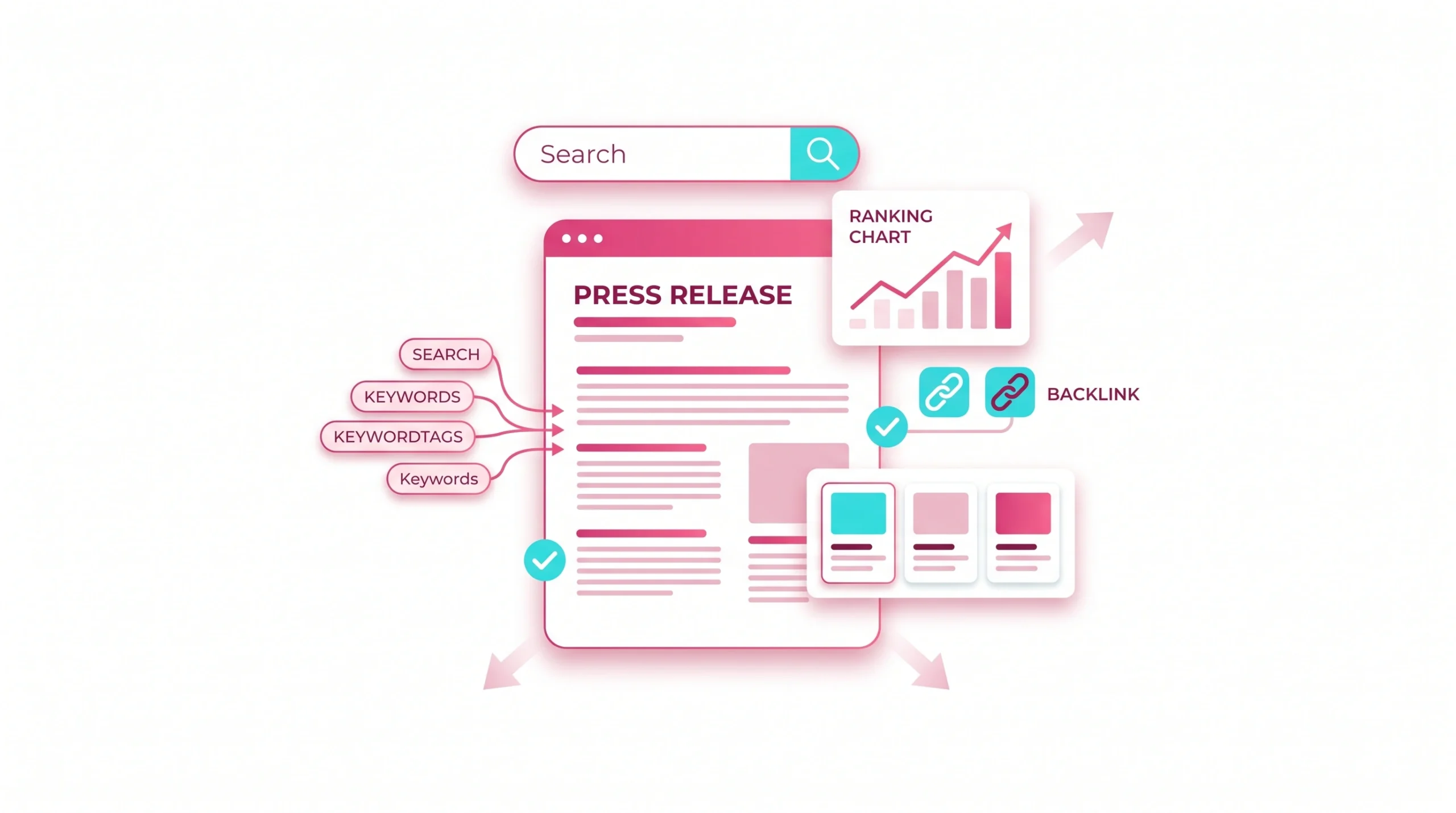
A well-crafted press release can do more than announce company news. When planned with search engine optimisation, audience value, and media relevance in mind, it can support visibility, credibility, referral demand, and stronger editorial discovery without feeling forced or promotional.
This guide explains how to write, optimise, and distribute a press release in a way that serves readers first. It is written for marketers, founders, communications teams, and agencies that want measurable results from every news release.
Press Release SEO: Is Press Release for SEO Still Effective?
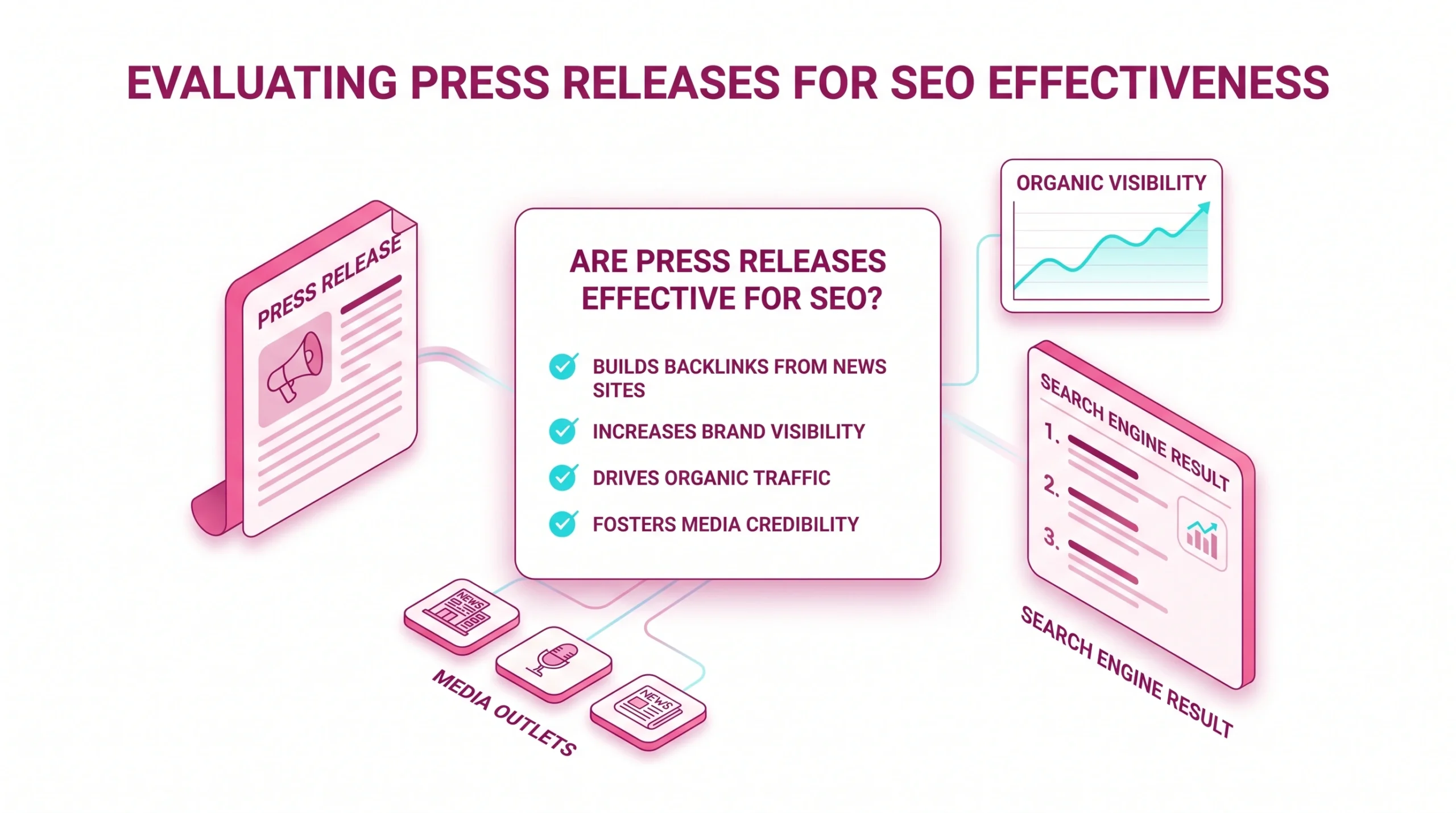
Press release SEO connects PR fundamentals with search engine best practices. The goal is not to manipulate ranking, but to make verified news easier for journalists, customers, AI search systems, and search engine crawlers to interpret. For AI search optimisation, clear entities, dates, sources, and direct answers matter because summaries often favour well-labelled facts.
What is a Press Release for SEO
A press release is an official announcement created by an organisation to share news with media outlets, stakeholders, and a target audience. It usually covers product launches, funding, partnerships, research, events, leadership changes, awards, or milestones that deserve public attention.
Why Press Releases Are Effective for SEO
SEO helps a press release become easier to discover, index, and reference. When the headline, URL, structure, and links are clear, search engine systems can identify the topic faster, while journalists can decide whether the story matches their beat and readers.
SEO-Friendly Press Release Meaning
An SEO-friendly press release is newsworthy, concise, factual, and structured for both humans and search engine systems. It includes a clear press release headline, relevant keyword placement, helpful context, credible quotes, supporting assets, and links that guide readers to useful pages. It also names real people, organisations, products, and locations so answer engines can identify reliable entities.
Press Release SEO Best Practices
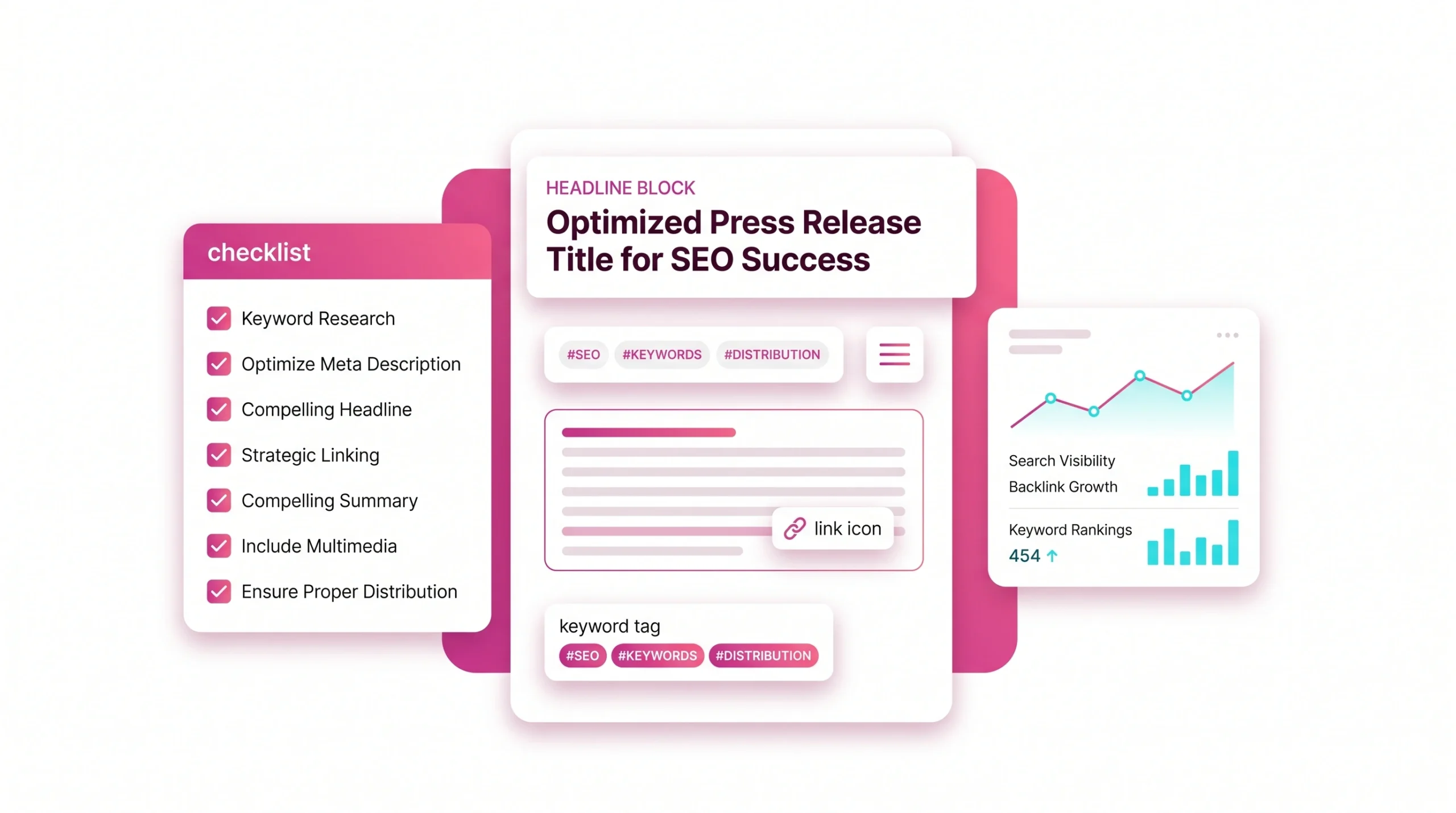
Press release best practices begin with editorial discipline. Before you optimise your press release, confirm that the story has substance, timely relevance, and a practical reason for people outside your company to care enough to read, cite, or cover it.
Press Release Structure for Search Engine Visibility
A strong structure helps readers scan and gives media outlets the facts they need. Keep the most important information near the top, then support it with evidence, quotes, background, and contact details for fast verification.
| Section | Purpose |
| Headline | Summarises news value in one clear line |
| Lead | Answers who, what, when, where, why, and how |
| Body | Adds detail, proof, quotes, and context |
| Boilerplate | Explains the company background and credibility |
| Contact | Gives journalists access to a real source |
Release Writing Tips to Boost SEO
Writing a press release works best when every sentence has a job. Avoid exaggerated claims, remove vague adjectives, and write press release content in a factual style that helps a journalist verify the story quickly.
- Start with the strongest fact.
- Keep paragraphs focused and short.
- Use one primary angle, not several competing messages.
- Add data only when it supports the announcement.
- End with contact details and a useful next step.
Newsworthy Angle and SEO Value
Newsworthy content gives a reason for coverage beyond brand self-promotion. A new feature may not be enough, but a feature tied to customer demand, market data, funding, growth, research, or local impact may become a stronger story.
Strong Opening for Effective SEO
A strong opening should summarise the announcement in plain language. In the first paragraph, include the company name, news event, date or timing, audience relevance, and the outcome that matters most to readers, investors, partners, or customers.
Using Keywords Effectively in Press Release SEO Strategy
Using keywords effectively means matching real search intent without turning the release into a repetitive SEO asset. The keyword should clarify the subject, not interrupt the tone or weaken trust with readers, editors, or potential buyers.
Integrating Keywords Naturally
A keyword should appear where it helps a reader identify the topic. Use the main phrase in the headline or lead only when it sounds natural, then use related terms in the body to add context for search engine optimisation and AI search summaries.
Keyword Placement in Headline, Lead, Body
Keyword placement matters because scanners, crawlers, and journalists pay close attention to early signals. Put the core phrase in the press release headline when possible, mention it once in the lead, and use supporting terms in subheadings, quotes, or body copy.
Long-Tail Keyword Opportunities for Search Engine Results
Long-tail phrases help connect the announcement with specific buyer intent. For example, a cybersecurity company might target “small business ransomware insurance report” rather than a broad phrase that competes with unrelated articles, landing pages, and newswire archives.
Optimise Press Release Headline for Search Engine Results
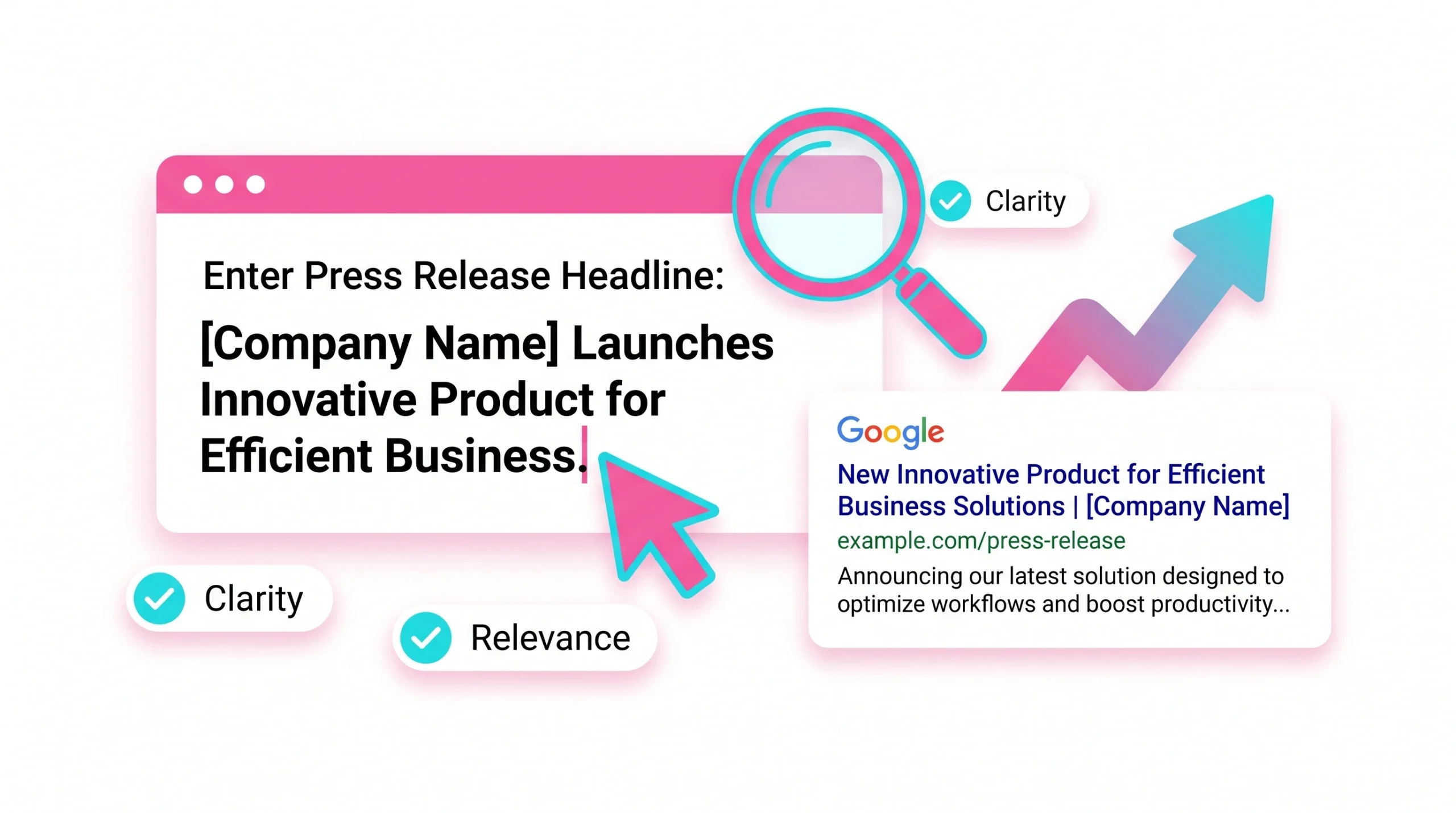
Headline work is where PR judgment and SEO strategy meet. The headline must be accurate enough for editors, clear enough for search results, and compelling enough for readers who see only one sentence before deciding whether to continue.
Catchy Headline and Subheadings
A catchy headline should communicate the central story without exaggeration. Subheadings can add context by naming the audience, outcome, location, or proof point, especially when a complex announcement needs a smoother path for quick comprehension.
Attention-Grabbing Headline
Attention comes from specificity, not hype. “Company launches analytics dashboard” is weaker than “Company launches dashboard helping retailers forecast seasonal demand,” because the second version explains who benefits, what changed, and why the announcement matters.
Clear and Concise Wording
Clear wording improves readability and may increase the likelihood of your press release being picked up. Avoid insider language, acronyms without context, and long clauses that hide the news behind brand positioning or executive commentary.
News Value in Headline
News value should be visible before a reader reaches the body. Put the event, change, result, or measurable milestone in the headline, then reserve promotional detail for later sections where evidence can support it responsibly.
Strategic Keyword Use
Strategic keyword use does not mean repeating every possible phrase. Select one primary keyword, two or three close variants, and several entity terms such as product names, locations, industries, and stakeholders that help define the topic. This supports SEO without weakening editorial quality.
Optimised Press Release Content for Better SEO Performance
Optimising press release content is about clarity, credibility, and discoverability. The copy should be complete enough to answer immediate questions, but concise enough that media professionals can reuse core facts without digging through promotional filler.
Press Release Format
A standard format keeps the story easy to evaluate. Use a headline, dateline, lead paragraph, body sections, quote, boilerplate, contact details, and relevant links. This familiar layout supports editorial workflows and reduces friction for every journalist reviewing the announcement.
Effective Press Release Content
An effective press release explains what happened, why it matters, and what readers can do next. It should include facts, a direct quote, a product or service context, and a clear path to supporting information on your website. For SEO performance, connect the announcement to a broader resource that answers follow-up questions.
Useful content elements include:
- verified dates, figures, and company names
- concise executive or expert commentary
- customer, market, or industry context
- relevant multimedia assets
- a source page for deeper information
- contact details for follow-up questions
Engaging Body Content
Engaging body content moves from news to context. After the lead, explain the problem, the change introduced by the announcement, supporting evidence, and expected impact. Use storytelling carefully, showing real-world value without turning the piece into an advertisement.
Technical SEO Tips for Press Releases
Technical choices affect how a release is crawled, displayed, and interpreted. Google says SEO is partly about “helping search engines understand your content,” so technical details should make the page easier to access, not more complicated. Treat every technical step as a trust signal for readers and a clarity signal for search systems.
URL Optimization
A clear URL should be short, readable, and aligned with the announcement. Use lowercase words, avoid unnecessary dates unless they help archive news, and publish the release on your website so search engine crawlers can associate it with your brand source.
Meta Description
A meta description should summarise the announcement in one or two sentences. According to the Google Search Central SEO Starter Guide, snippets can come from page content or the meta description, so write a concise summary that includes the key point.
Meta description checklist:
- mention the company name and announcement
- Keep the summary specific and readable
- include audience value, not only brand value
- avoid duplicate descriptions across releases
- reflect the content on the page accurately
On-Page SEO for Press Releases
On-page SEO for press releases includes a single H1, logical H2 and H3 sections, descriptive image text, fast loading, canonical handling, and accessible formatting. These details help users and crawlers read the same information without confusion. They also make your newsroom easier to maintain as older announcements accumulate.
Internal Links and External Links
Internal links should point to pages that deepen context, such as a product page, research report, case study, newsroom, or related announcement. External links should support claims or identify partners, but they should not be used as a shortcut for artificial ranking gains.
Anchor Text Optimisation
Anchor text should describe the destination page honestly. Google’s guidance on link attributes explains how nofollow, sponsored, and user-generated link signals help clarify link intent, which is important for press release links and paid placements.
Multimedia and Visual Optimisation for Press Releases
Multimedia can make an optimised press release easier to understand and more appealing to media outlets. In AI search environments, visuals also provide extra context when filenames, captions, and alt text describe the asset accurately. Strong visuals may also increase time on page and support social sharing.
Incorporating Multimedia Elements
Add images, charts, videos, or downloadable media kits when they strengthen the story. For a product launch, include product screenshots; for research, include one chart; for an event, include official photos that editors can use with permission.
Visuals for Reader Engagement
Visuals help readers process information quickly, especially when the announcement includes data or technical details. Google’s image SEO guidance recommends descriptive filenames and useful alt text, while warning against stuffing image descriptions with repeated keywords.
Images, Videos, Infographics
Different formats serve different goals. Images support recognition, videos show demonstrations, and infographics make data easier to reuse. Select formats based on the story, the target audience, and the likely needs of a journalist preparing coverage. For B2B brands, one simple chart can often communicate market impact faster than several paragraphs.
Asset planning checklist:
- Use descriptive filenames
- write accurate alt text
- Add captions for context
- Compress files for page speed
- Include usage rights when sharing media
- keep visuals aligned with factual claims
Readability and Brand Recall
Readable layouts improve brand recall because users can absorb the message without effort. Break long blocks of text, use descriptive subheadings, and keep visual branding consistent so the release looks credible on your site and when shared elsewhere.
Press Release Distribution and SEO Value
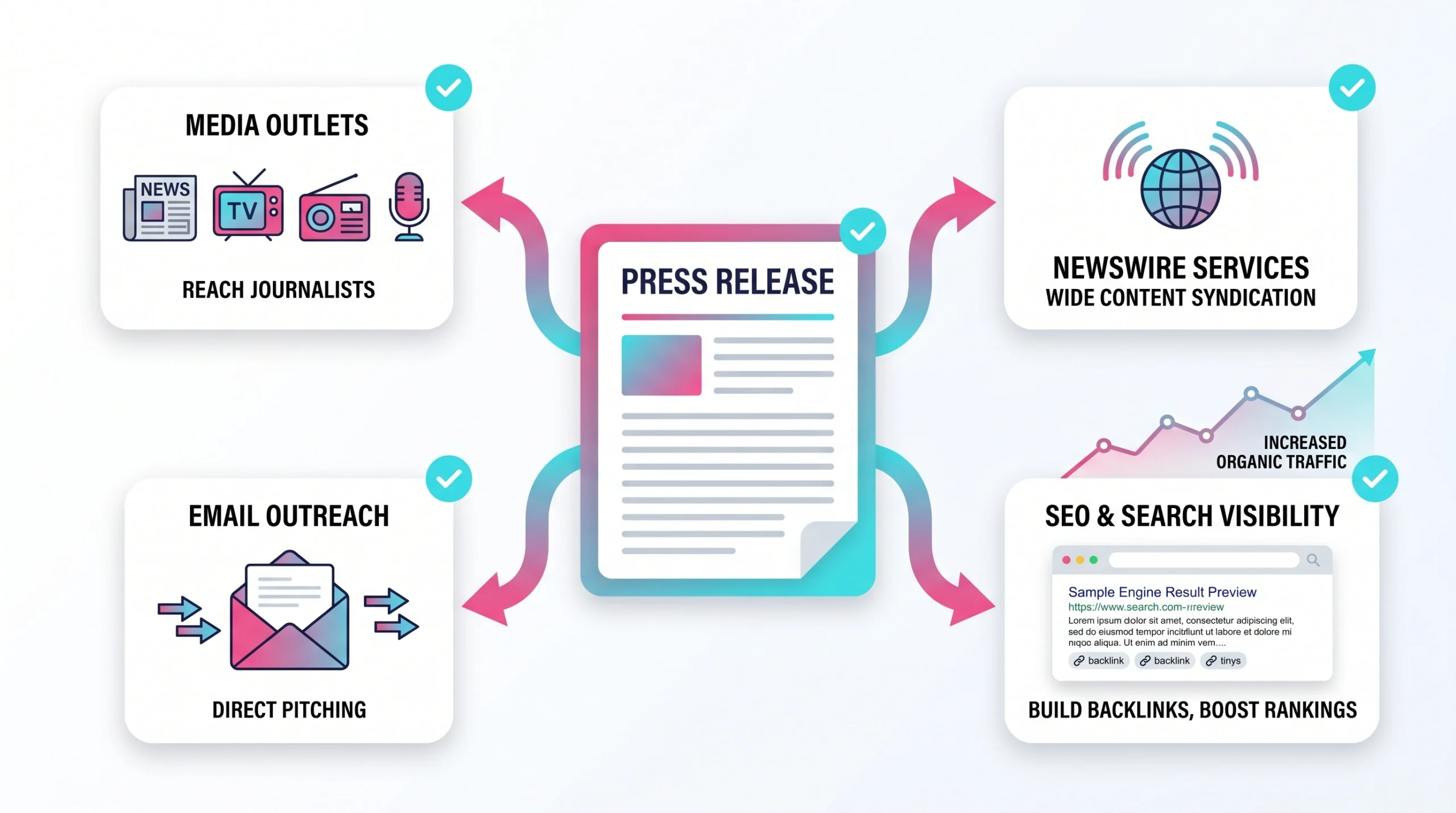
Press release distribution should match the goal of the announcement. A broad newswire may help with reach, while focused outreach can be more effective when the story depends on niche expertise, geography, or strong media relationships. The right mix protects the budget and keeps SEO efforts tied to real business outcomes.
Utilise Press Release Services
Press release services can help distribute your press release across newswire networks, databases, and partner sites. Evaluate each provider by editorial standards, industry categories, geographic targeting, reporting quality, and whether the service reaches outlets that matter to your audience.
Service evaluation criteria:
- relevant industry and location filters
- transparent syndication network
- reporting on pickups and referral traffic
- multimedia support
- editorial review standards
- clear rules for links and disclosures
Press Release Submission Sites
Submission sites vary widely in quality. Low-quality press releases posted across weak directories may create clutter rather than value, while reputable sites with editorial controls may improve discovery, indexing, and referral visibility in specific scenarios.
How to Use Press Release SEO in Distribution
Distribution should combine owned, earned, and syndicated channels. Cision’s 2025 findings reported that 72 per cent of journalists cite releases as a useful PR resource, while 86 per cent may reject pitches that do not fit their beat or audience, according to Cision’s State of the Media release.
- Publish the release in your newsroom.
- Send tailored outreach to selected journalists.
- Use a reputable newswire when a broad reach matters.
- Share your press release through email and social channels.
- Track media mentions, referral sessions, and conversions.
SEO Press Release Distribution
SEO press release distribution works best when it supports genuine awareness. Google’s spam policies warn against techniques intended to manipulate search systems, so focus on relevance, editorial value, and reader usefulness instead of link volume.
Link Building and Backlink Strategy for Press Releases
Backlinks from a release are not a magic ranking shortcut. The stronger opportunity comes when a successful press release earns real editorial coverage, expert mentions, and citations from trusted publications that add independent context. This is why relationship quality often matters more than raw placement count.
Quality Backlinks
Quality backlinks usually come from relevant coverage, not mass syndication alone. A niche industry publication that explains why your announcement matters can be more valuable than dozens of duplicate placements that repeat the same content without editorial input.
Relevant and Descriptive Anchor Text
Relevant anchor text helps users know what they will find after clicking. Instead of vague phrases like “click here,” use descriptive wording such as “download the research report,” “view product details,” or “read the full customer study.”
Linking to Important Pages
Link to pages that help users take the next informed step. Good destinations include a newsroom post, report landing page, demo page, event registration page, customer story, or data source that supports claims made within a press release.
Using Press Releases for Local SEO
Local SEO depends on relevance, proximity, and trust signals. For regional brands, using press releases can help connect company news with local media, community events, neighbourhood searches, and location-specific customer needs. A local angle should feel useful to residents, not simply localised for ranking.
Local Media Outreach
Local media outreach should focus on community relevance. A national headline may miss the point, while a regional angle can show how a hiring plan, event, partnership, or grant affects local customers, workers, schools, or businesses.
Local Keyword Targeting
Local keyword targeting should be natural and precise. Use city, neighbourhoods, region, or service area terms only where they clarify the announcement, such as datelines, event details, location pages, quotes, maps, or supporting context.
Community Events and Sponsorships
Community events and sponsorships can create credible local stories. If your company supports a nonprofit drive, small business program, school initiative, or public workshop, explain the local outcome rather than centring the announcement only on brand generosity.
Local Influencer Partnerships
Local influencer partnerships work when the partner has audience trust and a genuine connection to the topic. Choose collaborators who can explain why the news matters locally, then keep claims transparent, accurate, and aligned with disclosure expectations.
Local Success Stories
Local success stories turn broad claims into proof. A release about a business expansion becomes stronger when it includes customer impact, employee growth, local investment, or a measurable community benefit that media outlets can verify independently.
Collaboration with Local Organizations
Collaboration with local organisations can add authority to a regional announcement. Chambers of commerce, universities, nonprofits, and associations may provide context, quotes, and distribution support when the partnership is real, transparent, and mutually valuable.
FAQ
Clear answers help readers make faster decisions and can improve visibility in search results and AI summaries. Keep each response direct, factual, and consistent with the article above, without turning the FAQ into another sales section.
You write an SEO-friendly press release by starting with real news, defining the target audience, creating a clear headline, placing the main keyword naturally, using a standard format, adding useful links, and distributing it through relevant channels. The best result comes from combining editorial value with search engine optimisation, not from forcing repeated terms into the copy.
A release is good for SEO when it is useful, easy to crawl, factually accurate, and connected to a broader content strategy. It should support organic traffic through clear structure, trusted signals, relevant links, and media coverage, while avoiding low-quality press releases that exist only to create backlinks.
Keywords should be used in the headline, first paragraph, subheadings, image context, and body copy where they fit naturally. A keyword can also appear in the URL and meta description, but readability matters more than repetition because search engine systems and readers both respond better to clear, specific language.
An SEO-friendly press release is usually long enough to answer essential questions and short enough for busy readers to scan. In many cases, 400 to 800 words works well, but complex announcements may need more detail when data, quotes, background, or regulatory context is necessary.
Press releases can help SEO when they generate discovery, referral traffic, branded search demand, and credible coverage from relevant publications. They are less effective when used only for mass syndication or artificial links, so the strongest SEO benefits usually come from news value, audience fit, and editorial pickup.
A press release should include only the links that genuinely help readers. Most releases need one to three links, such as a source page, product page, report, event registration page, or newsroom resource, because too many links can distract readers and weaken editorial trust.
The best way to distribute an SEO-friendly press release is to publish it on your website, share it with selected journalists, use a reputable distribution channel when a broader reach is needed, and promote it through owned media. Strong distribution depends on relevance, timing, and a clear reason for media outlets to care.