

What Qualifies as Long-Form Content?
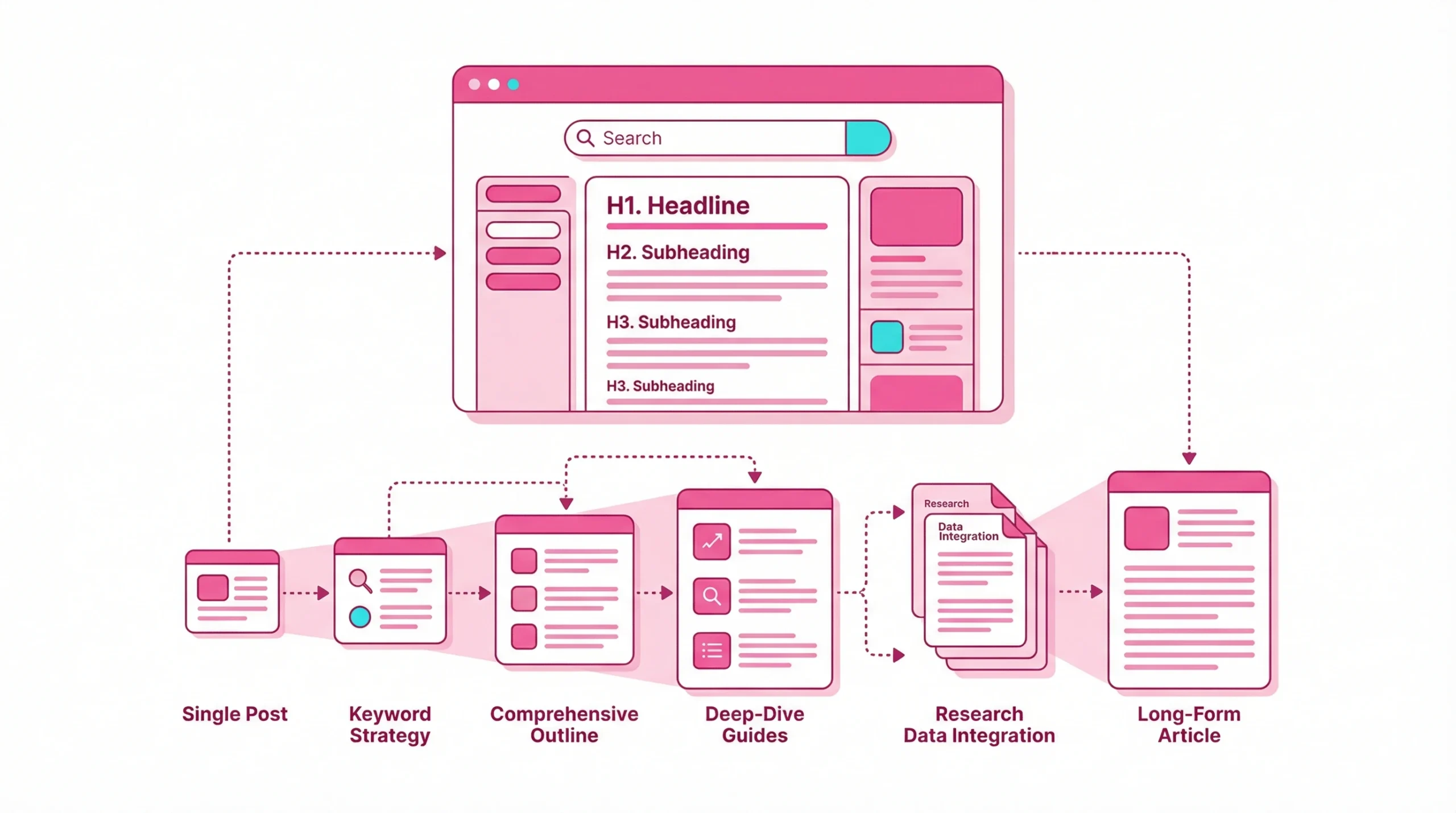
Long-form content is more than a high word count. It represents a deliberate effort to cover a topic with depth, structure, and genuine purpose — and understanding what it actually is helps you use it effectively.
Definition of Long-Form Content for SEO
In the context of search engine optimization, long-form content typically refers to written material that exceeds 1,200 words. Unlike short form content, it addresses a subject comprehensively, covering multiple angles within a single article. It can take many shapes — from detailed blog posts and step-by-step tutorials to full-scale guides and in-depth analysis.
Average Length and Word Count for Deep-Dives
Most top-ranking articles for competitive queries fall between 1,500 and 3,000 words. However, length alone does not determine success. An article that delivers value at every section will consistently outperform longer pieces that repeat themselves or fill pages without fresh insight.
Common benchmarks by format:
| Content Type | Typical Word Count |
| Short-form content | Under 1,000 words |
| Standard blog posts | 1,000–1,500 words |
| Long-form pieces | 1,500–3,000 words |
| Pillar pages | 3,000+ words |
Common Formats and Structures to Make Your Content Stand Out
Your structural approach will depend on the topic and your broader marketing strategy. Common formats for longer pieces include:
- Step-by-step tutorials and how-to guides
- Comprehensive pillar pages for topic clusters
- Research-based whitepapers and reports
- Detailed case studies with real outcomes
- Guides and tutorials covering full workflows
How Long-Form Differs from Short-Form Content
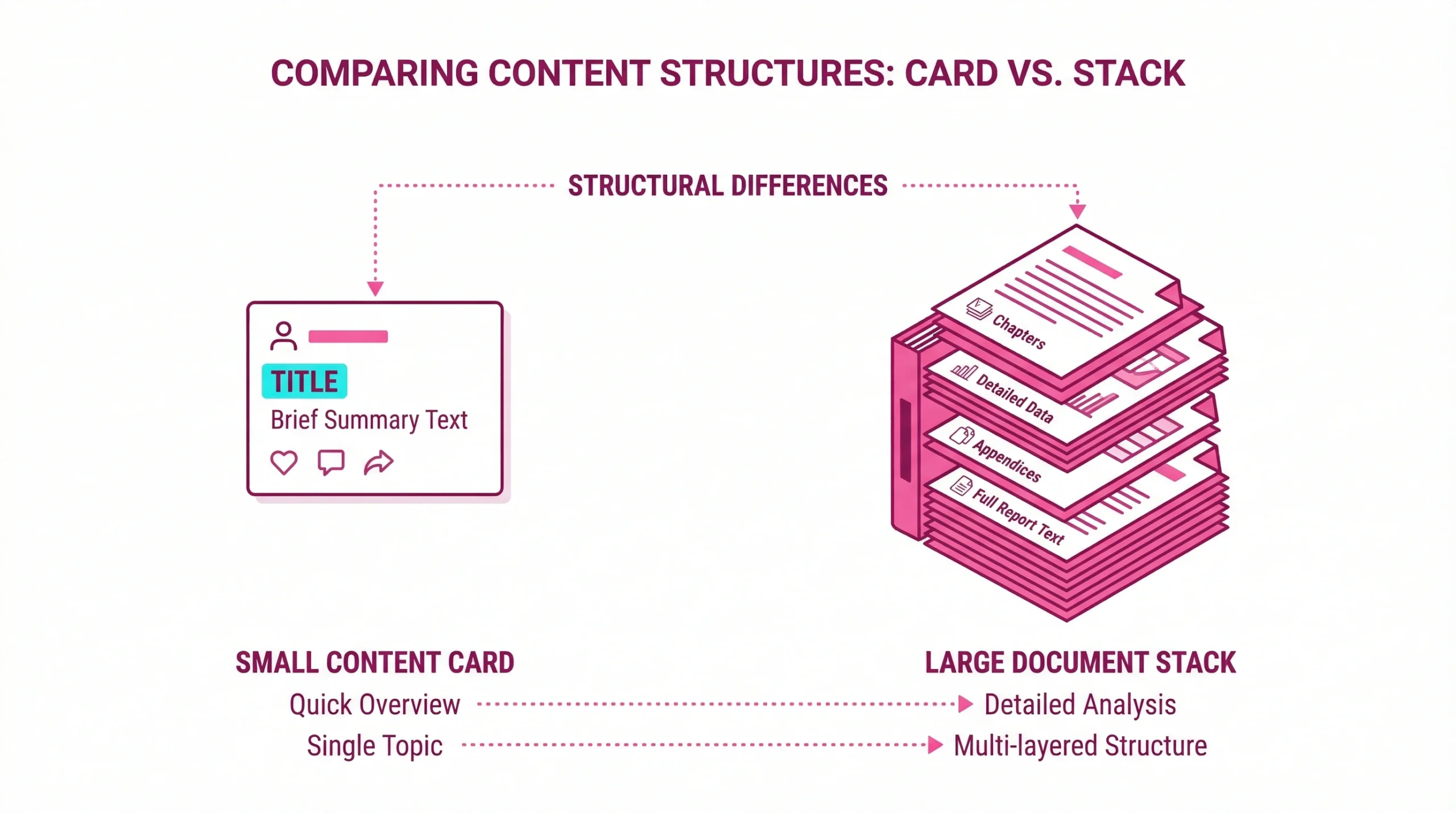
Understanding this distinction helps you align each format with the right goal in your content strategy. Both have a place — the key is knowing which one fits the moment.
Key Characteristics of Short-Form Content Pieces
Short-form writing is designed for speed and immediacy. It delivers a quick answer, suits high-frequency publishing, and works well for social engagement.
Typical traits:
- Under 1,000 words focused on a narrow angle
- Optimized for a single target keyword
- Easier to produce at volume
- Best suited for news, updates, and social posts
Strategic Advantages of Writing Long-Form Content
When you write long-form content, you give yourself room to build trust with your audience. You can address the full scope of a topic, answer questions people ask across different stages of the funnel, and demonstrate real expertise. Long-form content also creates space to prove authority in a way that shorter articles simply cannot match. This is where the benefits of long form content become most visible.
Key advantages:
- Better alignment with complex search intent
- More opportunities to include related material and semantic terms
- Stronger foundation for internal linking across your site
- Higher engagement and dwell time from genuinely curious readers
- Greater potential to earn backlinks from other publishers
Choosing the Right Format Based on Marketing Goals
If your goal is brand awareness or social reach, shorter articles may serve you better. If you aim to rank in SERPs, build topical authority, or generate leads through gated material, longer pieces are typically the stronger choice. Always match your format to the objective — not the other way around.
Why Long-Form Content Matches Search Intent Better
Search intent is the foundation of effective content marketing. Understanding why content is important to get right — and why someone runs a Google search — helps you build articles that genuinely address their need rather than just targeting a phrase.
Definition of Search Intent Types
There are four primary types of search intent that guide how you write:
- Informational – The user wants to learn or understand something
- Navigational – The user is looking for a specific website or brand
- Transactional – The user intends to complete a purchase
- Commercial investigation – The user is comparing services or products before deciding
Aligning Comprehensive Depth with User Queries
Long-form content goes beyond a surface-level response. For informational and commercial intent queries, a comprehensive approach addresses the full range of questions people ask around a topic. This means your article isn’t just answering one query — it anticipates follow-up questions and removes the need for a second search.
Analyzing SERP Layout to Determine What Content Needs to Rank
Before you produce your piece, examine the search engine results pages for your target query carefully. Look at what top-ranking pages include — whether that is a comparison table, a numbered process, or a thorough explanation. Using a keyword research tool at this stage reveals gaps in existing coverage that your article can fill.
Useful tools for SERP analysis and keyword research:
- SEMrush — Comprehensive keyword research, competitor gap analysis, and SERP tracking. SEMrush’s Keyword Magic Tool is particularly strong for uncovering related clusters and questions people ask around a topic.
- Google Search Console — Free insight into how your pages perform in Google Search, including click-through rate, average position, and impression data.
- Ahrefs — In-depth backlink analysis and page explorer for identifying top-ranking material in any niche.
Why Long-Form Content Still Works for SEO Today
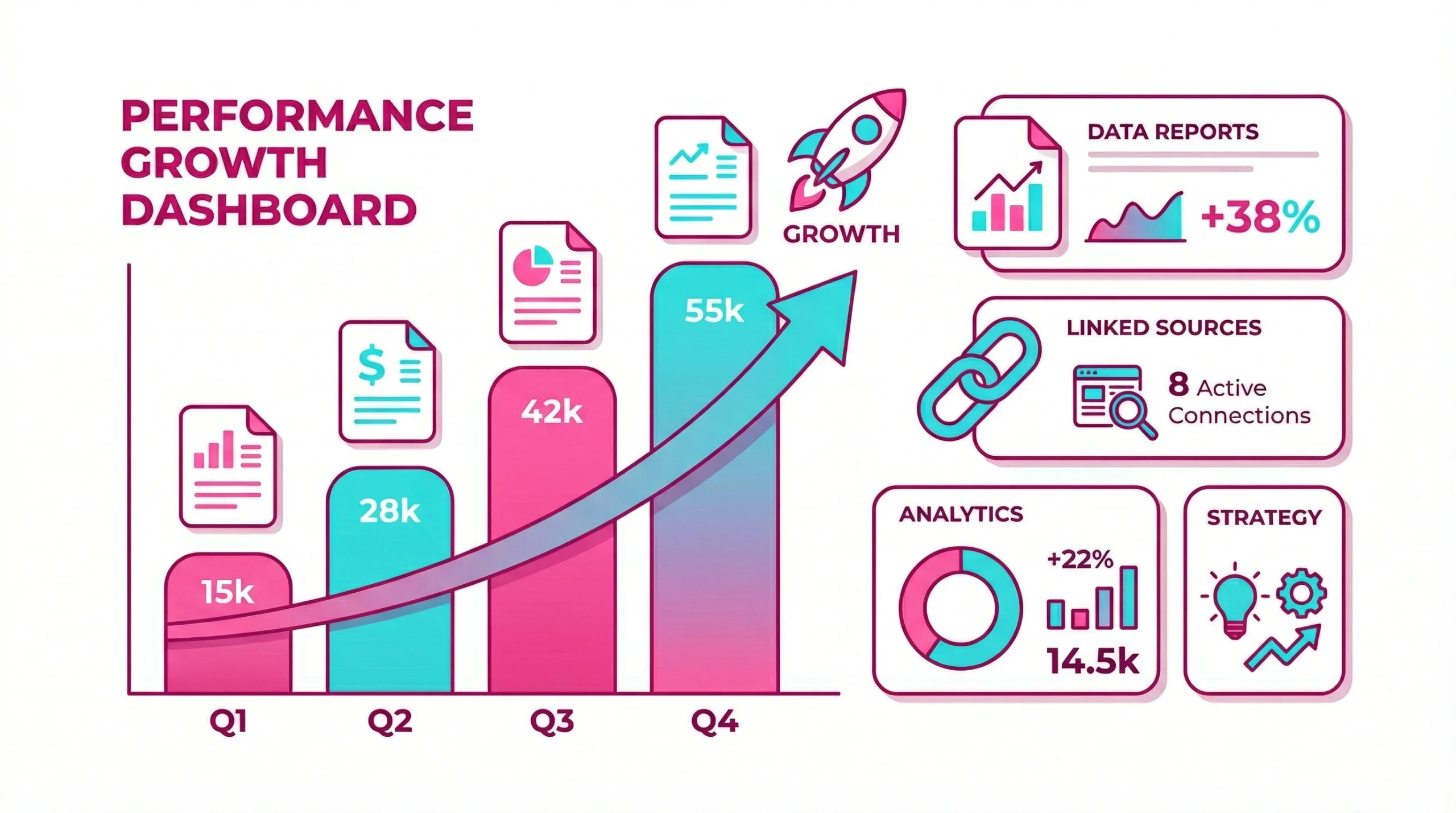
Despite constant changes to how search engines process pages, comprehensive writing remains a reliable asset in any marketer’s toolkit.
Rewards for Comprehensive Topical Coverage and Intent Alignment
Google’s ranking systems favor pages that satisfy a user’s full query. Articles that cover a topic from multiple angles — including definitions, examples, comparisons, and practical steps — tend to perform better across a broad range of queries. Great content works because it reduces the need for the user to search again after reading it.
Ranking for Long-Tail and Related Search Variations
A single comprehensive article can rank for dozens of variations of your target keyword. As your piece of content covers more facets of a subject, it naturally incorporates long-tail queries. This is one of the clearest benefits of long form content from a search traffic perspective — one page, many entry points.
Internal Linking Opportunities and Building Topical Authority
Longer content provides more natural anchor points for internal links. By connecting your blog posts and guides through a well-planned hub structure, you signal to search engines that your site has deep coverage of a subject. This helps every page on your site gain authority collectively, not just in isolation.
Increasing Dwell Time and Engagement Behavioral Signals
When users spend more time on a page, it signals relevance to search engines. High-performing long-form articles keep readers engaged because the material gives genuine value at every stage. Difficult to read formatting, on the other hand, drives users away — so structure matters as much as the substance itself.
Higher Chances of Earning Backlinks and Social Shares
According to Backlinko’s large-scale content analysis, long-form content earns significantly more backlinks than shorter articles on average. Comprehensive research, original data, and detailed guides attract citations naturally because other writers and publishers find them worth referencing.
Planning and How to Make Long-Form Content
A well-researched plan saves time and significantly improves the final quality of your output before you write a single word.
Table of Contents: Organizing Your Structural Aims
Map your structure before drafting. A clear table of contents helps you identify gaps, avoid repetition, and keep logical flow throughout the article. It also signals to readers that the piece is well-organized — which builds trust before they even begin reading.
Identifying Target Audience Needs and Pain Points
Understanding who you are writing for is as important as knowing what to write. Build a clear picture of your audience’s goals, frustrations, and the questions people ask before buying a product or service. This directly shapes every section of your outline.
Mapping Search Intent to Article Flow
Once you know your target keyword and the intent behind it, structure your article flow around that intent specifically. Informational content should move from definitions to practical insight. Commercial content should move from comparison to recommendation, with actionable next steps at the end.
Building Comprehensive Outlines Through Competitor Analysis
Review the top-ranking pages for your topic. Identify what they cover well and where they fall short. Your outline should address everything competitors cover — and then offer something additional, whether that is greater depth, original data, or a clearer step-by-step explanation the reader can actually follow.
Best Practices for Writing Long-Form Content
Executing well on a plan requires both craft and technical discipline working together.
Developing Semantic Depth and Topic Coverage
Avoid fixating solely on a single target keyword. Build content that covers the full topic, including related terms, synonyms, and subtopics. Google’s guidance on helpful content emphasizes that a page should demonstrate expertise on the subject as a whole, not just target a phrase repeatedly.
Methods to Demonstrate E-E-A-T
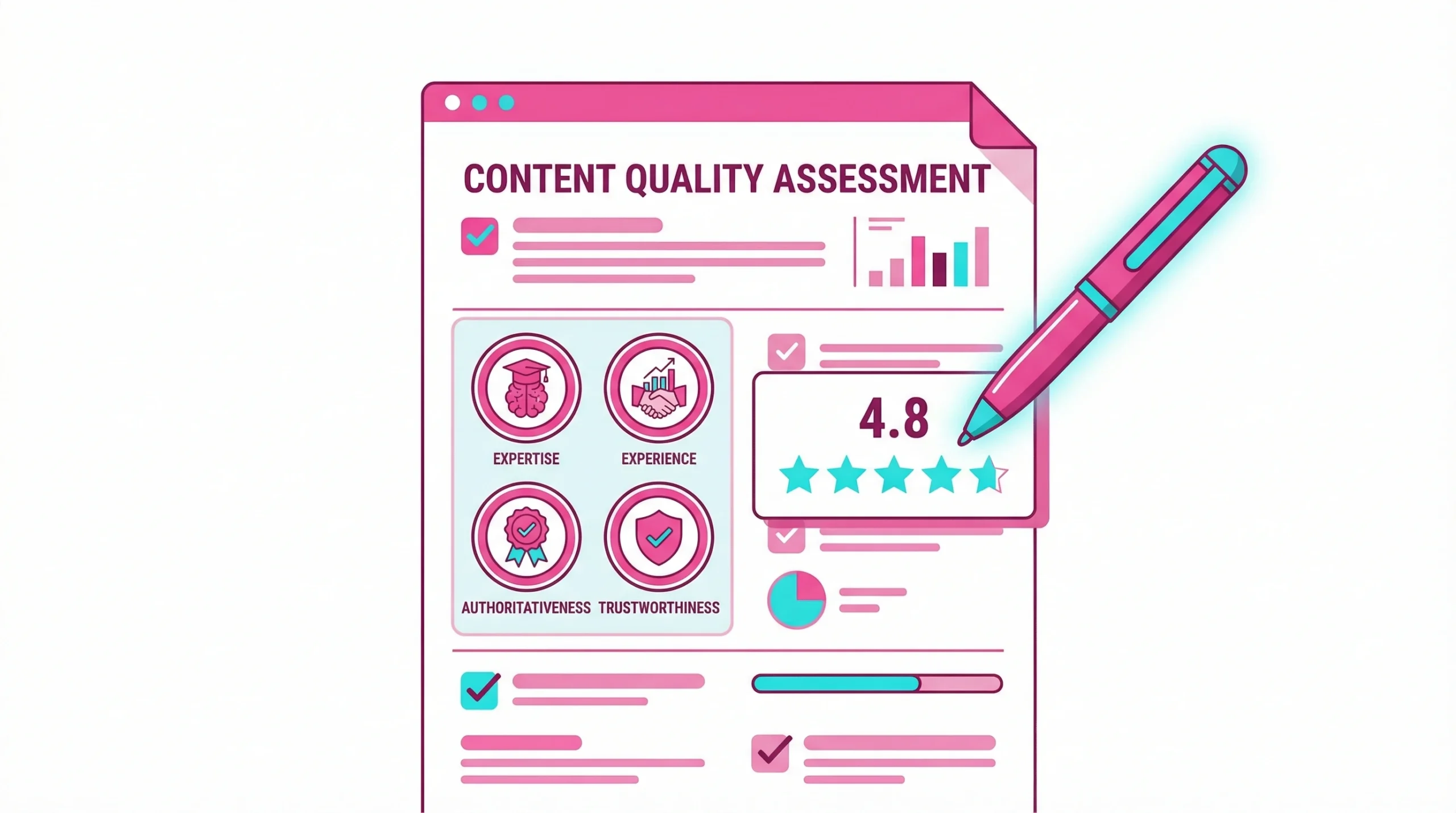
E-E-A-T — Experience, Expertise, Authoritativeness, and Trustworthiness — is central to how Google evaluates written content. Practical ways to build trust with your audience include:
- Including author bios with verifiable credentials or experience
- Referencing and linking to credible data sources
- Adding first-hand examples, case data, or client outcomes
- Reviewing and updating content to maintain accuracy over time
Making Your Content Skimmable and Reader-Friendly
Most readers scan before they commit to reading in full. Difficult to read walls of text push users away quickly. Use short paragraphs, subheadings, bullet points, and tables to help readers find what they need without friction.
Practical readability tips:
- Keep most paragraphs under 100 words
- Use a subheading every 200–300 words
- Break long processes into numbered steps
- Use white space intentionally to reduce cognitive load
Utilizing Technical Optimization and Crawlability
An SEO writer should pay equal attention to technical signals. These include proper heading hierarchy, schema markup for FAQ or how-to content, clean URL structures, and fast page load times. Monitoring your content on your site through Google Search Console helps you catch crawl errors and indexing issues early.
Incorporating First-Party Data for High Impact
Original research and proprietary data make your content stand out in a way that no competitor can replicate. Whether it is a customer survey, an internal case study, or aggregated performance analytics, first-hand insight adds a layer of credibility that purely derivative content cannot match.
High-Performing Content Types with Examples
Different goals call for different formats. Understanding which structure delivers the most value helps you make smarter decisions when planning your content strategy.
Comprehensive Pillar Pages and Evergreen Posts
A pillar page serves as a hub for a core topic. It links out to more specific cluster pages and covers the subject broadly without exhausting every detail. This structure is highly effective for building topical authority and supporting the SEO performance of related content across your site.
Detailed Case Studies and Research Reports
Case studies are a strong example of long-form pieces that directly build credibility. They show real outcomes tied to your services or products, and they give prospective buyers actionable proof of what works in practice. Including specific metrics strengthens them further.
In-Depth Tutorials and How-To Guides
Guides and tutorials are among the most shared forms of written content online. They are valuable because they walk readers through a process in a logical, step-by-step sequence — providing value at every stage of learning rather than leaving the reader to figure out the gaps.
Whitepapers and Ebooks for Lead Generation
Gated content like whitepapers and ebooks allows you to offer deeper research in exchange for contact details. According to Content Marketing Institute’s annual research, long-form gated content remains one of the top lead generation formats for B2B marketing, particularly where buyers want detailed analysis before committing to a purchase.
Long-Form Content in the Age of AI Overviews and Passage Indexing
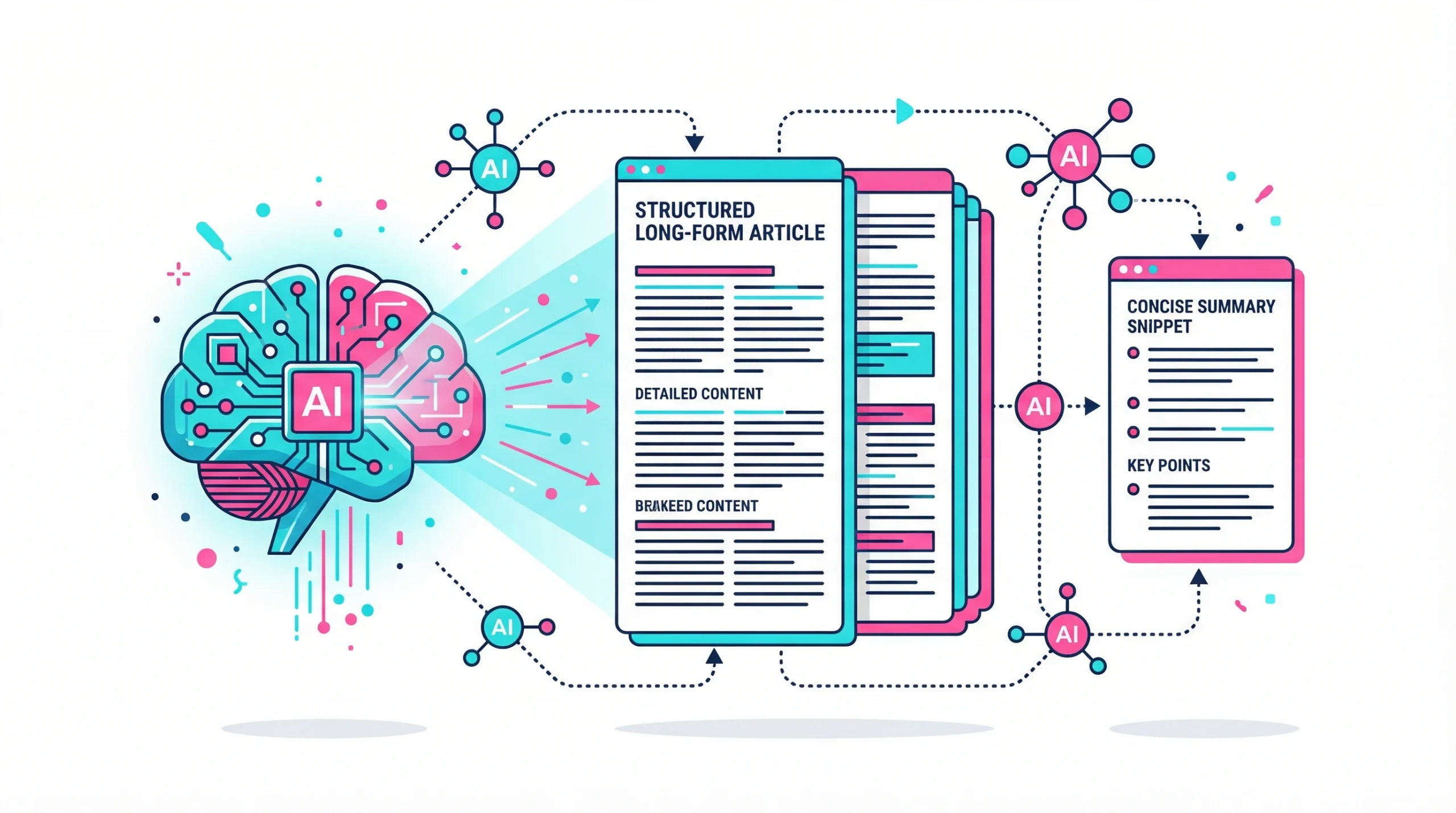
AI-powered search features are reshaping how content gets surfaced. Understanding these systems helps you write content that performs in both traditional and AI-driven results.
How LLMs Extract Answers from Specific Passages
Large language models used in AI overviews scan individual passages within a page rather than evaluating the full document as a single unit. This means each paragraph can independently surface in an AI-generated summary. Structuring your content so each section stands on its own is therefore more important than ever.
Structuring Pieces for AI-Generated Summaries
Write content so that each section answers a self-contained question. A well-structured paragraph that opens with a direct answer, followed by supporting detail, is the format most likely to be extracted and cited. Avoid burying the core point in the middle of a long passage.
Writing Machine-Readable Content for Modern Search
Use proper heading tags, schema markup, and concise paragraph openings. Content that is easy for a human to skim is also easier for an AI system to parse and extract. Clarity and structure are the best dual investment you can make for both audiences simultaneously.
Common Mistakes in Long-Form Content Creation
Even experienced writers fall into predictable traps when producing content at scale. Avoiding these errors separates high-performing articles from forgettable ones.
Prioritizing Word Count Over Actual Value
Content isn’t valuable because it contains thousands of words. Every section should earn its place by answering a genuine question or providing useful information. Padding length without adding real insight is one of the most common reasons otherwise well-optimized pages fail to rank or retain readers.
Keyword Stuffing and Over-Optimization Issues
Over-optimizing content with repetitive keyword use damages readability and can attract algorithmic penalties. A natural writing style incorporates the target keyword and related terms organically — never forcing the same phrase into every other sentence at the expense of clarity.
Ignoring Schema Markup and Internal Linking Strategies
Many writers focus exclusively on copy and overlook technical elements entirely. Schema markup helps search engines understand your content structure, and proper internal linking distributes authority across your site. Both are worth treating as core parts of the writing process, not afterthoughts.
Failing to Refresh Content or Maintain Relevance
Content on your site has a shelf life. Data changes, tools evolve, and search intent shifts over time. Content that isn’t refreshed gradually loses rankings as fresher, more accurate pages take its place. Build a review schedule and treat updating existing articles as part of your ongoing content strategy.
FAQ
Images alone do not directly improve rankings, but they support readability and can drive additional traffic through image search. Well-optimized visuals with descriptive alt text contribute to overall page quality. Including relevant diagrams or screenshots reinforces the content’s depth and keeps readers engaged for longer, which positively affects behavioral signals like dwell time and scroll depth.
The right update frequency depends on how time-sensitive your topic is. For evergreen content marketing guides, a thorough review every 12 months is often sufficient. For topics tied to tools, platforms, or rapidly shifting industry trends, revisiting every six months is more appropriate. Checking your performance data in Google Search Console will reveal when a page is losing impressions or traffic — the clearest signal that a refresh is overdue.
Well-structured longer content does not harm mobile experience when formatted correctly. Short paragraphs, clear subheadings, and responsive design ensure that even a comprehensive piece of content reads comfortably on smaller screens. The issue arises when a page lacks structure and forces mobile users to scroll through dense, unbroken text without clear signposts or natural visual breaks to guide them.
Google does not enforce a maximum word count. Search engines evaluate content on the basis of relevance, quality, and user satisfaction rather than length. However, content that extends well beyond what a reader needs to answer their query may see diminishing engagement over time. The goal is to match content length to the genuine depth a topic requires, not to hit an arbitrary number of thousands of words.
AI tools can generate solid structural drafts and assist with initial research, but they work best as a starting point rather than a finished product. High-performing long-form content requires original insight, first-hand experience, and careful editorial judgment that current tools do not fully replicate on their own. An SEO writer who uses AI assistance while adding genuine expertise, real data, and a unique perspective will consistently produce stronger results than those relying entirely on automated output.
Google Search Console provides data on impressions, clicks, and average position for each piece of content on your site. Pairing this with a behavioral analytics platform helps you measure scroll depth, session duration, and exit rate. These combined signals give a complete picture of whether your long-form content is genuinely engaging readers or simply attracting initial clicks that do not lead to meaningful interaction or conversion.