
London has become one of Europe’s most active hubs for search innovation. As AI-powered search tools reshape how people discover information online, the demand for agencies that understand both traditional SEO foundations and the newer requirements of AI search environments has grown sharply. This guide covers ten of the best options available to businesses in 2026.
10 Best AI SEO Agencies in London
The agencies below each bring a distinct approach to combining traditional and AI search optimisation. Whether you are an ecommerce brand, a B2B company, or a professional services firm, there is an option here suited to your needs.
1. Tenet

Tenet is a London-based marketing agency that has built its reputation on a rigorous technical foundation. The team works with businesses across B2B and SaaS sectors, combining structured data implementation with entity-rich content strategies. Their approach to AI search visibility is rooted in making content interpretable to both search engines and AI systems simultaneously.
Key strengths:
- Technical SEO and crawl architecture
- Entity optimisation and schema markup
- Strategy aligned with how AI systems interpret content
- Strong fit for professional services and technology firms
2. Kaizen
Kaizen is a well-established digital PR and content marketing agency in the UK. Over the past few years, the agency has expanded its service offering to address the growing intersection of digital PR and AI search. Their work focuses on building the kind of sustained, authoritative presence across the web that large language models are more likely to reference.
Key strengths:
- High-volume digital PR campaigns that generate genuine authority
- Content strategy tailored to AI citation patterns
- Strong track record across consumer and media-facing brands
- Integrated approach that connects link acquisition to AI entity signals
3. Aiiimpact
Aiiimpact is an agency built specifically around AI search optimisation. Rather than treating it as an add-on to broader SEO work, the agency focuses exclusively on helping brands appear in AI-generated answers across platforms like ChatGPT and Perplexity. Their methodology includes semantic structuring, prompt-intent mapping, and consistent entity signal management.
Key strengths:
- Purpose-built focus on AI search environments
- Expertise in generative engine optimisation (GEO)
- Prompt-intent analysis to align content with AI query patterns
- Transparent reporting on AI mention frequency and citation rates
4. SINE Digital

SINE Digital is a London agency that combines performance marketing with an evolving AI search practice. The team works primarily with ecommerce and retail clients, helping them maintain strong SEO foundations while adapting their content and structure to meet the demands of generative search. Their dual focus makes them a practical choice for businesses that need both short-term results and longer-term AI search preparation.
Key strengths:
- Ecommerce SEO with AI search integration
- Performance marketing expertise alongside organic strategy
- Adaptable frameworks for brands at different stages of AI readiness
- Clear reporting on both traditional and emerging search metrics
5. FDRY
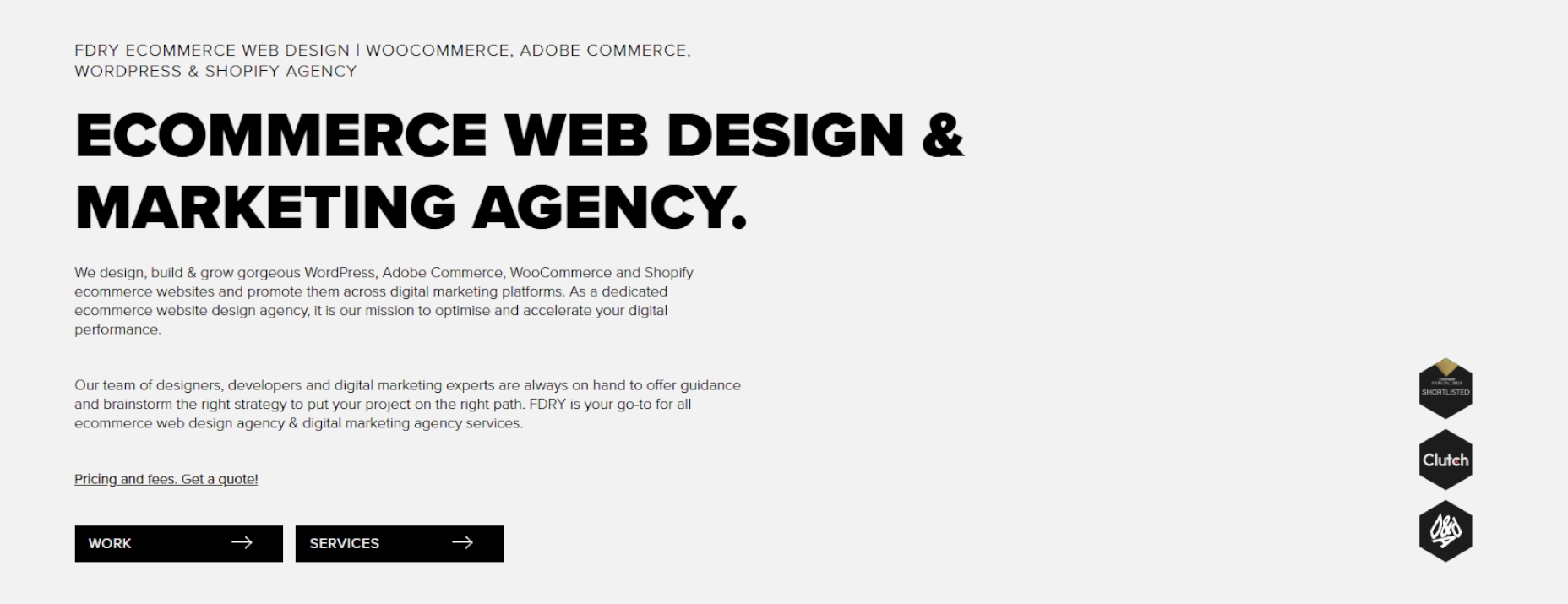
FDRY is a London agency known for content architecture and strategic SEO. Their approach combines technical SEO foundations with structured long-form content frameworks that tend to perform well in AI summaries. The agency serves mid-market businesses and has developed a methodology that connects content depth with AI discoverability.
Key strengths:
- Content architecture designed for AI surfacing
- Technical SEO auditing with AI-readiness assessment
- Long-form content strategies that support featured placement
- Suitable for mid-market brands with complex content requirements
6. Rank4AI

Rank4AI is one of the more specialist options on this list. The agency was formed with a clear purpose: helping businesses appear in AI-generated results rather than just traditional search listings. Their work treats AI search not as a standalone tactic but as an integrated component of a broader SEO strategy, which reflects a mature understanding of how AI seo works in practice.
Key strengths:
- Dedicated focus on AI search environments
- Generative engine optimisation and schema strategy
- Transparent benchmarking and AI metric reporting
- Accessible entry points for businesses new to AI search preparation
7. ClickSlice
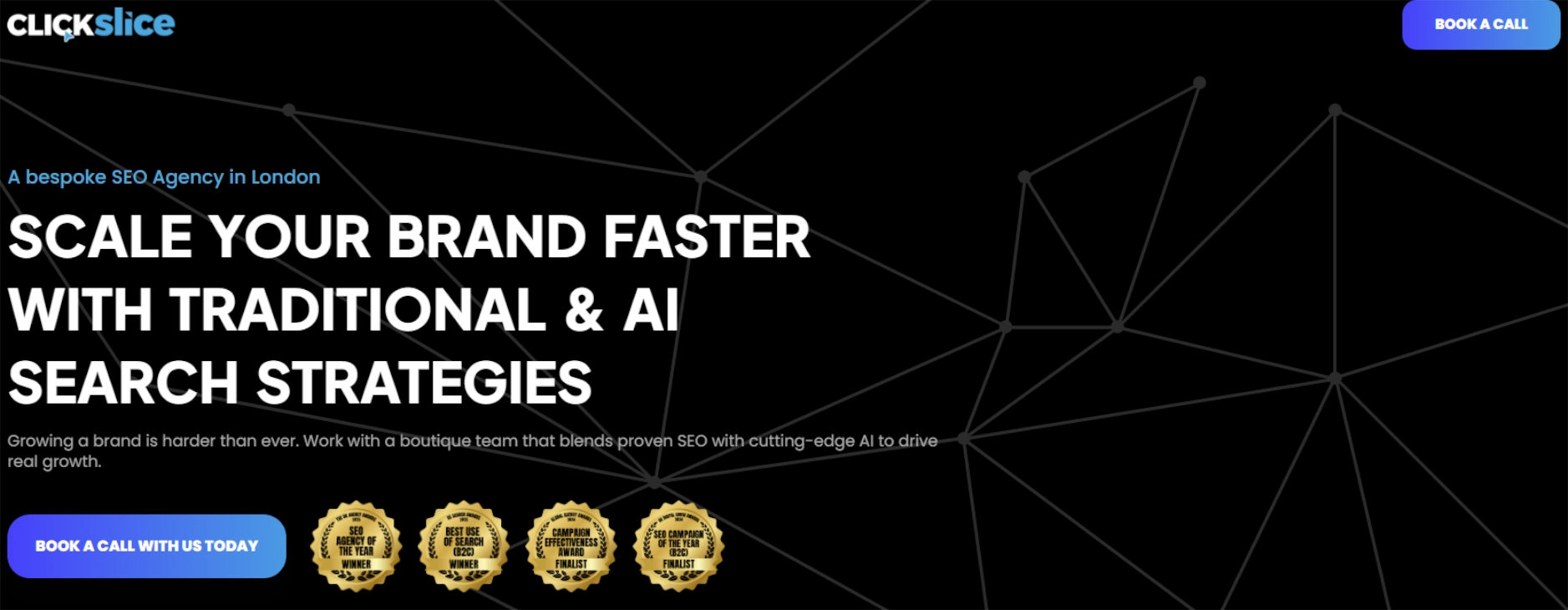
ClickSlice is a well-regarded SEO agency in the UK with a growing presence in AI search optimisation. Founded in London, the agency is known for results-focused SEO campaigns that combine precise keyword research with strong technical delivery. In recent years, ClickSlice has begun adapting its processes to account for how AI models evaluate and prioritise content, making it a solid choice for growing businesses.
Key strengths:
- Strong track record in traditional search results
- Active transition towards AI-aligned content and schema practices
- Accessible for SMEs and scaling ecommerce businesses
- Detailed keyword and semantic research capabilities
8. Digital Search Group
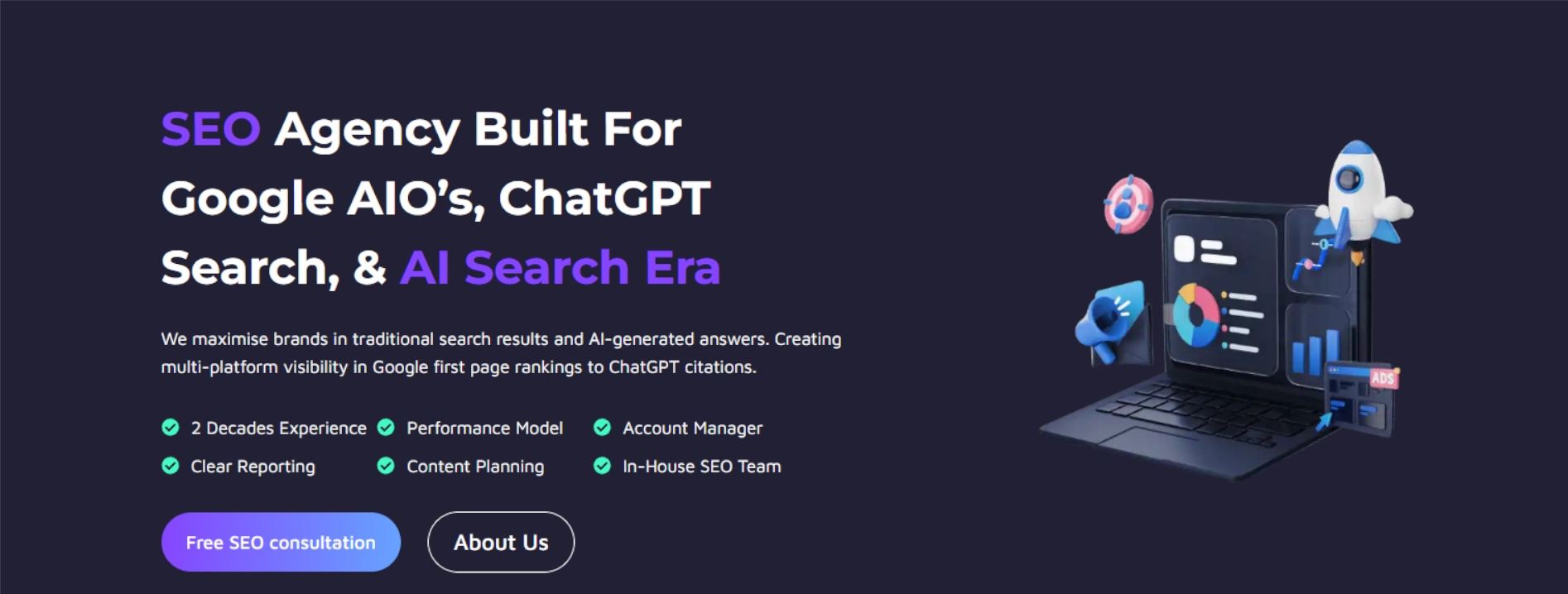
Digital Search Group is a full-service UK agency that understands both the technical and content dimensions of modern SEO. The agency works across multiple sectors and offers comprehensive audits that assess traditional SEO fundamentals alongside emerging AI search requirements. Their breadth of experience makes them a reliable choice for multi-sector businesses.
Key strengths:
- Full-service SEO covering technical, content, and link acquisition
- Detailed auditing aligned with AI-ready optimisation criteria
- Multi-sector experience across B2B, retail, and services
- Clear reporting frameworks for both traditional and AI search metrics
9. Appear Online
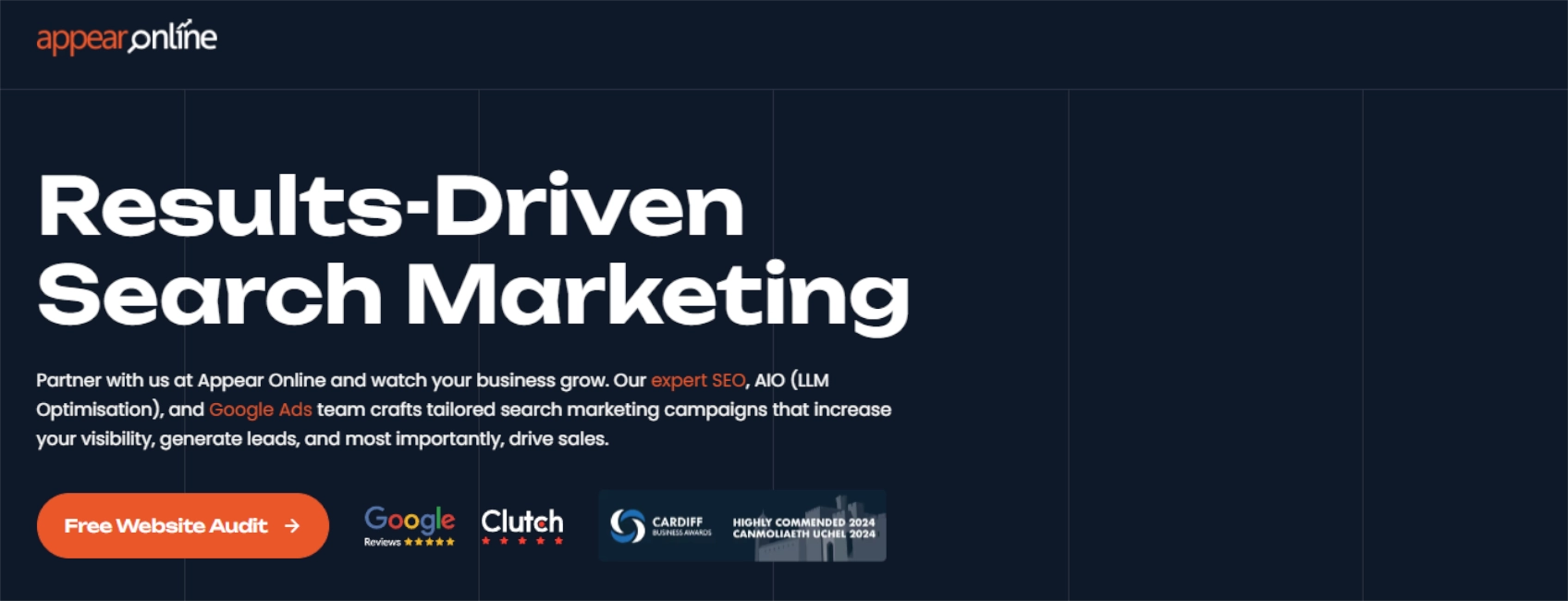
Appear Online is an agency with a clear specialism in helping businesses gain visibility across search engines and AI systems. Their work spans organic SEO, structured data implementation, and digital PR — three areas that together support performance in both traditional search results and AI search environments. For service businesses scaling nationally, they represent a strong integrated option.
Key strengths:
- Integrated organic SEO and digital PR
- Structured data expertise for AI platform compatibility
- Suitable for service businesses and nationally scaling brands
- Consistent approach across search engines and AI platforms
10. The SEO Works
The SEO Works is one of the most established SEO agencies in the UK, with offices across England including London. The agency focuses on ethical, data-led strategies with a long record of delivering results for complex clients. As AI search has emerged as a priority, the team has developed frameworks to help clients maintain and grow visibility across both traditional and AI search environments.
Key strengths:
- Deep experience in national and ecommerce SEO
- Structured AI search adaptation built on strong SEO foundations
- Ethical, data-driven approach aligned with quality guidelines
- Strong fit for established businesses with layered SEO requirements
How AI SEO Is Different from Traditional SEO
Traditional SEO and AI search optimisation share the same fundamental goal: helping your brand get found. However, the mechanics are increasingly different. Search engines now operate alongside AI platforms that generate direct answers rather than ranked lists of links. Understanding both is essential.
Generative Engine Optimization and GEO Services
Generative Engine Optimisation (GEO) is the discipline of structuring content so that generative AI platforms surface it within their responses. Unlike traditional search ranking, GEO focuses on making content citable and trustworthy in the eyes of AI models.
Key signals that support GEO performance include:
- Clear authorship and named entity attribution
- Factual, verifiable claims backed by credible sources
- Consistent brand mentions across authoritative domains
- Schema markup that clarifies the type and context of content
- Structured formatting that allows AI systems to extract clean answers
Entity-Rich Content for LLM Interpretation
Large language models do not read content the way a human or traditional crawler does. They identify and map relationships between entities — brands, people, topics, and facts. Content that explicitly establishes these relationships tends to be surfaced by AI systems more reliably.
Writing that references real organisations, named experts, specific data sources, and concrete concepts tends to outperform generic descriptive content across AI search environments.
Transition from Keyword Density to Semantic Intent
Traditional SEO placed significant weight on keyword frequency and placement. AI search optimisation shifts the emphasis to semantic intent — understanding what a user is actually trying to accomplish and providing the most complete, trustworthy answer available. According to research from SparkToro, zero-click searches now account for a substantial portion of all queries, which makes on-page content quality and direct answer formatting more important than ever.
Structured Data for ChatGPT and Perplexity Visibility
Structured data, particularly schema markup, helps AI platforms understand the context and type of information on a page. Implementing FAQ schema, Article schema, and Organisation schema has been shown to improve how content is interpreted and cited in AI-generated answers.
This is one of the most practical and measurable actions a business can take to improve its AI search performance in the short term.
Why Your Company Needs AI-Ready SEO Now
Businesses that delay preparing for AI search risk losing ground not just in AI overviews but across the broader range of touchpoints where buying decisions are increasingly being influenced by generative tools.
Future-Proof Online Visibility
Search behaviour is shifting faster than most businesses realise. More users are beginning their research on AI assistants rather than typing queries into a traditional search engine. According to Gartner, search engine volume could drop by as much as 25 percent by 2026 as AI chatbots handle a growing share of informational queries. Brands that invest in AI search visibility now position themselves ahead of this shift.
Performance Benchmarks and AI Search Metrics
Measuring performance in AI search environments requires different benchmarks than those used in traditional SEO. The table below outlines the main differences:
| Dimension | Traditional SEO | AI Search Optimisation |
| Primary goal | Page ranking in search results | Brand citation in AI-generated answers |
| Key authority signal | Backlinks and domain authority | Entity consistency and source reputation |
| Content focus | Keyword alignment | Semantic intent and factual completeness |
| Primary measurement | Rankings and organic traffic | AI mention frequency and citation rate |
| Monitoring tools | Google Search Console, Ahrefs | AI monitoring platforms, brand listening tools |
Brand Mention Tracking in AI-Generated Answers
Tracking where and how your brand appears in AI-generated answers is now a core part of any forward-looking SEO strategy. Specialised monitoring tools allow businesses to identify when AI systems cite their content, which offers real insight into how well the work is performing.
This kind of tracking also reveals gaps — topics where competitors are being cited and your brand is absent — which informs both content strategy and digital PR priorities.
Competitive Edge in AI Overviews
Google’s AI Overviews now appear at the top of many search results pages, frequently taking precedence over the traditional first organic result. Brands structured and authoritative enough to feature in these summaries gain meaningful exposure without requiring a click. This makes appearing in AI search results a genuine competitive advantage rather than a secondary consideration.
Key AI SEO Services for London Businesses
London businesses have access to a growing range of specialist AI SEO services. The most effective approaches combine technical rigour with content depth and ongoing authority building.
Comprehensive AI SEO Audit and Strategy
A thorough AI SEO audit should cover the following areas:
- Site structure and crawlability for both search engines and AI systems
- Schema and structured data implementation and gaps
- Content quality, semantic depth, and entity alignment
- Backlink profile strength relative to AI authority signals
- Brand mention frequency and consistency across external sources
- Competitive positioning in AI-generated answers within your sector
Medical and Business Schema for AI Search
Schema markup is one of the most direct ways to communicate content context to AI platforms. For medical, legal, and professional services businesses, implementing sector-specific schema types helps AI systems accurately represent services and build the trust signals that influence citation decisions.
Content Architecture for Search Success
Effective content architecture for AI search involves a structured, intentional approach:
- Build topic clusters around core entities relevant to your business
- Use clear headings and formatted structures that allow clean extraction
- Cite authoritative sources within content to reinforce credibility
- Maintain consistent internal linking that reinforces topic authority
- Ensure factual claims are verifiable and properly attributed
- Update content regularly to reflect current information and data
Advanced Keyword Research via AI Tools
AI-driven research tools have moved beyond simple search volume data. Platforms like Semrush and Ahrefs now surface semantic clusters and intent-based opportunities that reflect how users actually phrase queries in AI-assisted search environments. Using these tools effectively allows agencies to identify not just what people search for, but what AI platforms are most likely to answer — and which gaps present opportunities for your brand.
What to Look for in AI SEO Agency
Choosing the right AI SEO agency involves more than reviewing a portfolio. The field is still evolving, which means experience, transparency, and adaptability matter as much as credentials or agency size.
Proven Case Studies and Success Metrics
Ask any prospective agency for documented examples of clients who have seen measurable improvement in AI search visibility. The best agencies will provide clear before-and-after data showing changes in brand mention frequency, featured placement rates, and organic traffic from AI-influenced queries.
Agencies that can only reference vague outcomes or traffic uplift without attribution to specific AI search activity are a yellow flag.
Active Practitioners in Generative Engine Technology
The right agency will have team members actively working with GEO techniques, not just writing about them. Look for agencies that publish original thinking on AI search, contribute to industry conversations, and demonstrate hands-on experience across AI search environments. An agency that cites only general AI trends without specific technical depth is unlikely to deliver meaningful results.
Flexible Pricing and ROI-Focused Frameworks
AI SEO timelines vary depending on sector competitiveness, current SEO foundation strength, and the specific platforms being targeted. Agencies that offer flexible pricing models tied to clear deliverables and ROI benchmarks tend to be better aligned with client outcomes. Avoid agencies that bundle AI search work into inflexible retainers with no visible link to measurable performance.
Industry Suitability for B2B and E-commerce
Not every agency suits every sector. Ecommerce SEO and B2B SEO each have specific requirements that intersect differently with AI search optimisation. Confirm the agency has relevant industry experience before committing — a strong consumer brand case study is not evidence of B2B expertise, and vice versa.
Common AI SEO Challenges and Solutions
Even with the right agency in place, AI search optimisation comes with its own set of recurring challenges that businesses should be prepared for.
Addressing AI-Generated Content Safety
AI content tools can accelerate production significantly, but unreviewed AI output carries real risks. Factual errors, hallucinated statistics, and inconsistent brand voice can damage credibility. The best agencies use AI tools for research and drafting while applying rigorous human editorial review before anything is published.
Overcoming Data Privacy and Security Hurdles
Businesses in regulated industries — healthcare, legal, financial services — face additional complexity when incorporating AI tools into SEO workflows. A reputable agency will have clear data handling policies and will not process sensitive client information through third-party AI models without appropriate agreements and safeguards in place.
Managing AI Vanity Metrics vs Real Growth
AI search visibility can generate impressive-looking metrics that do not translate into business outcomes. Brand mention frequency in AI answers is meaningful only if it correlates with referral traffic, lead generation, or conversion behaviour. A good agency will help you distinguish genuine authority growth from surface-level statistics.
Integrating Traditional Backlinks with AI Entities
Traditional SEO and AI search optimisation are not competing approaches — they reinforce each other. Strong backlink profiles contribute to the entity authority that AI systems rely on when deciding which sources to cite. Combining traditional backlink acquisition with structured entity optimisation produces the most durable and compounding results over time. Research from Moz consistently shows that entity-based signals are playing a growing role in how search engines and AI systems assess source credibility.
FAQs – Deep Dive into AI Search
AI SEO is the practice of optimising your website and content so that AI-powered tools — including Google AI Overviews, ChatGPT, and Perplexity — are more likely to surface your brand in their responses. It builds on traditional SEO foundations but adds a layer of semantic structuring, entity optimisation, and structured data implementation to ensure AI systems can accurately interpret and cite your content when users ask relevant questions.
Yes, though the mechanism is indirect. ChatGPT and similar large language models are trained on vast volumes of web content, and platforms like Perplexity pull from live web sources when generating answers. Brands that are consistently mentioned across authoritative sources, maintain strong entity signals, and produce factual, well-structured content are more likely to appear in AI-generated responses over time, though the process is not as direct or measurable as traditional search ranking.
AI SEO timelines vary significantly depending on the current strength of your SEO foundation, how competitive your sector is, and which AI platforms you are prioritising. Businesses with well-established technical SEO and content infrastructure tend to see early signals — such as increased brand mention frequency in AI answers — within three to six months, though building meaningful, sustained authority in AI search environments typically takes longer and requires consistent, ongoing effort.
FAQ schema communicates directly to AI platforms that a section of your content is designed to answer specific questions in a structured format. This makes it significantly easier for AI systems to extract and cite your content in response to user queries, improving the likelihood that your answers appear in AI summaries and featured placements across multiple platforms — particularly for informational and decision-stage queries where AI tools are most frequently consulted.
AI SEO and PPC management serve genuinely different purposes and perform best when used together. AI search optimisation builds organic visibility and brand authority over time, creating compounding returns, while PPC delivers immediate, measurable traffic with direct conversion data. As AI search environments continue to evolve, the relationship between organic authority and paid visibility will keep shifting, but both remain relevant and complementary components of a balanced digital marketing strategy for most businesses.