

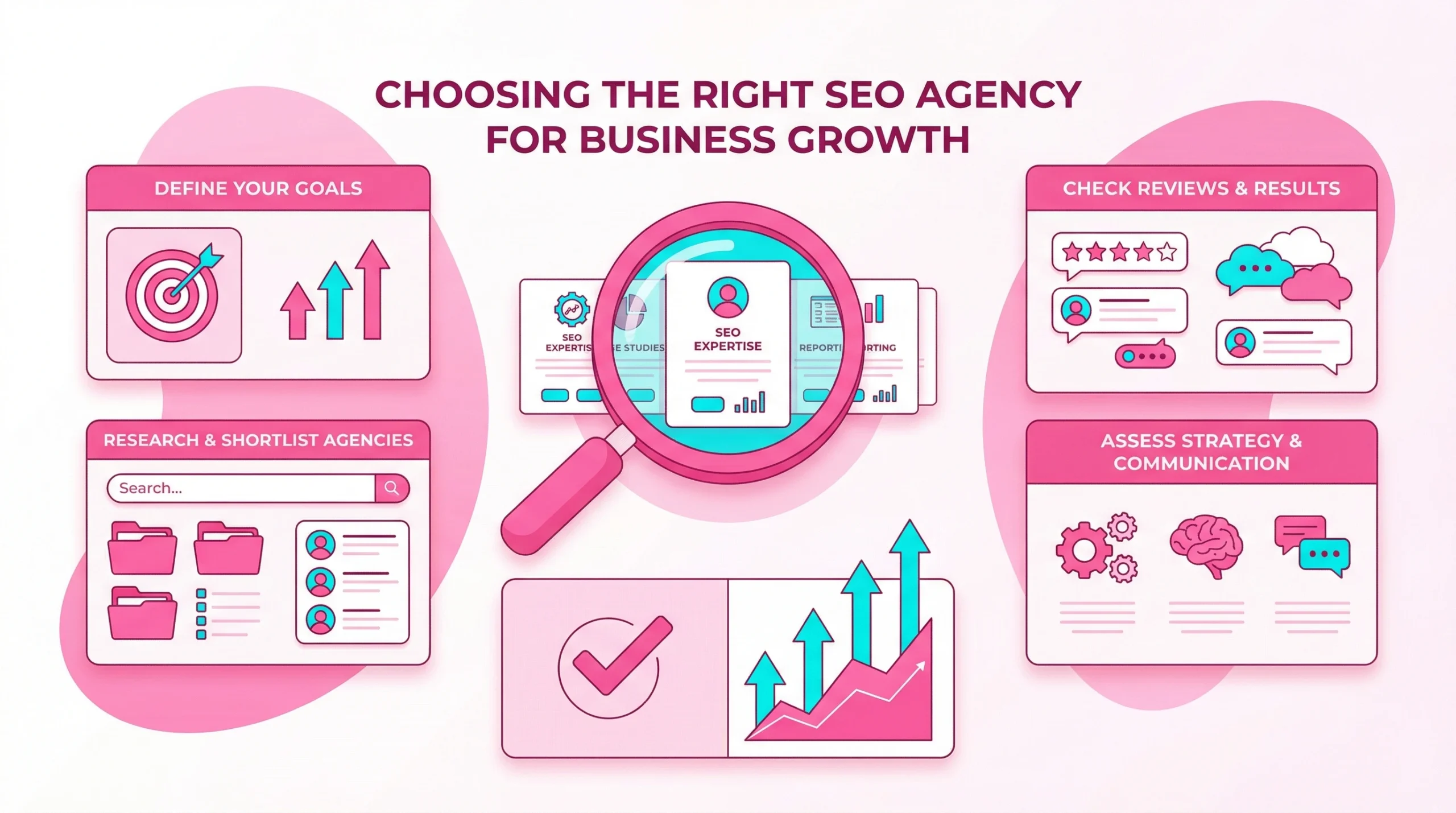
Knowing how to choose the right SEO agency ranks among the most consequential decisions a growing brand can make. Whether your aim is to generate more leads for your business, enter competitive new markets, or help your business thrive with lasting authority online, the agency you work with will directly shape those outcomes. This guide helps business owners navigate every stage of that process with confidence and clarity.
5 Factors to Use When Evaluating SEO Companies
Before reaching out to any provider, develop a clear evaluation framework. Choosing the right SEO company for your business without defined criteria leads to mismatched expectations and wasted budgets.
Factor 1: Aligning SEO Strategy with Traffic and Conversion Goals
A credible partner works to understand your business goals before proposing any plan. Traffic volume alone is not a meaningful objective unless it connects to real conversions. Look for a company that ties every recommendation to qualified outcomes — whether purchases, form completions, or booked consultations.
- Does the agency link keyword targets to buyer intent stages?
- Can they show how past SEO efforts translated into measurable conversions?
- Do they prioritize high-value pages over general blog output?
Factor 2: Core Emphasis on Technical SEO vs. Content Strategy
Providers vary significantly in their strengths. Some focus on technical SEO — crawl architecture, Core Web Vitals, schema — while others center their work on editorial planning. Effective SEO requires both, so identify where any agency places most of its emphasis before committing.
A well-rounded SEO approach typically covers:
- Site architecture and internal linking structure
- Metadata, structured data, and page speed
- Content gap analysis aligned to search demand
Factor 3: Content Fulfillment Capabilities for Professional SEO Services
Quality content output is central to quality SEO. If an agency lacks the capacity to produce consistent, well-researched material, your SEO investment will plateau. Ask whether in-house writers hold genuine expertise in your field or rely entirely on generalist freelancers unfamiliar with your market.
Factor 4: Dedicated Landing Pages vs. Standard SEO Practices
Not every provider builds conversion-focused landing pages as part of SEO best practices and standard service delivery. Some campaigns require purpose-built pages for specific services, locations, or promotions. Confirm this capability early, particularly if growth depends on service-area targeting or individual product lines.
Factor 5: Specialized Expertise in Product and Service Copywriting
Copy quality affects both rankings and conversion rates simultaneously. An agency that understands your industry writes more relevant service pages, which reduces bounce rates and improves dwell time — both meaningful signals for search algorithms. Verify whether their writers have demonstrated knowledge in your sector before agreeing on terms.
Identifying Your SEO Needs and Marketing Goals

Clarity about your internal objectives makes every agency conversation more productive. An SEO company can help you align those objectives with realistic targets, but your SEO goals should emerge directly from your business goals, not be imposed on them after the fact.
Researching Highest Value Buying Intent Keywords
Map out keywords that indicate purchase readiness before any agency contact. Transactional searches attract buyers; informational searches attract readers. Business owners frequently discover that a small cluster of high-intent terms drives most revenue, yet these phrases remain underrepresented in existing content.
Questions worth asking internally:
- Which searches take visitors directly to service or product pages?
- What do customers typically ask before making a purchase decision?
- Which competitor pages rank for your most commercially valuable terms?
Assessing Performance Against Competitor SEO Campaigns
Benchmarking current performance against competitor campaigns reveals where your gaps are largest. SEO tools such as Semrush or Ahrefs expose which pages earn backlinks, which topics rivals dominate, and which content formats attract the most organic traffic. This data shapes a more realistic scope of work and clarifies what it will take to grow your business through search.
Establishing Realistic SEO Budget for Long-term Scalability
Long-term SEO is a commitment, not a short sprint. Expecting transformative results within 30 days creates the wrong foundation. A budget supporting ongoing SEO across 6 to 12 months — covering audits, content, link acquisition, and reporting — reflects how sustained organic growth actually works.
| Monthly Budget | Typical Scope |
| Under $1,000 | Basic audits, minimal content |
| $1,000 – $3,000 | Content production and link building |
| $3,000 – $8,000 | Full-service campaigns with reporting |
| Above $8,000 | Enterprise-level or highly competitive niches |
Evaluating Right SEO Company Expertise and Approach
Once your internal picture is clear, evaluate top SEO candidates rigorously. A reputable company welcomes scrutiny and offers evidence rather than vague assurances.
Reviewing Detailed Case Studies from Best SEO Experts
Request case studies specific to your industry, audience size, and campaign type. Vague results presented without time frames or baselines are not meaningful evidence. An agency with a proven track record shares detailed SEO results — before-and-after data across rankings, traffic, and conversions — without hesitation or caveats.
Checking Client Testimonials for a Good SEO Company
Look beyond testimonials hosted on an agency’s own site. Independent reviews on platforms such as Clutch, G2, or Google Business Profile provide more reliable signals. Consistent feedback around communication quality, reporting clarity, and measurable results is what separates a good SEO agency from one with polished marketing but limited outcomes to show.
Verifying White Hat Methods and Ethical Search Engine Rankings
Ask every agency how they build backlinks and whether any tactics fall outside Google’s published guidelines. Black hat SEO may produce short-term visibility gains but carries significant penalty risk. Ethical SEO, built on legitimate content and editorial outreach, is the only long-term approach worth funding.
Essential Questions to Ask Before Hiring an SEO Agency
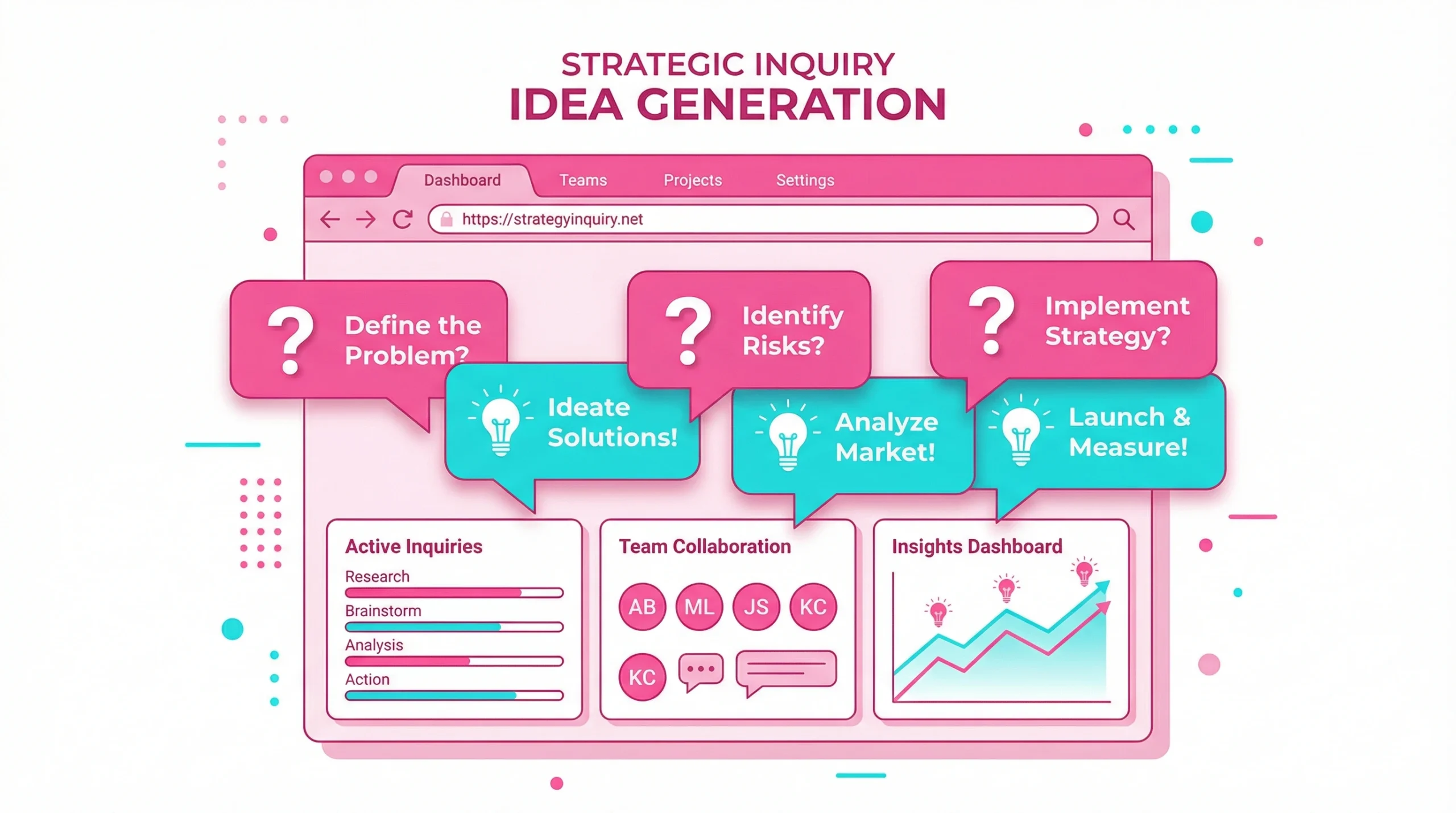
Asking the right questions about SEO tactics and strategy during evaluation separates agencies with genuine substance from those with polished pitch decks. Prepare specific inquiries before any formal discussion begins.
Inquiry Into Reporting Transparency and Strategic Communication
An agency will be transparent about performance if there is real substance behind its work. Establish early how often reports are delivered, which metrics appear, and how issues are raised. Monthly reporting is the minimum baseline for any ongoing engagement.
Key questions to prepare:
- How frequently are campaign reports delivered?
- Which KPIs are tracked, and how are they defined?
- What is the typical response time for strategy-related questions?
Verification of Niche Expertise for Your Right SEO Agency
An agency with relevant industry experience requires less onboarding time and fewer unfounded assumptions about your market. Ask for examples of clients in adjacent sectors and what measurable results were produced. Real familiarity with your audience helps an agency move faster and make better decisions throughout.
Clarification of Processes for On-page and Off-page Optimization
Ask any shortlisted agency to walk through its approach to both on-page SEO and off-page SEO. On-page work includes heading structure, internal linking, metadata, and content optimization. Off-page SEO covers backlink acquisition, brand mentions, and domain authority growth. A clear, articulate answer signals genuine expertise over surface-level familiarity.
Red Flags to Avoid When Choosing the Right SEO
Recognizing warning signs early protects your budget and your site’s standing in search results. Always ensure the agency you shortlist operates with integrity — not just confident language.
Risks of Guaranteed Rankings from Unreliable SEO Companies
No credible provider guarantees specific positions. Any agency should be able to explain clearly why guarantees are misleading — Google’s algorithm accounts for hundreds of variables, and promises of first-page placement within a defined number of days should disqualify a provider immediately.
Lack of Transparency in Execution and Backlink Profiles
Agencies that resist sharing link-building methods or backlink data are protecting something worth questioning. Low-quality or purchased links can trigger manual penalties from Google. Always request direct access to backlink reports, and treat hesitation on this topic as a firm warning.
Watch for these warning signs:
- Evasive answers about link sources or methods
- No access to live backlink reporting dashboards
- Reluctance to discuss any past site penalties or algorithm impacts
Concerns With Inflexible or Vague Digital Marketing Plans
A credible agency presents a tailored plan reflecting your industry, competitive environment, and audience. If the proposal resembles a generic package with different branding applied, it was probably not built with your situation in mind. Any plan that cannot be clearly explained or adjusted is a liability.
Comparing Different Types of SEO Agencies for Business
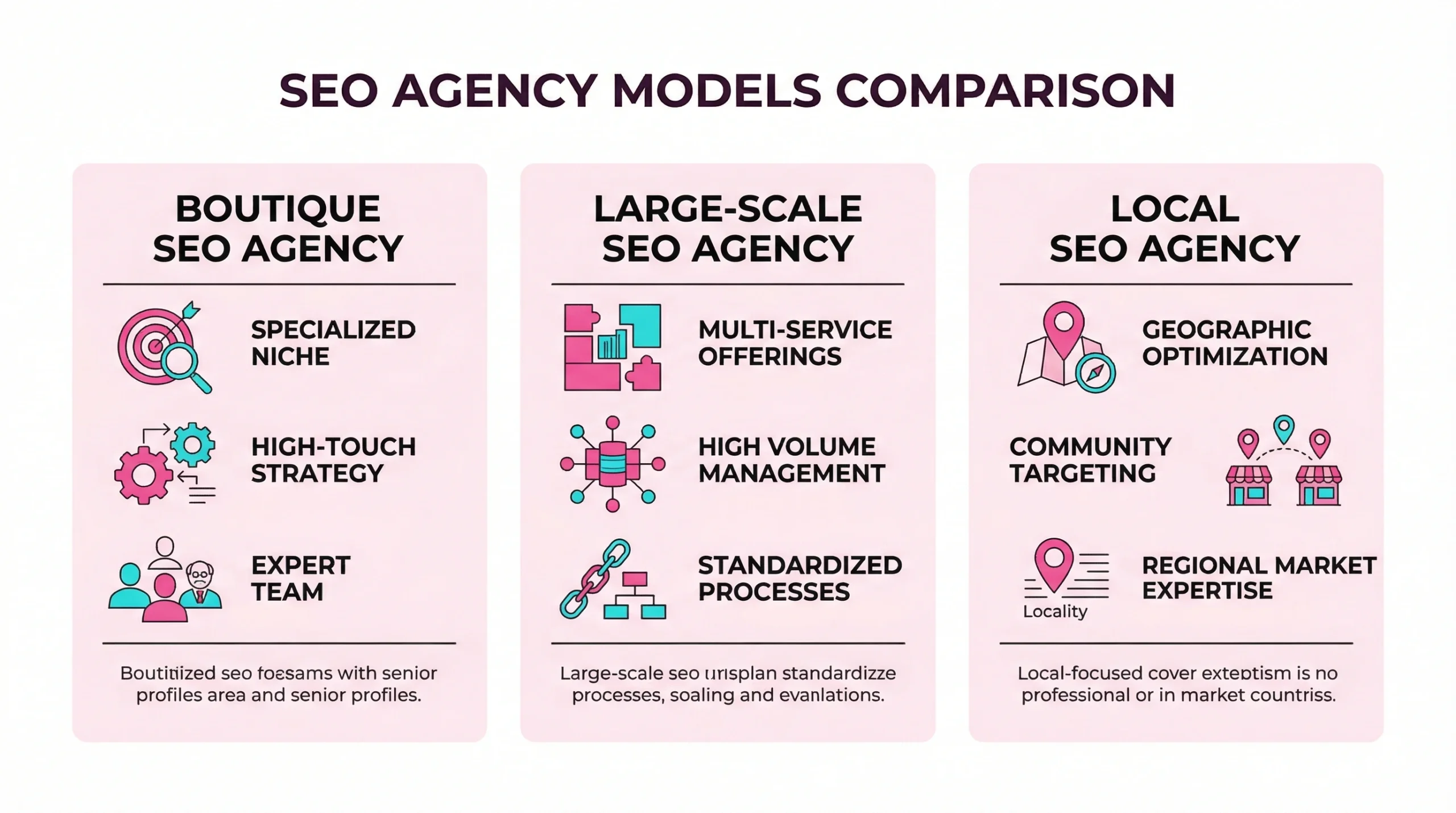
The SEO industry includes several distinct operating models. Understanding each helps you identify the ideal SEO structure for your needs and budget.
Boutique Agencies vs. Large-scale SEO Service Providers
Boutique agencies generally offer more direct access to experienced staff and greater flexibility. Large providers bring broader resources and established processes but may assign junior team members to smaller accounts. Neither is universally superior — the better choice depends on your campaign complexity and how much senior involvement you expect.
| Comparison Point | Boutique Agency | Large-scale Provider |
| Account attention | High | Varies by account size |
| Pricing structure | Mid-range | Tiered, often higher |
| Flexibility | Strong | More structured |
| Specialization | Often industry-specific | Typically broader scope |
Local SEO Specialists vs. International Firms
For businesses serving a defined region, a specialist in local search will outperform a generalist partner in most cases. For brands expanding across multiple countries, international SEO expertise — including hreflang implementation, regional content planning, and foreign-language link acquisition — becomes genuinely necessary. According to BrightLocal’s annual local consumer review research, consumer search behavior varies significantly by geography, confirming the practical value of specialist regional knowledge.
General Marketing Agencies vs. Dedicated SEO Professionals
A general digital marketing agency bundles SEO alongside paid media, social, and email. Dedicated SEO professionals focus exclusively on organic performance. For businesses where organic visibility drives the majority of revenue, choosing the right agency — a specialist firm aligned entirely around search — typically delivers stronger long-term outcomes because their entire team, toolset, and culture aligns around one discipline.
Finalizing Selection and Working With an SEO Partner

With two or three agencies shortlisted, the final decision rests on fit as much as capability. Building a successful SEO partnership involves more than technical competence — it requires genuine alignment on communication and expectations.
Gauging Compatibility and Team Communication Style
Observe how an agency communicates during the pitch itself. Do they ask questions before proposing solutions? Do they demonstrate real understanding of your market context? Poor communication at the proposal stage rarely improves after the contract is signed. This stage is the clearest preview of how the working relationship will function.
Reviewing Service Promises and Performance Metrics
Before any agreement is made, confirm exactly what deliverables you receive each month.
Confirm in writing before signing:
- Monthly content output and formats
- Link acquisition scope and methodology
- Reporting cadence and metric definitions
- Access credentials for all analytics accounts
Securing Clear Contract Terms for Professional SEO Services
A well-defined contract protects both parties and prevents disputes down the line. Before you commit to any SEO company to work with long-term, review ownership of all content, account access on termination, and the minimum engagement length. Some agencies structure agreements so they retain content or access rights when the relationship ends — a risk entirely avoidable with careful review upfront.
According to Google’s Search Essentials documentation, transparency and guideline compliance are foundational to sustainable performance in search, making your agency’s contractual honesty a direct reflection of their broader professional standards.
Key contract terms to verify:
- Ownership of all published and unpublished content
- Full account access upon contract termination
- Defined performance review milestones
- Notice period requirements for ending the engagement
Frequently Asked Questions
The questions below address the practical concerns that business owners most often raise when evaluating search partners. Each answer reflects common scenarios in the SEO industry.
Request documented case studies that include starting metrics, a description of actions taken, and measurable outcomes over a defined period. Ask whether supporting data can be confirmed through tools such as Google Analytics or Search Console, and whether you can speak with the clients referenced. Agencies with a genuine track record share this evidence as part of their standard process, not reluctantly under pressure.
Low-quality link building typically involves links placed on irrelevant sites, private blog networks, or low-traffic directories with no real editorial standards. If a provider promises a high volume of links at unusually low cost without explaining their sources or methods, that is a reliable warning. Ethical link building earns placements from relevant, authoritative domains through content quality, outreach work, and digital public relations — not bulk transactions.
All content, platform accounts, and analytics access should be explicitly assigned to the client in the contract before any work begins. In any professionally structured arrangement, everything created on your behalf belongs to your business. If an agency is unwilling to confirm ownership terms in writing before the engagement starts, that reluctance reveals a structural conflict of interest serious enough to disqualify them.
For campaigns requiring consistent content production, link acquisition, and performance monitoring, a monthly retainer provides better continuity and accountability than isolated project work. Project pricing suits defined, time-limited deliverables such as technical audits or initial strategy development. The right model should reflect the ongoing nature of what your campaign requires, since organic growth rewards sustained effort more than sporadic activity.
A technical audit surfaces the structural issues that prevent search engines from properly crawling and indexing your site. Producing content or building links before resolving these problems produces weaker results than the same work on a technically sound site. Starting with an audit also creates a clear baseline, making it far easier to measure progress accurately throughout the campaign.
Modern search algorithms and genuine user experience are closely aligned. Pages that load quickly, present content clearly, and address user intent without unnecessary friction tend to perform better in rankings and convert more effectively. A well-constructed SEO strategy improves both dimensions simultaneously, meaning that work done to satisfy search requirements almost always improves the actual visitor experience as well.
Monthly reporting represents the standard minimum for any ongoing engagement. Higher-quality providers often supplement monthly data reports with quarterly strategy reviews that assess broader trends and adjust priorities based on performance. Reports should cover ranking movements, organic traffic growth, conversion data, and a clear summary of completed work, giving you an accurate picture of what the campaign has produced.
Begin by securing complete access to all accounts, including Google Analytics, Search Console, and any third-party tools used during the previous engagement. Request a handover document summarizing active campaigns, backlink profiles, and any known technical issues or penalties. Allow your new agency sufficient time to complete a thorough audit before launching fresh activity, since abrupt structural changes can temporarily disrupt rankings during the transition period.