

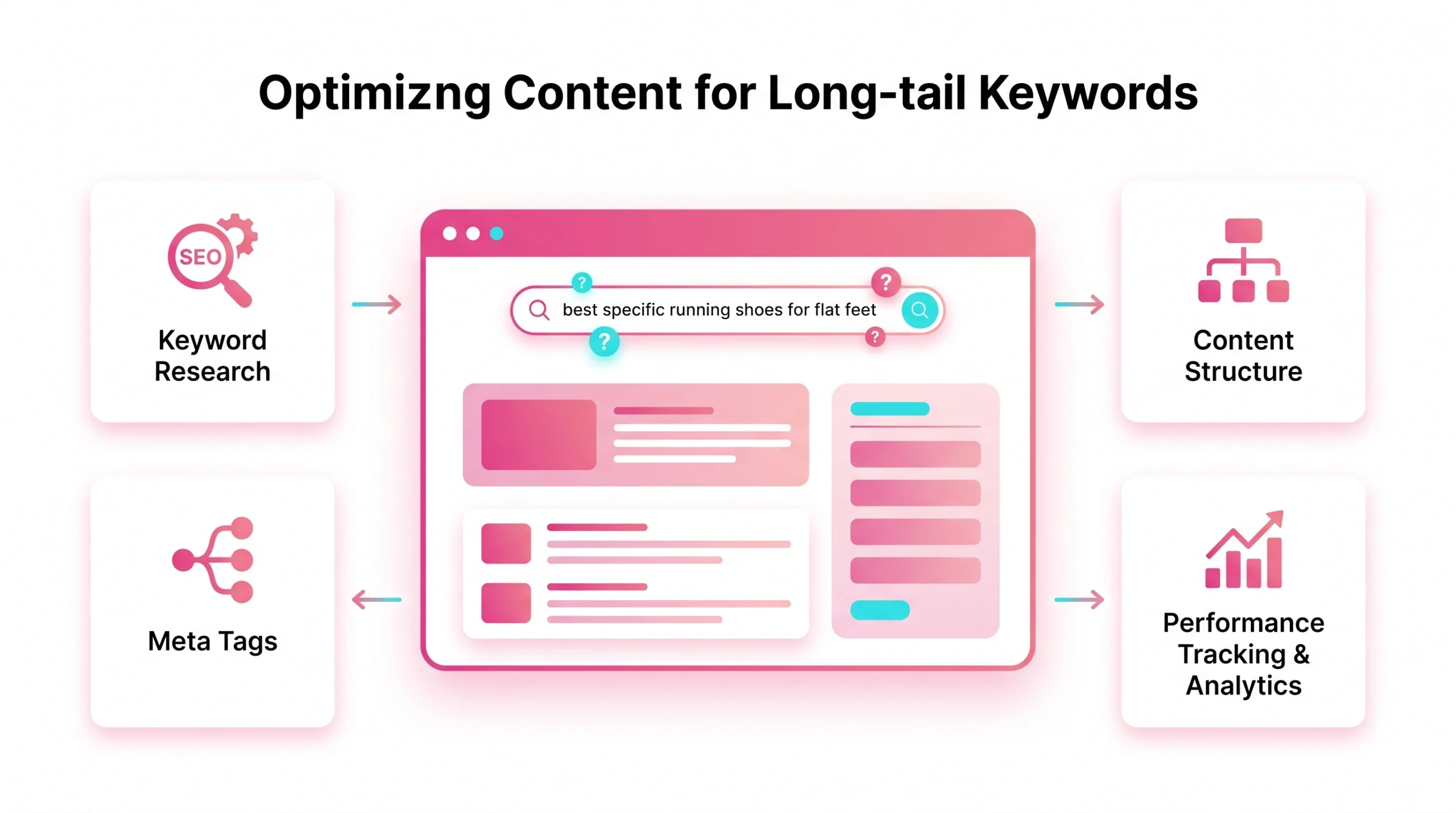
Long tail optimisation helps businesses win qualified search demand instead of chasing broad visibility alone. For marketing teams, the practical goal is simple: connect precise search queries with useful pages that answer intent, support decisions, and give readers enough confidence to take the next step.
Strong seo strategies do not force repeated phrases into every paragraph. They rely on thorough research, clear structure, content creation workflows, editorial judgment, and accurate examples so every target keyword serves a genuine reader need rather than a mechanical search engine signal.
Where Should You Use Long-Tail Keywords on a Website?
Long-tail phrases should appear where they clarify the page’s meaning for visitors and search systems. The best placements help readers confirm that a page matches their need, while weak placements create keyword stuffing, thin relevance, and a worse experience.
On-Page Copy and Headings
Use one primary long-tail keyword near the opening of the page, then support it with related phrases, entities, examples, and proof. Headings should describe value clearly, while body copy should explain the topic with enough context for both people and search engine crawlers.
Meta Titles and Meta Descriptions
Meta titles should connect a focused keyword with a clear benefit, audience, or situation. Meta descriptions can mention use case, outcome, and value proposition, so a search result snippet feels relevant before the user decides whether to click.
URLs and Internal Anchor Text
Short URLs can include a specific keyword when it helps users predict the page topic. Internal links should use descriptive anchors that explain the destination, such as “local seo content checklist,” rather than vague labels that add no context.
Image Alt Text, Structured Data, and FAQ Markup
Alt text should describe the image’s purpose for accessibility first, with relevant wording only when it improves clarity. Structured data can help search systems identify page type, products, questions, or reviews, but FAQ markup should be used only when visible answers are genuinely useful.
Dedicated Landing Pages
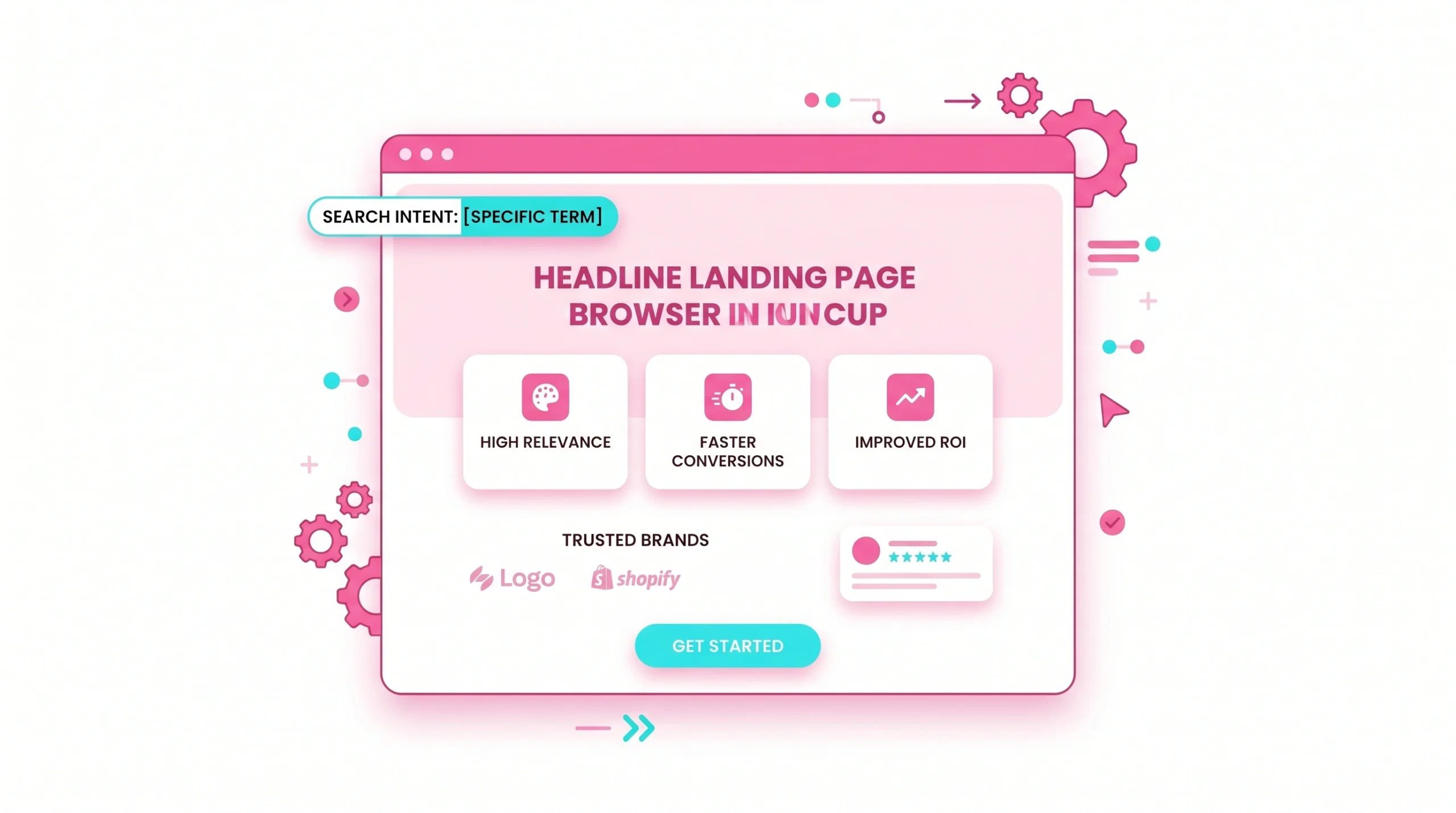
Dedicated landing pages are useful when one topic needs its own proof, offer, audience, and conversion path. They work best for commercial search queries where the visitor already knows the problem and expects a specific solution.
Local, SaaS, and E-commerce Pages
Local pages should combine service, area, and situation, such as emergency roof repair after storm damage in a specific city. SaaS pages can focus on roles, workflows, integrations, and pain points, while ecommerce pages should help shoppers compare size, compatibility, material, and use case.
PPC and Conversion-Focused Copy
PPC campaigns perform better when ad copy, landing page headline, and offer match the same query family. Use proof blocks, objection handling, short testimonials, comparison notes, and clear calls to action so paid visitors understand why your solution fits their needs.
Multimedia Content
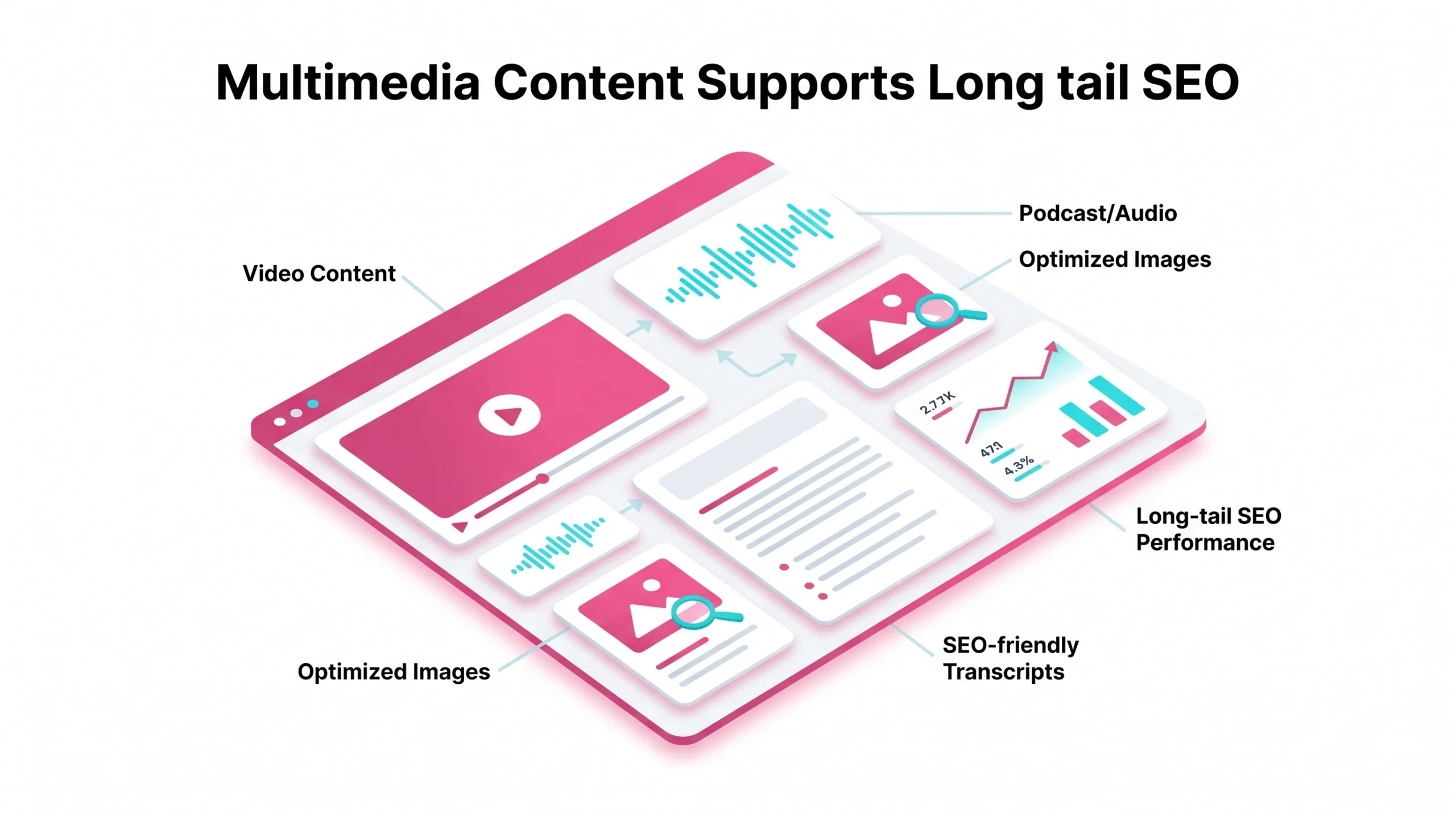
Multimedia gives long-tail content more entry points across organic search, video platforms, social feeds, and AI summaries. Video, audio, images, transcripts, and short snippets can capture searches that written pages may miss or only partially answer.
Video Titles, Descriptions, and Transcripts
Video titles can target question-based phrases when the content answers a direct problem. Descriptions should summarise steps and outcomes, while transcripts capture natural expert language and can be edited into searchable sections with internal links to related pages.
Podcast Notes, Image SEO, and Short-Form Snippets
Podcast notes should include guest credentials, main ideas, timestamps, and resources so listeners can scan for value quickly. Images need descriptive alt attributes, while short videos or carousel posts can test question-based topics before you invest in a full article.
Optimised Product and Category Pages
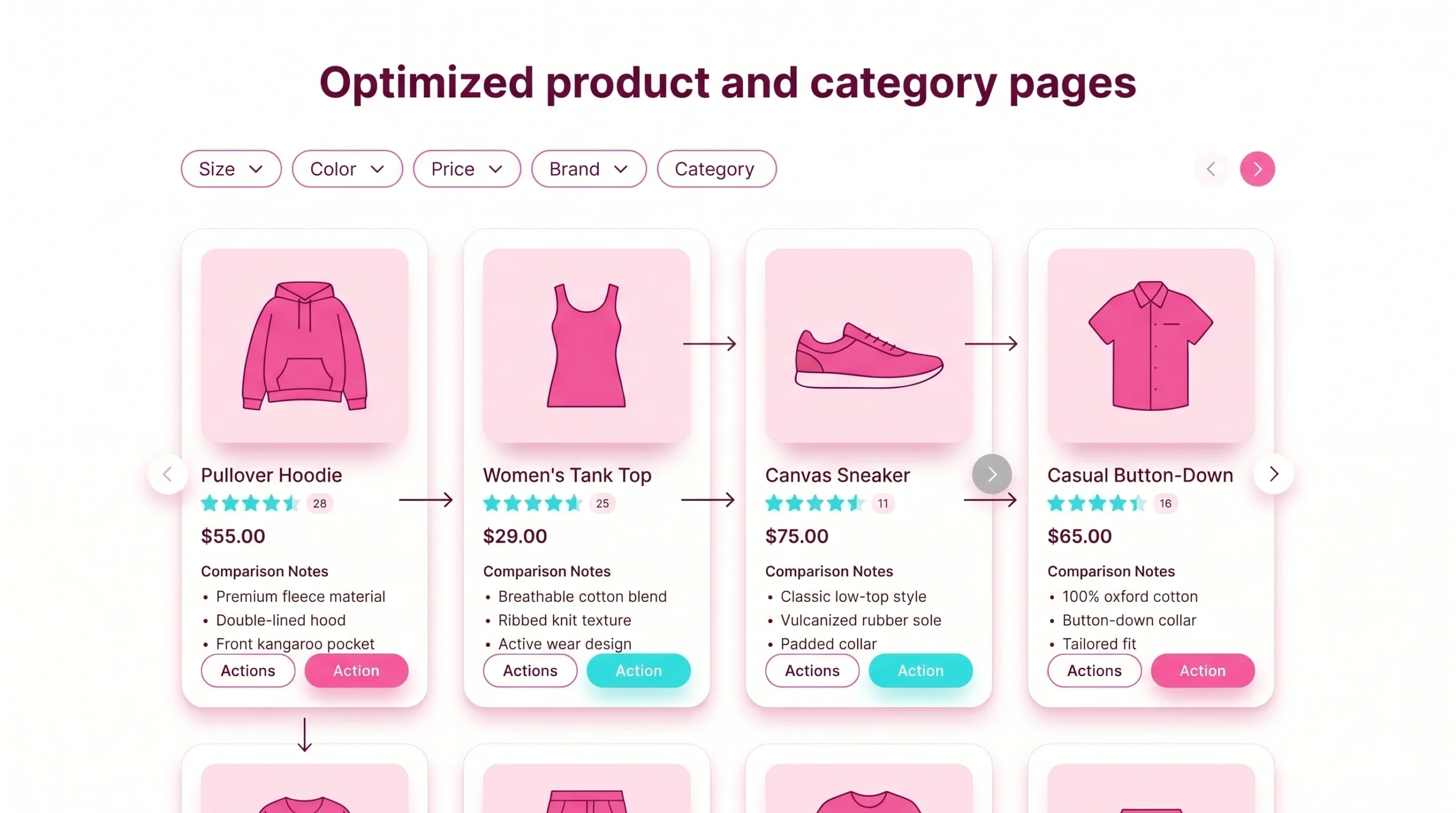
Product and category pages often convert better than blog posts when visitors already know what they want. Specific search phrases are crucial here because they communicate size, fit, compatibility, comparison needs, and buying readiness.
Product and Category Modifiers
Modifiers such as size, colour, compatibility, material, audience, price range, and use case can improve better seo for e-commerce pages. Use them where accurate in product titles, specifications, filters, descriptions, and comparison copy without creating unnatural repetition.
Reviews, Facets, and Commercial Internal Links
Reviews and comparisons give context that product specs cannot provide alone. Faceted navigation should be indexed only when combinations have real demand and unique value, while commercial pages should link to guides that support confident purchase decisions.
Content Refreshes
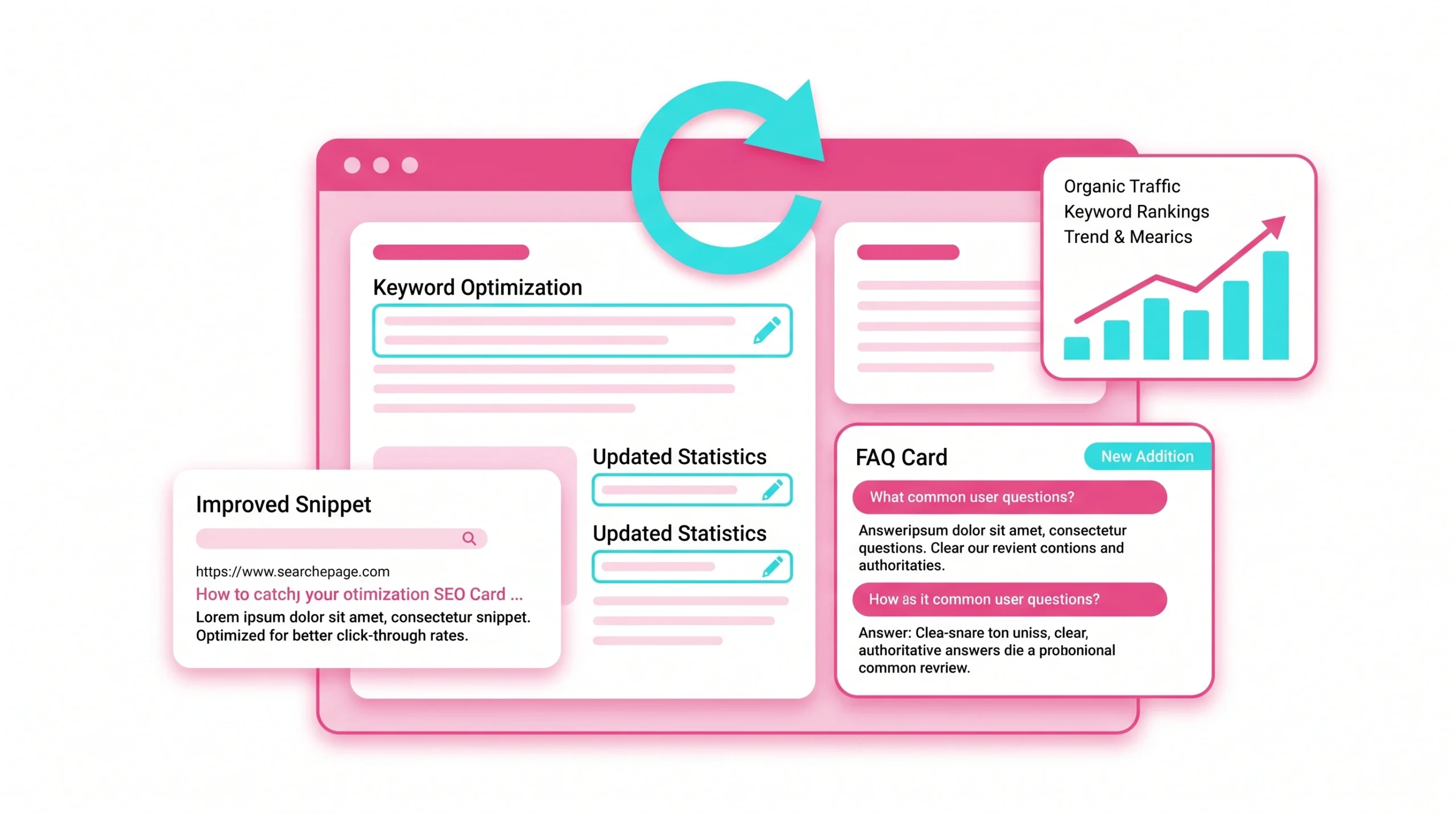
A refresh can revive pages that already have impressions but weak clicks, outdated sections, or missing intent coverage. In many cases, updating an existing asset is faster and more profitable than publishing a completely new page.
Ranking Review and Search Console Expansion
Check which search queries already bring impressions, then expand sections that are close to ranking well. Search Console can reveal relevant phrases you did not target during the first publication, especially when the click-through rate is weak, but the impressions are steady.
Competitor Gaps, Outdated Sections, and Fresh FAQs
Compare competing pages for subtopics, examples, media, proof, and clarity, but avoid copying their structure blindly. Rewrite stale claims, update screenshots, and add FAQs only when they answer real objections or help AI systems extract concise, citable responses.
Why Use Long-Tail Keywords?
Precise search phrases reveal need, context, and stage in the buyer journey. They help businesses prioritise qualified visits over vanity traffic, especially when broad keywords are too competitive, vague, or disconnected from commercial value.
Lower Competition
Focused phrases often face less competition than head keywords, making them useful for new websites, niche services, and brands competing against stronger domains. This does not guarantee rankings, but it may create more realistic opportunities for early traction.
Better Conversion Rates
Visitors using detailed terms often arrive with clearer intent, which can improve conversion rates in specific scenarios. A query like “email automation tool for nonprofit donor journeys” usually shows more context than a broad search for “email software.”
Better Click-Through Rates
Specific titles can feel more relevant in search result pages because they mirror the visitor’s exact need. When a snippet reflects the audience, problem, and outcome, the user has a stronger reason to choose your page over a generic alternative.
What Are Long-Tail Keywords?
Long-tail keywords are specific search phrases that usually contain more context than broad terms. They may have lower search volume, yet they often attract visitors with stronger intent, clearer expectations, and a more defined business problem.
Long-Tail vs. Mid-Tail vs. Short-Tail Keywords
Short-tail terms are broad, mid-tail terms narrow the topic, and long-tail phrases describe a precise need. The more specific the phrase becomes, the easier it is to understand what the visitor wants from the page.
| Type | Example | Typical intent |
| Short-tail | seo | Learn a broad topic |
| Mid-tail | seo strategies | Compare methods |
| Long-tail | seo strategies for local dental clinics | Solve a specific business need |
Examples by Intent
Useful examples reflect action, audience, and context rather than word count alone. A B2B marketer might target “how to create content for SaaS buyers,” while an ecommerce team might focus on “waterproof hiking boots for wide feet.”
How They Work in Search
Search engine systems use words, entities, page context, links, and satisfaction signals to match pages with needs. Good long-tail content answers the full intent behind the phrase instead of repeating exact keyword wording throughout the page.
How to Find Long-Tail Keywords
You can identify long-tail keywords through tools, customer language, current rankings, sales calls, competitor research, and trend monitoring. Strong discovery combines data with human insight, because not every valuable query appears clearly in a tool.
Research Tools and Autocomplete
Using keyword research tools helps uncover monthly search patterns, difficulty, related terms, and SERP formats. Autocomplete can reveal natural language from searchers, especially when you test seed topics, product names, pain points, and audience modifiers.
Current Rankings and Competitor Pages
Existing rankings show where Google already sees relevance, while competitor pages reveal gaps in your coverage. Focus on missing subtopics, better examples, stronger proof, and clearer explanations rather than copying phrases or headings one by one.
Search Trend Monitoring
Trends can signal rising demand before tools show stable monthly search numbers. This is especially useful for AI marketing, seasonal ecommerce, regulatory topics, and fast-moving B2B categories where early coverage can build authority.
How to Choose Long-Tail Keywords for Content Strategy
Good keyword selection turns raw search data into business priorities. Do not chase every tail keyword; choose phrases with relevance, feasibility, intent clarity, and commercial value so your content plan stays focused and measurable.
Difficulty, Volume, and Search Intent Fit
Keywords may have lower search volume yet higher profit potential when they reveal urgency or a strong fit. Balance difficulty, demand, page authority, and intent before deciding whether a keyword deserves a new page, refreshed section, or supporting paragraph.
Buyer Persona Relevance and Conversion Potential
Target phrases tied to real customer roles, budgets, risks, and goals. A specific keyword has strong conversion potential when the searcher shows urgency, decision context, and a problem your offer can solve better than competing alternatives.
- Need clarity: Does the query show a real business problem?
- Audience match: Is the searcher likely to be your buyer?
- Offer fit: Can your product or service solve the need?
- Proof required: Can the page support a confident decision?
Zero-Volume Value and Topic Clustering
Zero-volume terms can still matter when customer conversations, support tickets, or sales demos show real demand. Group related phrases by shared intent so one strong page can cover multiple keywords naturally without drifting into unrelated topics.
Search Intent Behind Long-Tail Keywords
Search intent shows what the user expects next, which may be education, comparison, purchase, or troubleshooting. Long-tail keywords are important because they make those expectations easier to recognise before you create content.
Informational, Commercial, and Transactional Intent
Informational queries need guidance, definitions, and examples. Commercial queries need comparison criteria, proof, and differentiation, while transactional queries require a clear offer, reduced friction, trust signals, and a direct next step toward action.
Intent Mismatch Risks
An intent mismatch causes weak engagement because the page solves the wrong problem. A blog post rarely satisfies a visitor ready to request pricing, while a sales page may frustrate someone who needs beginner guidance before choosing a vendor.
How to Optimise Content for Long-Tail Keywords
Optimisation means making a page more useful for a precise need, not repeating the same phrase until the copy sounds unnatural. The strongest pages combine intent match, expert detail, readability, evidence, and a logical next action.
Map Phrases to the Right Content Type
Match each keyword to a format before writing so each page serves one clear job. This prevents blog posts from competing with landing pages and helps writers choose the best structure, proof, and call to action for each intent.
| Intent | Best type of content | Useful elements |
| Learn | Guide or checklist | Definitions, steps, examples |
| Compare | Comparison page | Criteria, pros, limits |
| Buy | Landing page | Proof, offer, CTA |
| Troubleshoot | Support article | Symptoms, fixes, screenshots |
Place Terms Naturally
Use keywords in strategic locations such as title, introduction, headings, body copy, image context, and internal links. Each placement should help readers understand page relevance, and any sentence that exists only for repetition should be removed.
Write Comprehensive Answers and Build Clusters
Comprehensive content answers questions, provides context, addresses risk, and takes the next step without adding filler. A cluster can connect a pillar guide, supporting articles, commercial pages, case studies, and FAQs so readers can move from research to action.
Add Internal Links
Internal links should guide readers to related services, educational pages, case studies, and product pages. Use descriptive anchors that match the next logical need, because “learn more” rarely gives enough context for users or crawlers.
How to Rank for Long-Tail Keywords
Ranking depends on relevance, quality, accessibility, reputation, and satisfaction. Google recommends creating “helpful, reliable, people-first content” rather than pages built only to manipulate search engine visibility.
Match Query Specificity
Precise queries deserve precise answers. If someone searches for “how to optimise blog posts for low-volume B2B terms,” generic advice about writing better articles will likely miss the intent and lose trust quickly.
Build Topical Authority
Topical authority grows when your website covers a subject from multiple practical angles. Google’s SEO Starter Guide supports clear, helpful improvements that make content easier for users and search systems to navigate.
Improve Depth and Internal Linking
Depth comes from experience, examples, constraints, and evidence, not length alone. Add screenshots, process notes, campaign outcomes, and expert commentary when they improve trust, then connect related pages with internal links that support a natural journey.
Long-Tail Keyword Examples
Examples make optimisation practical for briefs, editorial calendars, and page planning. Use them to show writers how specific long-tail keywords can reflect audience, intent, and context without forcing irrelevant phrases into copy.
Local Examples
Local examples combine service, place, and situation, which helps businesses attract qualified regional demand from people who already know the kind of help they need and the area where they need it.
- “emergency HVAC repair for restaurants in Miami”
- “family lawyer for custody mediation in Denver”
- “B2B SEO agency for SaaS startups in London”
E-commerce Examples
E-commerce examples usually include material, use case, compatibility, size, or problem, because shoppers need practical details before purchase and often compare several similar products before choosing one that fits their budget, risk, and delivery expectations.
- “waterproof hiking boots for wide feet”
- “organic cotton crib sheets for sensitive skin”
- “USB-C laptop charger for Dell XPS 13”
Blog Content Examples
Blog examples should answer questions buyers ask before contacting sales, especially when education shapes the purchase path and readers need practical context, credible proof, and clear next steps before they trust a vendor.
- “How to measure the impact of long-tail content”
- “How to use long tail keywords in content marketing”
- “Why long-tail keywords are important in seo”
Tools for Long-Tail Keyword Research
Tools speed up discovery, but they should not replace judgment. Use data, SERP review, customer language, and sales insight together so your final choices reflect both demand and business value.
Research Platforms
These platforms help uncover relevant long-tail keywords, estimate monthly search volume, compare difficulty, and evaluate competitor visibility, which makes them useful for planning topics, briefs, prioritisation, reporting, and content refresh decisions.
- Semrush: Broad database, competitive research, content briefs, and rank tracking for large marketing teams.
- Ahrefs: Strong backlink data, phrase discovery, SERP analysis, and content gap workflows.
- Moz Keyword Explorer: Accessible difficulty metrics, suggestions, and priority scoring for planning.
- Ubersuggest: Simple ideas, domain overview, and beginner-friendly workflows for smaller teams.
Google Search Console and SERP Features
Google Search Console shows real queries, impressions, clicks, countries, devices, and pages, while autocomplete and related searches show how people phrase problems. Use Search Console performance reports to find pages that already attract relevant long-tail traffic.
AI Ideation and Tracking Tools
AI tools can expand seed topics into question-based keywords, but the output needs review against SERPs and customer evidence. Use keyword tracking tools to monitor position, URL, device, and location, then connect rankings with leads and revenue.
Long-Tail Keywords for PPC
PPC makes phrase quality visible because every irrelevant click costs money. Target long-tail keywords when you need tighter intent, stronger landing page relevance, and cleaner tests before scaling budget into broader campaigns.
Campaign Discovery and Match Types
Build campaigns from customer problems, product use cases, competitor alternatives, and support questions. Phrase and exact match can protect intent during early tests, while broad match may work later when conversion data and negatives are strong.
Negative Terms and Landing Page Match
Negative terms prevent waste from irrelevant searches, so review search term reports frequently during launch. Ad headline, landing page title, and offer should reflect the same specific need because a message mismatch weakens trust quickly.
Conversion Tracking by Query
Measure query-level outcomes, not just clicks or impressions. Track form fills, booked calls, qualified pipeline, assisted revenue, and close rates where possible so paid search data can improve both ads and organic content planning.
Tracking and Measuring Long-Tail Keyword Performance
Measurement shows which pages deserve updates, links, promotion, or consolidation. Good reporting connects visibility to business value, because rankings alone do not prove that visitors are qualified or that content supports revenue.
Ranking Position Tracking
Track core phrases, specific long-tail keywords, and page groups over time. Focus less on daily fluctuations and more on directional trends across weeks, especially after publishing updates, adding internal links, or improving titles.
Search Console Review
Review impressions, clicks, click-through rate, average position, and page-level query patterns. Google notes that quality raters help assess whether systems provide useful results, but ratings do not directly determine rankings in its Search Quality Rater Guidelines update.
Volume, Traffic Quality, and Conversions
Difficulty and volume shift over time, so update priorities when competitors publish stronger pages or demand grows. Segment long-tail content by engaged sessions, demo requests, signups, assisted conversions, and CRM notes to see whether traffic creates real opportunities.
Common Myths and Mistakes
Long-tail strategy fails when teams treat phrases as decoration rather than evidence of demand. Success comes from matching precise needs with useful content, trustworthy proof, and clear next steps across the buyer journey.
Low Search Volume Means Low Value
Low volume does not always mean low value. A handful of searches can be profitable when a query signals urgent business need, especially for high-ticket B2B services, local services, or niche products with strong margins.
More Terms Per Page Means Better Rankings
Multiple keywords help only when they share the same intent. Forcing unrelated phrases onto one page confuses readers, weakens relevance, and makes the page harder for search systems to classify accurately.
Exact Match Is Required
An exact match can help title clarity, but natural language matters more. Related entities, synonyms, examples, and problem-specific wording often create a stronger experience than repeating one exact phrase across every section.
Long-Tail Phrases Work Only for Blogs
Long-tail phrases also work in landing pages, product pages, comparison pages, help centres, videos, podcasts, and paid campaigns. The best format depends on intent, not on whether a phrase looks educational.
Considerations for Long-Tail Strategy
Before scaling, set rules for topic selection, page ownership, briefs, review cadence, and performance reporting. This prevents overlap, keeps seo strategies focused, and helps marketing teams decide when to create, update, merge, or retire content.
Define Goals and Start Small
Decide whether the goal is traffic, leads, revenue, support deflection, or brand authority before choosing phrases. Start with one niche, product line, or buyer segment so the team can learn what works before scaling production.
Stay Relevant and Avoid Traffic Obsession
Every page should serve the audience’s needs and business purpose. Irrelevant traffic can dilute authority, distract reporting, and waste editorial resources, while a smaller page with higher conversion potential may create more value than a popular generic article.
FAQ
Long-tail keywords are specific search phrases that show a clearer need than broad keywords; they are important because they help businesses create more relevant content, compete in focused search result areas, and attract users who may be closer to action.
Find effective long-tail keywords by combining research tools, Google Search Console queries, customer questions, competitor gaps, sales call notes, and SERP analysis, then choose phrases that align with intent, audience, and business value.
Use long-tail keywords in page titles, introductions, headings, body copy, URLs, image alt text, meta descriptions, internal links, and FAQ answers when placement improves clarity while helping users recognise that the page matches their query.
Incorporate long-tail keywords into your content by assigning one primary phrase to each page, using related terms only where they fit naturally, answering intent fully, then editing copy so it reads like expert guidance rather than forced insertion.
One page should usually target one primary keyword plus a small cluster of closely related terms that share the same intent, because too many unrelated phrases can weaken focus and create a poor reader experience.
You should target zero-volume long-tail keywords when customer conversations, sales data, or product context show real demand, because tools may underreport niche search queries that still attract qualified buyers for specialised offers.
Long-tail keywords can work well for PPC campaigns when they match ad intent, landing page copy, and conversion goal, since specific queries often reduce wasted clicks and help marketers focus spending on users with clearer needs.